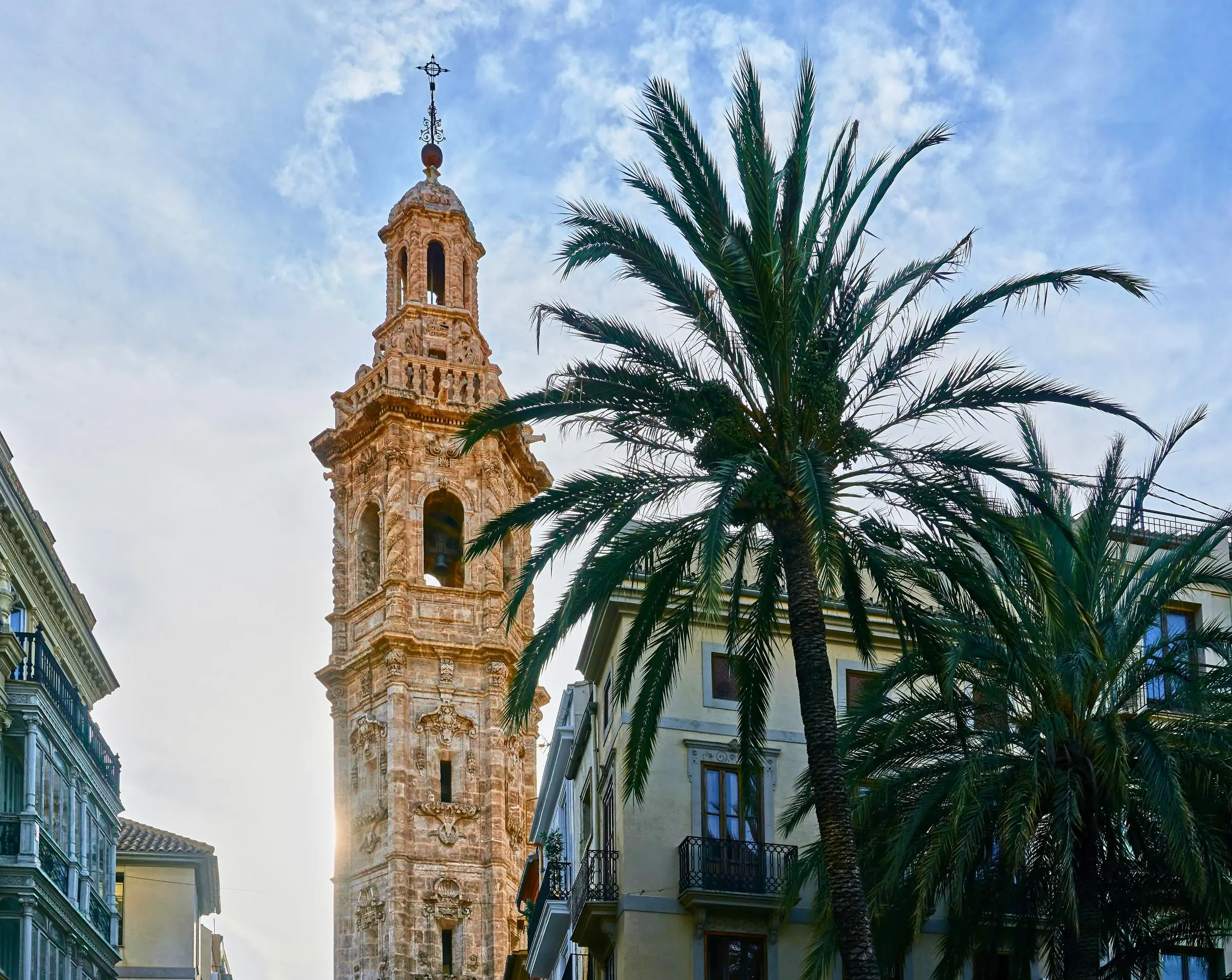
Standing at the intersection of Plaza de la Reina and Plaza Lope de Vega, the Iglesia de Santa Catalina (Santa Catalina Church) is impossible to miss. While the church itself is one of the oldest Gothic structures in Valencia—built shortly after the Christian reconquest in 1238—it is the soaring, 56-meter Baroque bell tower added in the 17th century that defines its silhouette.
Unlike the heavily ornamented interiors of other local parishes, Santa Catalina offers a stripped-back look at Valencia’s architectural history, scarred by fires and civil war, yet standing resilient. Whether you are here to climb the belfry for panoramic city views or simply want to admire the exterior tilework before grabbing a drink at the famous horchatería next door, this guide covers the practical details of your visit.
Santa Catalina at a Glance
Tower Climb
- Height: 56 meters (approx. 130 narrow steps).
- Time needed: 30 to 45 minutes for the church and tower.
- Location: Plaza Lope de Vega, right near the Central Market.
Is Santa Catalina Right for Your Trip?
Because it sits right in the middle of the Ciutat Vella, you will likely walk past Santa Catalina several times during your stay. Here is how to approach a visit based on your travel style:
- For the Time-Poor: You do not need to go inside to appreciate the architecture. Stand in Plaza Lope de Vega to photograph the hexagonal tower, then walk around to Plaza de Santa Catalina to see the main facade. It takes five minutes.
- For Budget Travelers: Entry to the main church nave is usually free during worship hours, and the tower climb costs just a couple of euros. It is one of the cheapest viewpoints in the city, offering a great alternative to the slightly more expensive climb at the nearby Valencia Cathedral.
- For Families with Young Children: The church is spacious and quiet, but the tower climb is not stroller-friendly. The spiral staircase is narrow, steep, and lacks an elevator. If you have toddlers, skip the tower and head straight to the horchatería next door for a sweet treat instead.
5 Structural Landmarks to Explore
Santa Catalina is a building of distinct halves: a medieval Gothic core and a flamboyant Baroque exterior. Here are the five key elements to look for when you visit.
1. The 56-Meter Twisted Stone Belfry
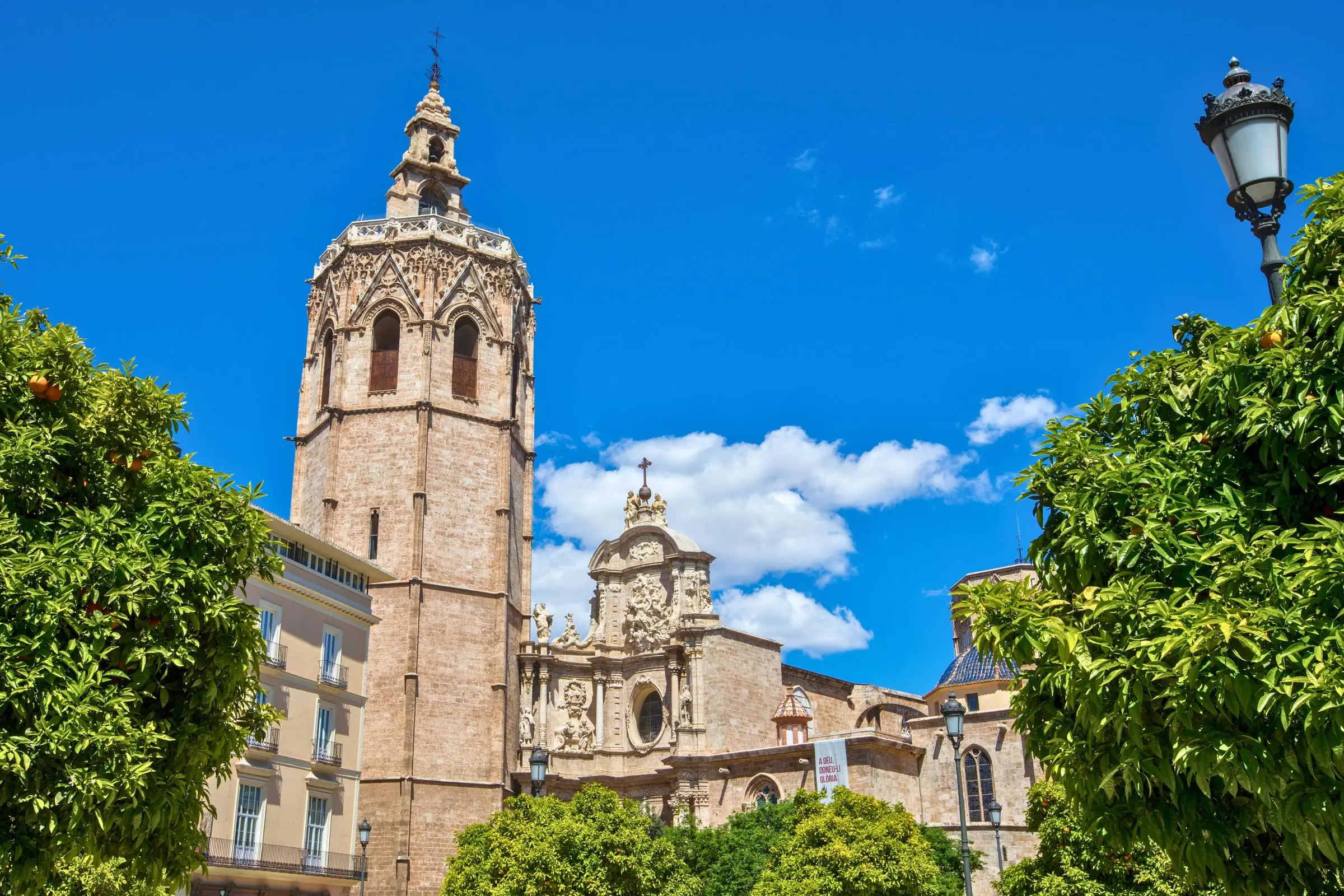
Built between 1688 and 1705 by architect Juan Bautista Viñes, the bell tower is the star of the show. Unlike the octagonal El Micalet tower at the Cathedral, Santa Catalina’s tower is hexagonal. It features a twisted, spiraling stone column design at its corners, giving it a dynamic, almost twisting appearance as it rises 56 meters into the sky.
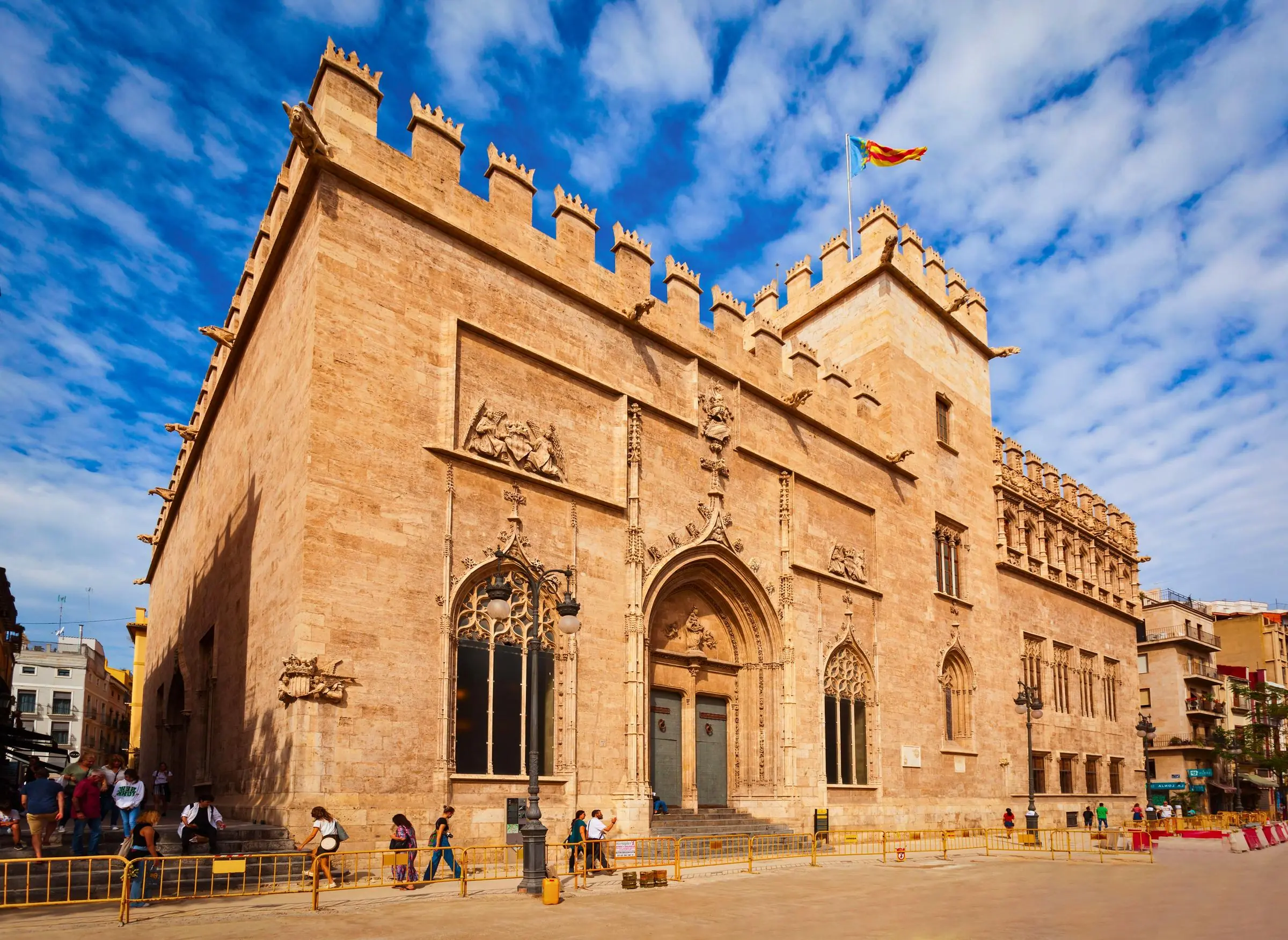
The climb to the top involves a tight, winding stone staircase. It gets claustrophobic, and you will occasionally have to press yourself against the wall to let descending visitors pass. However, the viewing platform at the top offers clear, unobstructed sightlines over the domes of the Old Town, the Central Market, and the La Lonja de la Seda.
The tower has specific opening hours that often differ from the main church, typically closing for a few hours in the early afternoon (siesta). Bring a €2 coin, as the attendant at the base of the stairs rarely has change for large bills.
2. The Classical Gothic Interior Nave
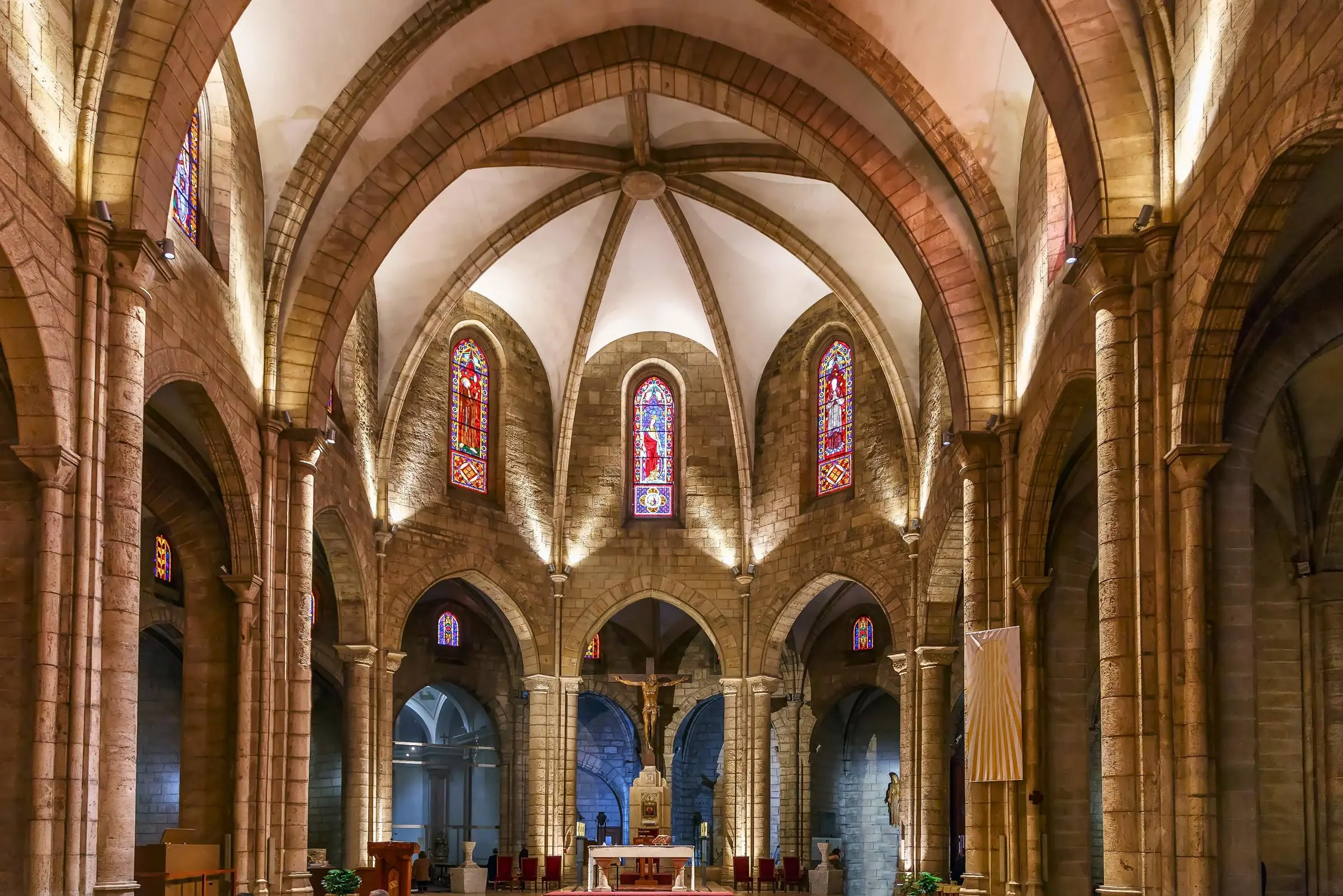
Stepping inside the main church, you will notice a stark contrast to the ornate Baroque tower. The interior is classical Valencian Gothic, characterized by high ribbed vaults, a single wide nave, and side chapels set between heavy buttresses.
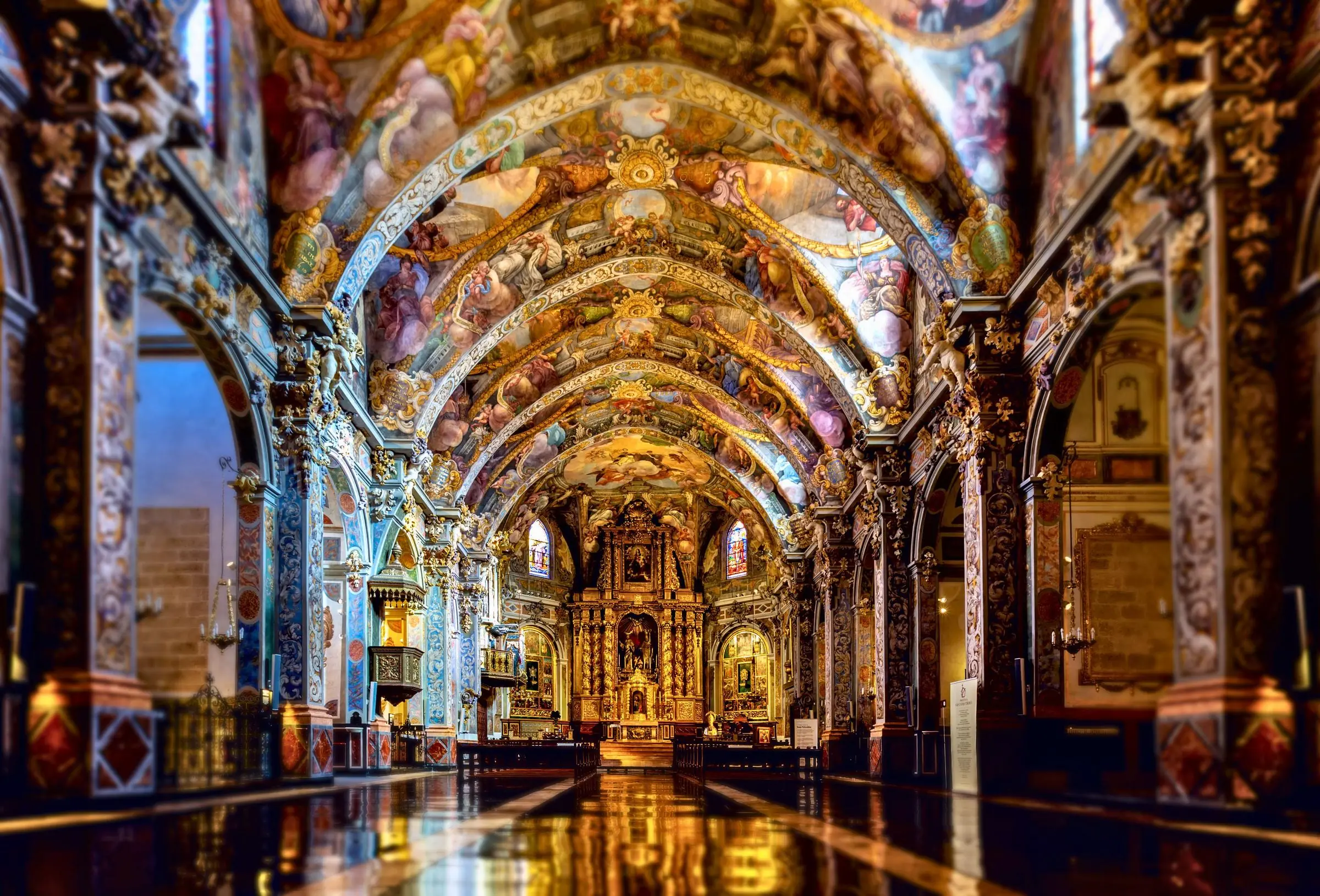
The church feels austere, almost bare. This is not a stylistic choice, but a result of history. The building suffered a devastating fire in 1548 and was heavily looted and burned again in 1936 during the Spanish Civil War. Much of its original artwork and altarpieces were destroyed. In the 1950s, restoration efforts stripped away the remaining damaged neoclassical plasterwork to reveal the original, raw Gothic stone underneath. If you have just visited the hyper-decorated Church of San Nicolás, Santa Catalina provides a sobering, quiet counterpoint.
3. The Historic London Bells
When you reach the belfry, take a moment to look at the bells before admiring the view. Santa Catalina houses a set of historic bells with a unique international backstory. In 1729, the church commissioned a set of bells from Richard Phelps, a master bell-founder based in the Whitechapel Bell Foundry in London (the same foundry that later cast the Liberty Bell and Big Ben).
It was highly unusual for a Spanish Catholic church to order bells from Anglican England, but the quality of Phelps’ work was renowned. While some of the original English bells were melted down over the centuries for wartime munitions or recast, a couple of the original 18th-century London bells remain in the tower today.
4. The Plaza Lope de Vega Facade & Tilework
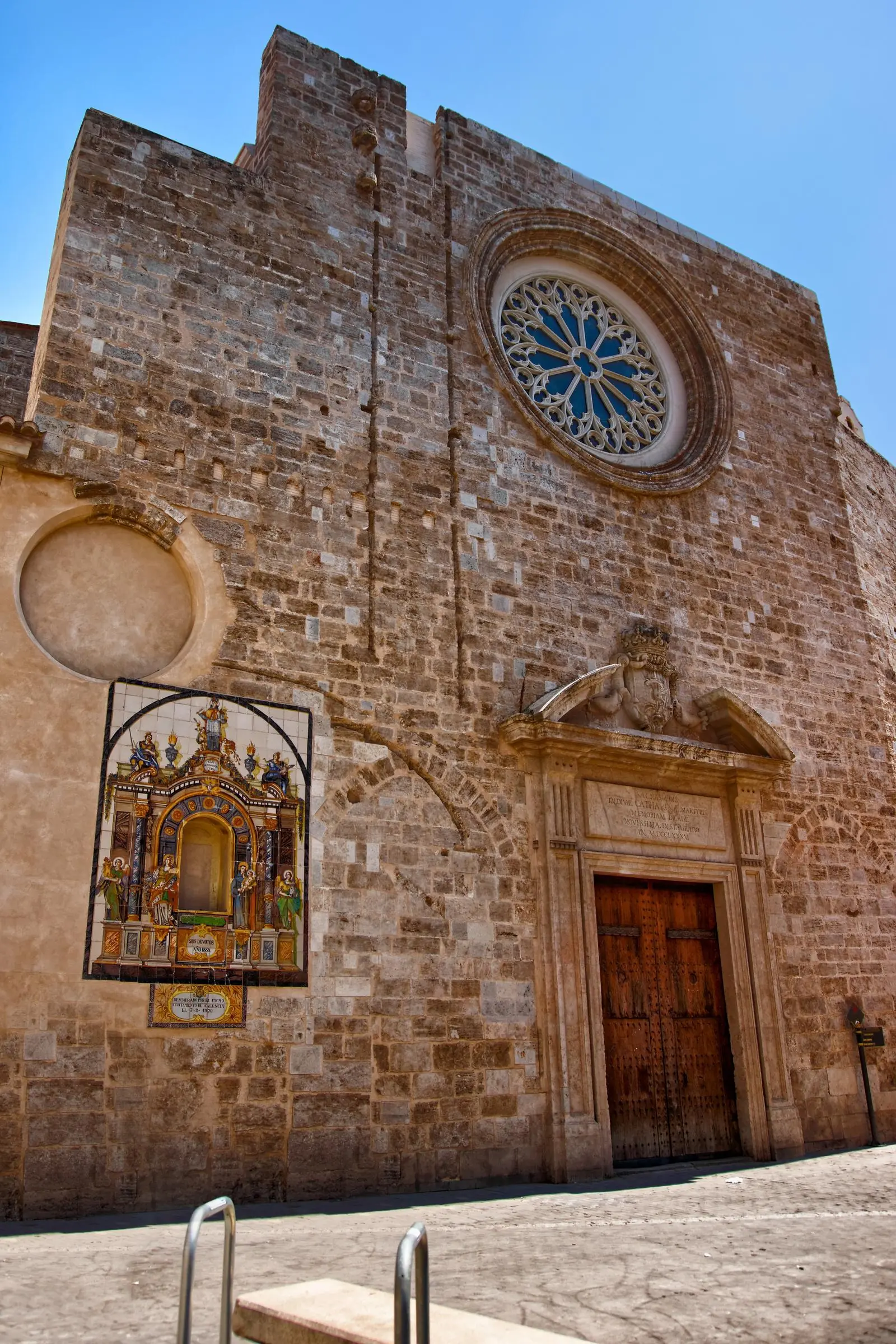
The church has two main entrances. The entrance facing Plaza de Santa Catalina features a classic, somewhat restrained Gothic portal. However, the side facing Plaza Lope de Vega is where the architectural drama happens.
Here, the base of the Baroque tower meets the street, and you can spot intricate exterior tilework and stonemasonry. Look closely at the walls near the tower base to find historic ceramic plaques and azulejos (painted tiles) that date back centuries.
Local Tip: While standing in Plaza Lope de Vega looking at the church, turn around. At number 6 Plaza Lope de Vega, you will see a tiny red building. At just 107 centimeters (42 inches) wide, it holds the record for the narrowest building facade in Europe.
5. Horchatería Santa Catalina
You cannot talk about the church without mentioning its famous neighbor. Located right at the base of the tower on Plaza de Santa Catalina is Horchatería Santa Catalina, one of the oldest and most traditional cafes in Valencia, operating for over two centuries.
After climbing the tower, it is a local tradition to sit down here for a glass of cold horchata (a milky drink made from tiger nuts) and a plate of fartons (long, sweet glazed pastries meant for dipping). Even if you don’t want a drink, peek inside the cafe to see the stunning Manises ceramic tile murals depicting traditional Valencian scenes.
Practical Logistics for Your Visit
Getting There
Santa Catalina is located in the pedestrianized heart of the Old Town.
- On Foot: It is a 3-minute walk south from the Valencia Cathedral and a 2-minute walk east from the Central Market.
- By Metro: The closest metro stops are Xàtiva (Lines 3, 5, 9) or Colón (Lines 3, 5, 7, 9). Both require about a 10-minute walk through the historic center.
- By Bus: Several EMT bus lines stop at Plaza de la Reina, just steps from the church.
Tickets and Tours
Entry to the ground floor of the church is free. To climb the bell tower, you pay a small fee (usually €2) directly to the attendant at the base of the stairs. There are no advance online tickets for the tower climb.
Because of its central location, Santa Catalina is a standard stop on almost every historical walking tour of the city. If you want to understand the layers of history here—from the original mosque to the Gothic church and the Civil War destruction—a guided tour is highly recommended.
If you plan on visiting multiple paid attractions in the area, such as the Silk Exchange or the Cathedral, consider picking up the Valencia Tourist Card. While it doesn’t cover the €2 tower climb, it provides free public transit to get to the Old Town and discounts on major nearby monuments.
Keep Planning: Check out our guide to the best walking tours in Valencia to find a local guide who can bring the Old Town’s history to life.
Where to Stay Nearby
Staying near Santa Catalina puts you in the dead center of the Ciutat Vella. You will be within a five-minute walk of the Cathedral, the Central Market, and dozens of excellent restaurants. The trade-off is that this area gets busy with foot traffic during the day, and taxis cannot access the pedestrian-only squares directly.
Use the map below to find hotels and apartments within walking distance of Plaza Lope de Vega:
Frequently Asked Questions
How many steps are in the Santa Catalina bell tower?
There are approximately 130 steps to reach the viewing platform of the Santa Catalina bell tower. The staircase is a narrow, continuous stone spiral without any landing areas to rest, so a moderate level of fitness is required.
Is there an elevator in Santa Catalina Church?
No, there is no elevator in the bell tower, and the upper levels are not accessible for wheelchair users or those with severe mobility limitations. The ground floor of the main church nave, however, is accessible.
What are the opening hours for the tower?
The tower hours fluctuate by season but generally run from 10:30 AM to 1:00 PM, and again from 5:30 PM to 7:30 PM. It is closed during the afternoon siesta and during major religious services. Always check the sign at the tower door for the day’s exact hours.
Which tower has better views: Santa Catalina or El Micalet?
Both offer excellent views. El Micalet (at the Cathedral) is slightly taller and offers a great view of Santa Catalina. Conversely, climbing Santa Catalina gives you the best vantage point to photograph El Micalet and the Cathedral domes. Santa Catalina’s stairs are slightly less crowded than El Micalet’s.
Can I take a guided tour of the church?
The church itself does not operate official in-house guided tours. However, you can book an Old Town Walking Tour with a local guide who will explain the exterior architecture and the history of the plaza.
What is the best time of day to photograph the tower?
For the best lighting on the hexagonal Baroque tower, aim for late afternoon or early evening (the “golden hour”). The sun hits the intricate stonework from the west, highlighting the twisted columns and casting long shadows across Plaza Lope de Vega.
Explore More of the Old Town
Just a two-minute walk from Santa Catalina is La Lonja de la Seda (The Silk Exchange), Valencia’s premier UNESCO World Heritage site. Don’t miss its incredible twisting columns.