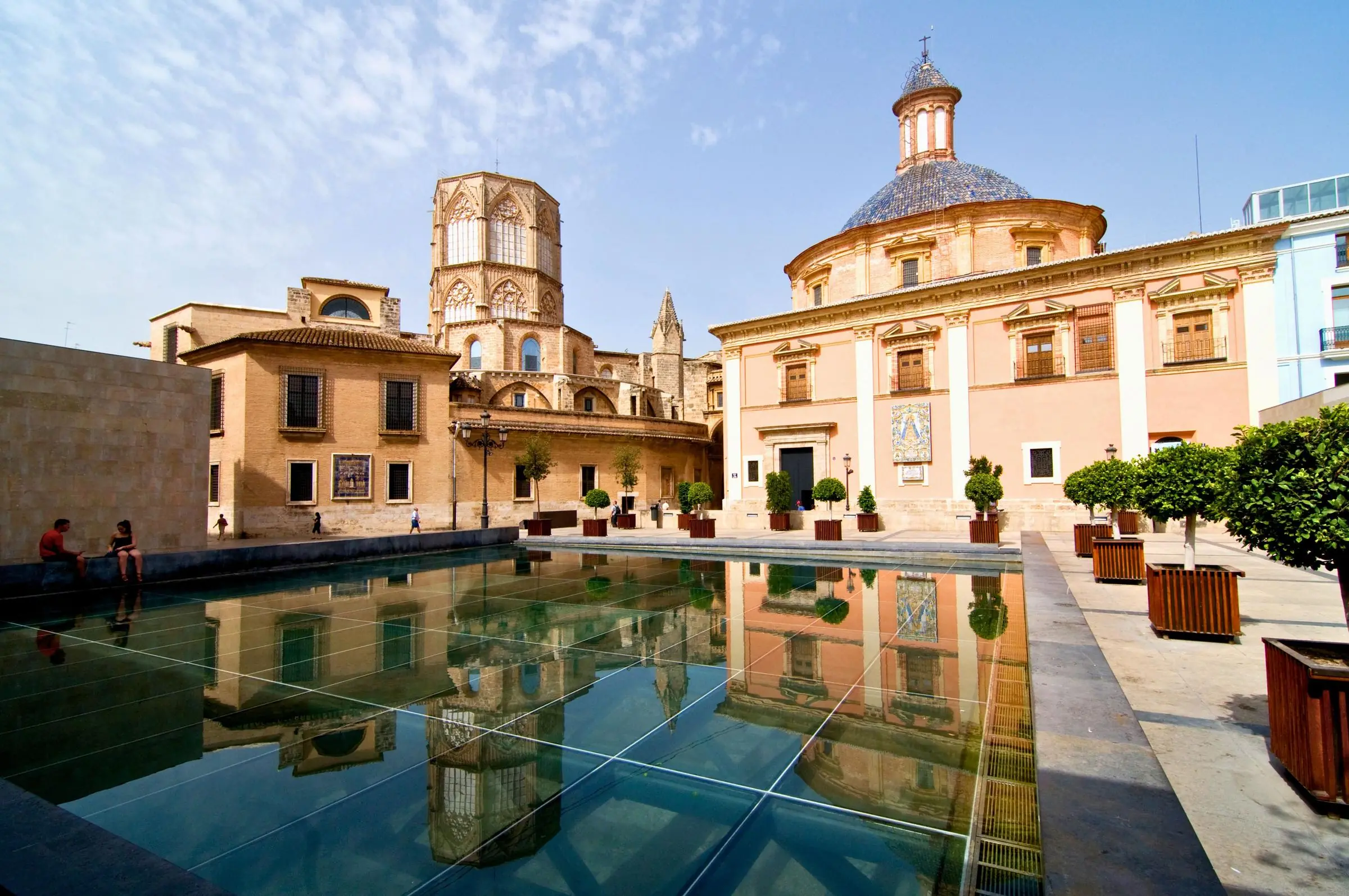
Directly behind the Valencia Cathedral, you will find a wide, pedestrianized square called Plaza de la Almoina. In the center of the plaza sits a large, shallow reflecting pool. If you walk up to the edge and look down through the water and glass, you will see stone columns, ancient walls, and skeletal remains.
This is the roof of the Almoina Archaeological Center (Centro Arqueológico de l’Almoina).
Excavated between 1985 and 2005, this subterranean museum is considered one of the most important archaeological sites in Spain. It does not just show one era of history; it reveals the exact spot where Valencia was founded in 138 BC, stacked with the architectural footprints of the Romans, Visigoths, Muslims, and medieval Christians.
Here is how to navigate the five layers of history beneath the glass, avoid the crowds, and make the most of your visit.
The Optics of the Glass Reflecting Pool
Before you even enter the museum, the roof itself is worth understanding. The 300-square-meter skylight is covered by a few centimeters of flowing water.
This is not just a decorative fountain. The water serves a highly practical architectural purpose: it acts as a thermal and optical regulator.
Valencia gets intensely hot in the summer. If the roof were plain glass, the subterranean museum would turn into a greenhouse, damaging the fragile ruins and making the space unbearably hot for visitors. The continuous flow of water absorbs the solar heat and diffuses the harsh Mediterranean sunlight, casting a soft, rippling, natural light over the Roman forum below.
Photography Tip: The best time to photograph the ruins from above the glass is at dusk, when the underwater lights turn on and the glare from the sun disappears.
Deep-Dive: The 5 Layers of the Almoina
When you descend the stairs into the museum, you are walking down through time. The site is organized chronologically, allowing you to trace the evolution of the city across five distinct periods. Walkways are suspended over the ruins, so you are looking down at the foundations just as the archaeologists found them.
1. The Roman Republic (138 BC – 1st Century BC)
This is the foundational layer of Valentia Edetanorum, established by retired Roman soldiers. The most significant structures here are the thermal baths (termas). You can clearly see the hypocaust system—the raised brick pillars that allowed hot air to circulate beneath the floor to heat the rooms. You will also see the original sanctuary of Asclepius (the god of medicine) and the city’s first granary.
2. The Roman Empire (1st – 2nd Century AD)
As Valentia grew into a prosperous imperial city, this area became the bustling Forum. The highlight of the entire museum is the exposed intersection of the Cardo Maximus (the main North-South street) and the Decumanus Maximus (the main East-West street). You can still see the deep ruts worn into the original stone paving slabs by the wheels of Roman carts over centuries of use.
3. The Visigothic Era (5th – 7th Century)
After the fall of the Roman Empire, the Visigoths took over. The civic center of the Romans was transformed into a religious center. Here, you will find the remains of a monumental baptistery and the apse of a church. This area is closely tied to the martyrdom of San Vicente (Saint Vincent), and you can see several stone tombs and skeletal remains from the necropolis that grew around the church.
4. The Islamic Period (8th – 13th Century)
When the Moors conquered the city, they renamed it Balansiya. The religious center was leveled to build a fortified Alcázar (palace). The most prominent surviving feature from this era is the large water wheel (noria) and the intricate courtyard pool system. It is a clear demonstration of the advanced irrigation and water management techniques the Islamic rulers brought to the region.
5. Medieval Christian Era (13th – 14th Century)
Following the Christian reconquest by James I of Aragon in 1238, the Islamic palace was dismantled. In its place, an Almoina was built. In the local Valencian language, an almoina is an alms house—a charitable institution that gave food and shelter to the poor. This building gives the modern square and the museum its name.
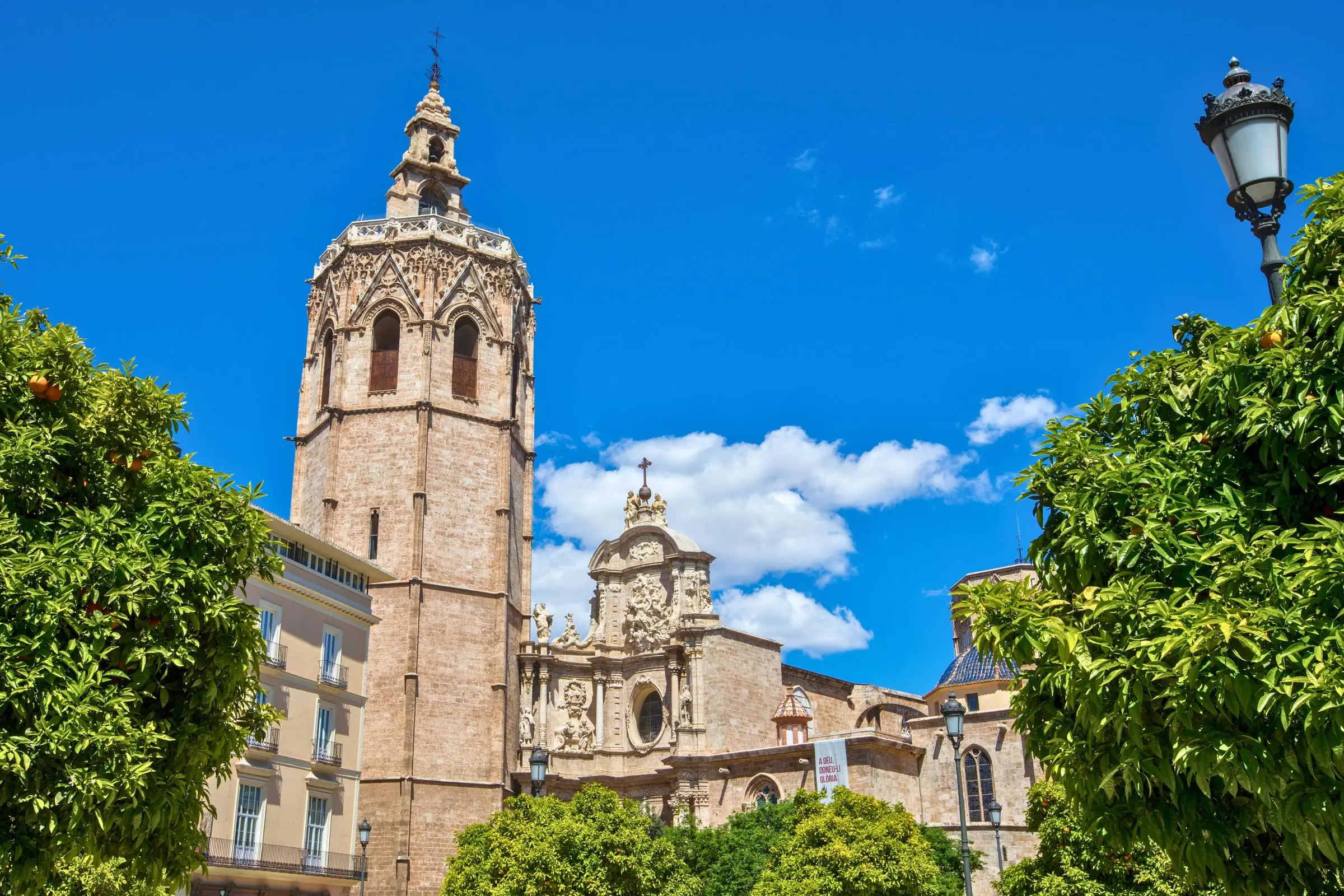
Valencia Cathedral
Navigate centuries of architectural history, a 207-step bell tower, and the chapel housing the Vatican-recognized Santo Cáliz.
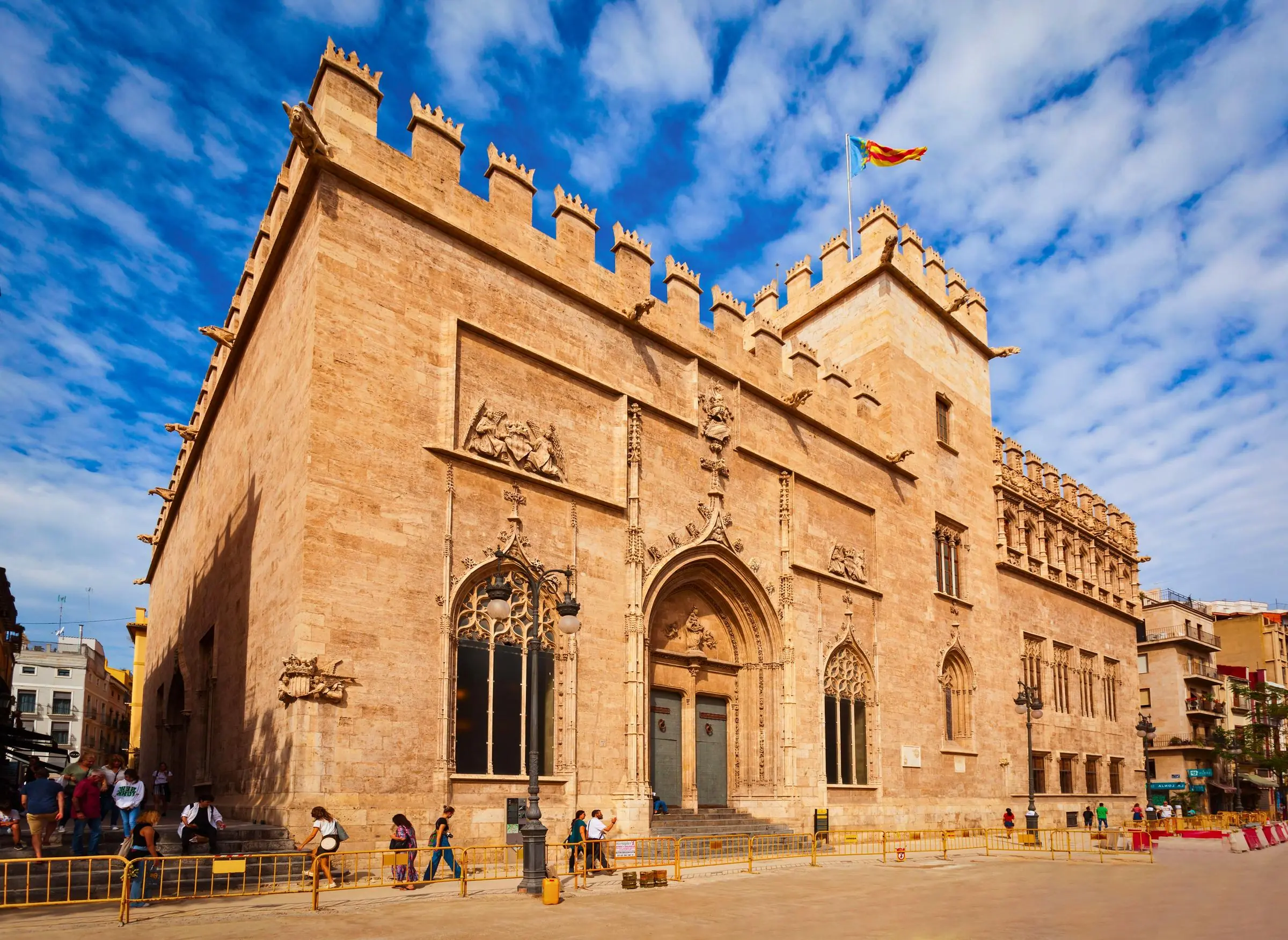
La Lonja de la Seda
Step inside the 15th-century trading hall that defined Valencia's golden age of commerce.
Audience Segmentation: How to Visit
Depending on your travel style, here is how you should approach the Almoina Archaeological Center.
For the Time-Poor
If you are rushing through a 1-day itinerary, you can see the highlights of the Almoina in about 30 to 45 minutes. Skip the lengthy introductory video near the entrance. Head straight for the Roman crossroads to see the cart tracks, look at the thermal baths, and spot the Islamic water wheel.
For Budget Travelers
The Almoina is a municipal museum, which means it is very cheap to enter. Standard admission is just €2.
- The Hack: Entry is completely free on Sundays and public holidays.
- The Pass: If you purchase the Valencia Tourist Card, entry to the Almoina (and all other municipal museums) is included at no extra cost.
Almoina Ticket Options
General Admission
- Buy at the door only
- Audio guide not included
Valencia Tourist Card
- Free entry to Almoina
- Free unlimited public transport
- Free entry to La Lonja & Serranos Towers
For Families with Kids
Children usually find traditional history museums boring, but the Almoina is highly visual. The glass roof with water flowing over it is a great hook. Inside, the suspended walkways make it feel like an exploration. Point out the physical cart tracks in the Roman road and the actual skeletons in the Visigothic tombs—these tangible details keep younger visitors engaged.
Logistics and Local Tips
Getting There
The entrance to the museum is located right on Plaza de la Almoina, directly behind the apse of the Cathedral.
- On Foot: It is in the pedestrianized heart of Ciutat Vella.
- By Metro: The closest stations are Colón or Xàtiva, both about a 12-minute walk away.
- By Bus: EMT bus lines 4, C1, and 31 drop you at Plaza de la Reina, a 2-minute walk from the entrance.
Quiet Hours
Because it is underground and air-conditioned, the Almoina gets busy during the peak heat of the afternoon (1:00 PM to 4:00 PM) as tourists seek refuge from the sun.
- Best time to go: Arrive right when it opens at 10:00 AM, or visit late in the afternoon around 5:30 PM.
- Sunday Warning: Because entry is free on Sundays, expect larger crowds and local families. Go early if you visit on a Sunday.
Guided Tours
The museum provides informational placards in Spanish, Valencian, and English. However, because the ruins are layered on top of each other, it can be visually confusing to separate the Roman stones from the Islamic ones. If you want a deeper understanding of the area, consider booking a guided walking tour of the Old Town that includes historical context of the Cathedral and surrounding plazas.
Where to Stay Near the Almoina
Staying in the Ciutat Vella (Old Town) puts you within a five-minute walk of the Almoina, the Cathedral, and the Central Market. It is the most convenient area for first-time visitors, though it can be noisy during festivals.
Use this map to find hotels and apartments near Plaza de la Almoina.
Keep Planning: If you prefer a quieter area or want to be closer to the beach, read our complete guide on Where to Stay in Valencia.
Frequently Asked Questions
How much does it cost to enter the Almoina Archaeological Center?
Standard admission is €2. Entry is free on Sundays and public holidays. It is also completely free any day of the week if you hold an active Valencia Tourist Card.
How long does it take to visit the museum?
Most visitors spend between 45 minutes and 1 hour inside. If you stop to read every placard and watch the introductory video, allow for 90 minutes.
Is the Almoina accessible for wheelchairs and strollers?
Yes. The museum is fully accessible. There is an elevator from the street level down to the museum floor, and the suspended walkways over the ruins are flat and wide enough for wheelchairs and strollers.
Can you walk on the glass roof in the plaza?
Yes, the glass roof in Plaza de la Almoina is flush with the pavement and designed to be walked on. However, the glass can be slippery when wet, so step carefully.
Are there guided tours available inside the museum?
The museum itself does not run regular guided tours in English for walk-in visitors. You will rely on the bilingual information panels. For a guided experience, you will need to book a private Old Town walking tour that specifically includes an entry and walkthrough of the Almoina.
Is the museum air-conditioned?
Yes, the subterranean space is climate-controlled to protect the ruins. It is an excellent place to escape the midday heat during the summer months.
For official opening hours and temporary closure notices, check the Valencia Cultural Heritage website.