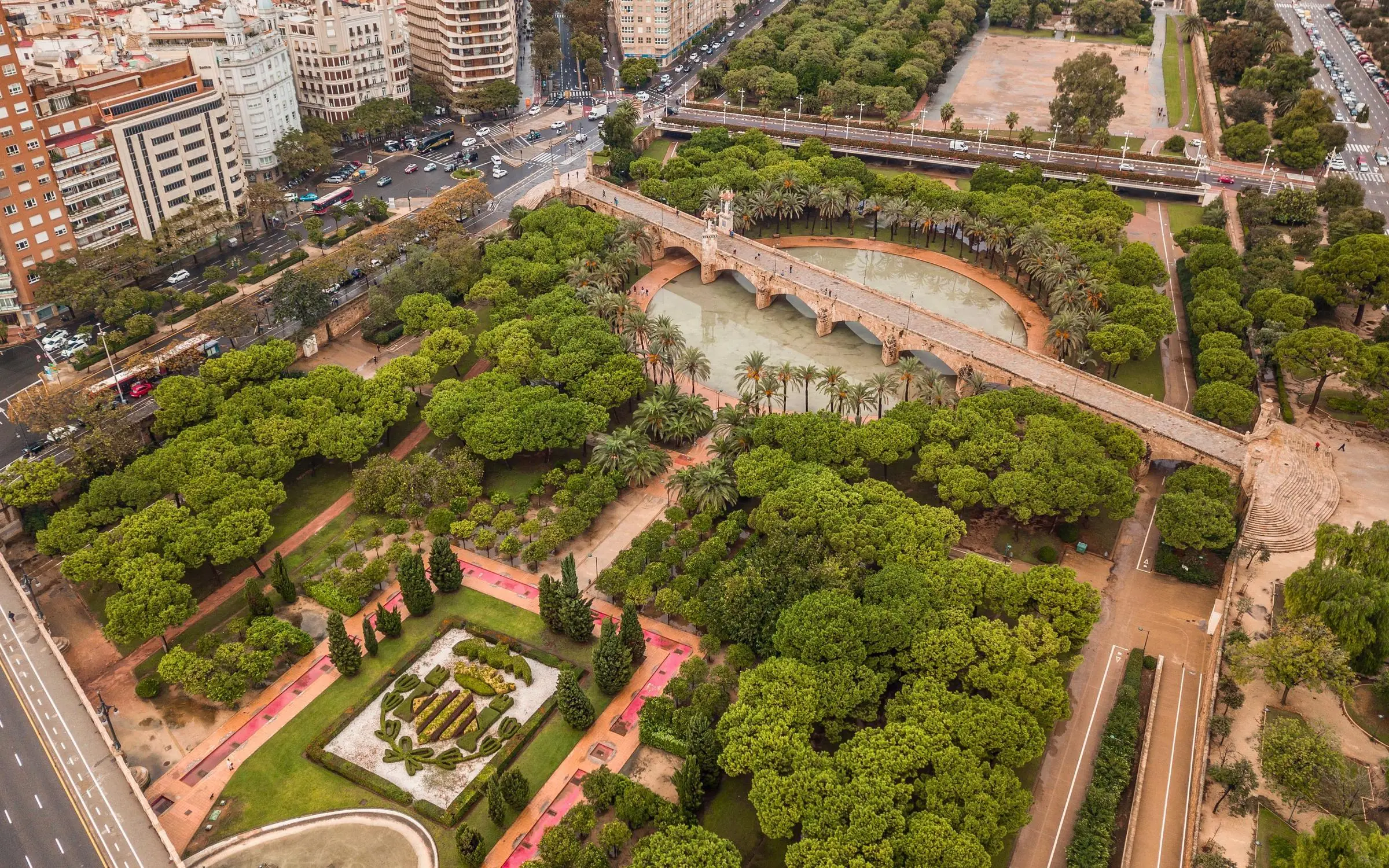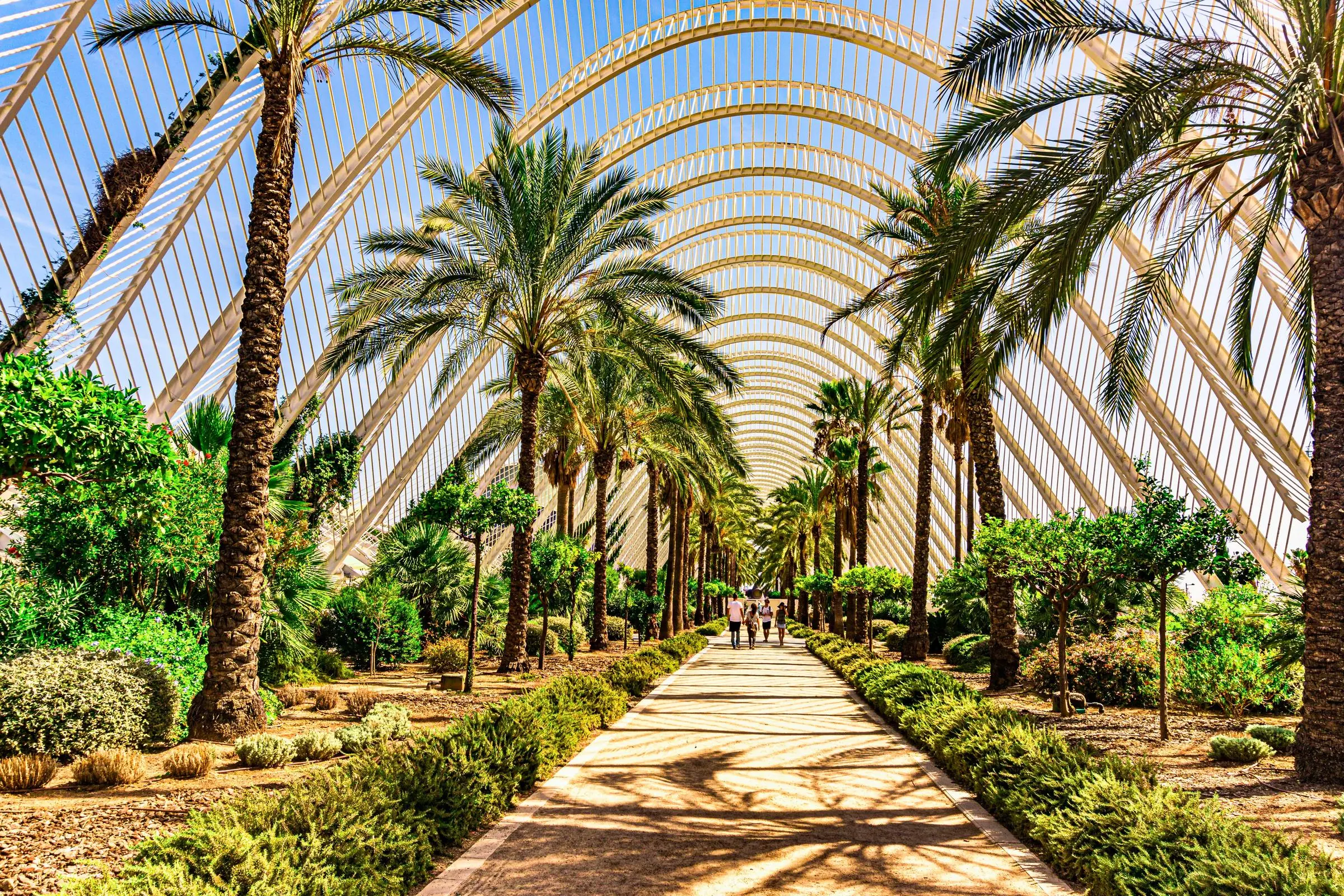
Most visitors to Valencia spend their time walking the massive Turia Gardens, completely missing the historical weight of the park sitting just off its northern bank. Jardines del Real, known to almost every local simply as Los Viveros (The Nurseries), is a sprawling botanical space built directly on top of the ruins of a historic Moorish palatial estate.
Originally an 11th-century country estate for the taifa kings of Valencia, it later became the Royal Palace for the monarchs of Aragon. Today, it is a heavily shaded, tranquil public park featuring archaeological ruins, a paleontology museum, aviaries, and seasonal festival grounds.
Whether you are looking for a quiet place to read, a playground for the kids, or a deep dive into Valencia’s layered history, here is exactly how to navigate Jardines del Real.
Who is this park for?
Local Tip: The park is completely free to enter and is open daily from early morning until sunset. Because of its dense tree canopy, it is noticeably cooler here than in the surrounding city streets during the peak of summer.
- Families: This is one of the easiest parks in the city for children. The wide, flat paths are perfect for strollers. The central aviary and the dinosaur skeletons inside the Natural Science Museum provide easy, low-cost entertainment.
- Time-Poor Travelers: If you only have 45 minutes, enter through the main southern gates (near the Museum of Fine Arts). Walk straight to the Royal Palace ruins, loop through the sculptural rose garden, and exit back toward the Turia.
- Budget Travelers: Aside from a nominal fee for the museum (around €2), the entire park, including the ruins and botanical enclosures, is free. It is a prime spot for a picnic if you want to save money on lunch.
5 Key Landmarks Inside Jardines del Real
The park is large enough that you can easily wander aimlessly, but if you want to understand the history of the space, you need to seek out these five specific areas.
1. The Ruined Royal Palace Stone Foundations
In 1810, during the Peninsular War, the Spanish military made the drastic decision to demolish the Royal Palace to prevent Napoleon’s advancing troops from using it as a fortress. For over a century, the ruins were buried and forgotten.
Today, archaeological excavations near the southern entrance (facing the Turia) have uncovered the stone foundations of the palace. You won’t see towering castle walls; instead, you will find low, excavated stone grids set into the grass, accompanied by informational plaques detailing the layout of the former Moorish and Christian courts. It is a sobering reminder of how much history was leveled in a single strategic military decision.
2. The Sculptural Rose Gardens (La Rosaleda)
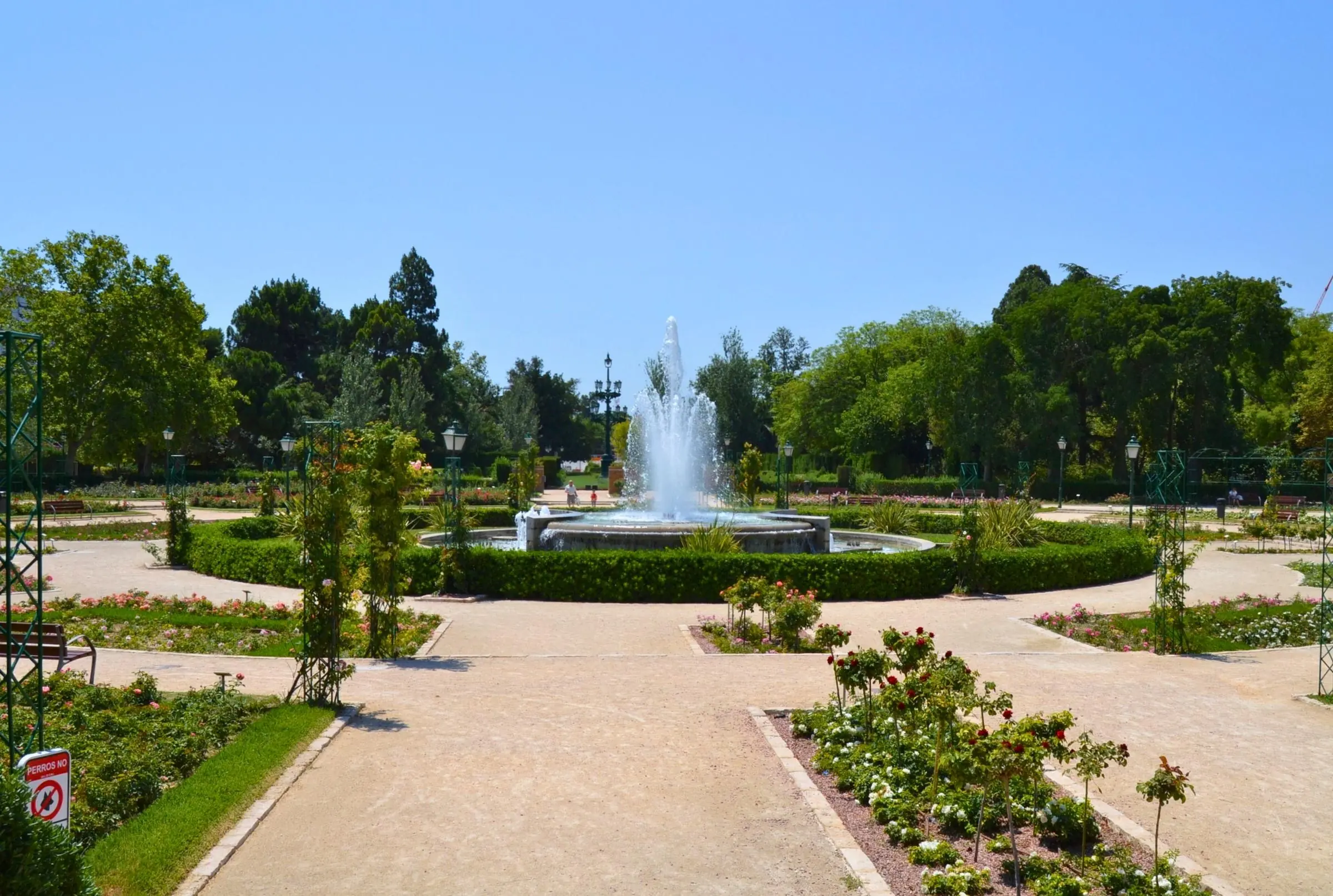
Located toward the center-east section of the park, the Rosaleda is a formal, symmetrical garden that bursts into color between late April and early June. The garden is laid out in concentric circles around a central fountain, featuring dozens of rose varieties interspersed with classical sculptures and pergolas.
If you visit in mid-summer, the roses will be past their prime, but the structural layout of the garden and the shaded benches still make it a quiet place to sit.
3. Natural Science Museum (Museo de Ciencias Naturales)
Do not confuse this with the massive, modern Science Museum down in the City of Arts and Sciences. This is Valencia’s traditional natural history museum, housed in a rationalist building right in the middle of Viveros.
The absolute highlight here is the collection of South American Pleistocene fossils, specifically the Megatherium (a massive, extinct ground sloth). The skeleton was brought to Spain from Argentina in the 19th century and is one of the best-preserved specimens in Europe. The museum is small, slightly dated in its presentation, but highly charming and very cheap to enter.
Tickets for the Natural Science Museum are purchased at the door (usually around €2, free on Sundays and holidays). If you plan to use public transit to get here, grab the Valencia Tourist Card for unlimited bus and metro rides across the city.
4. Central Aviary Ponds
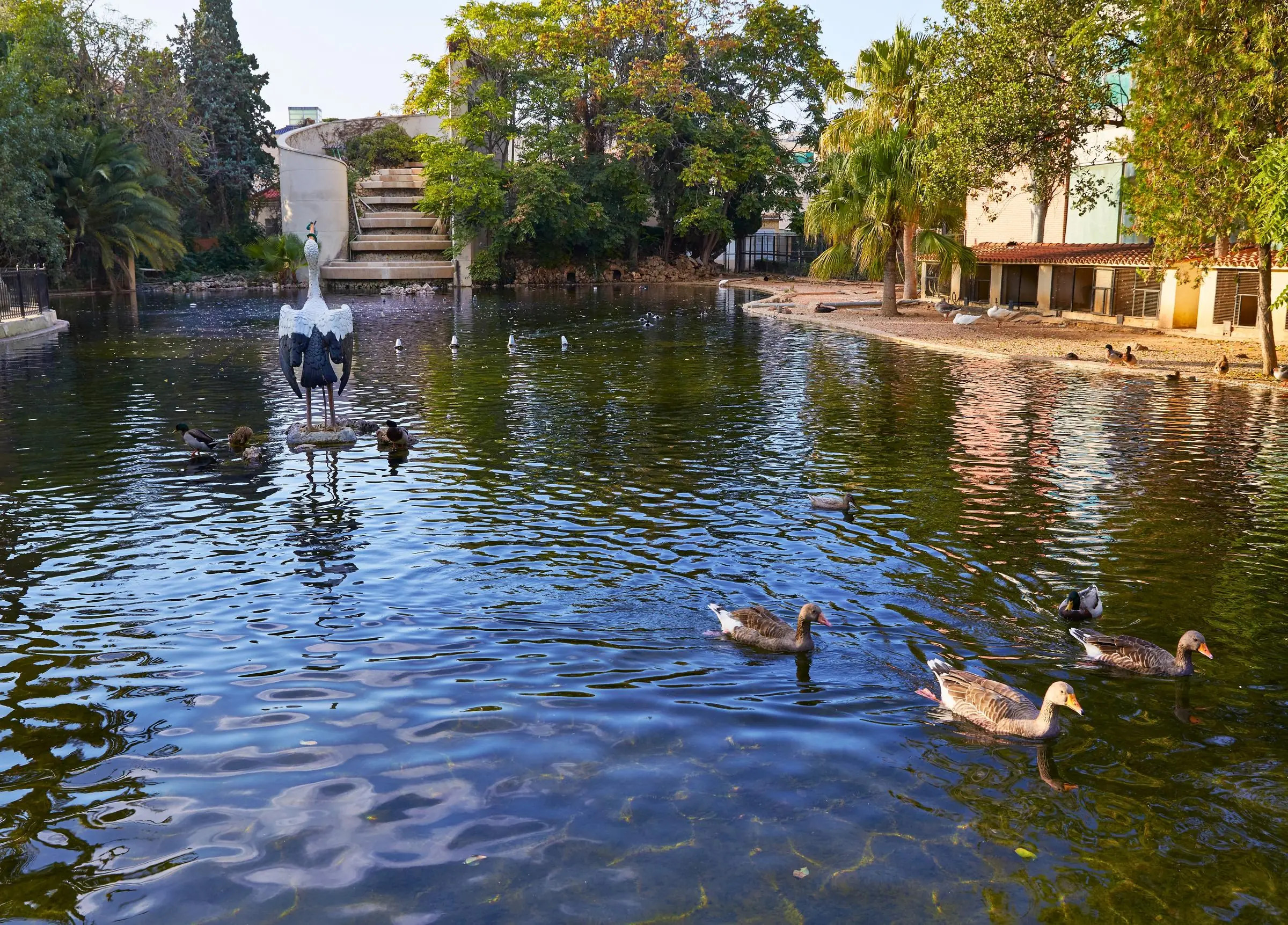
In the heart of the park, you will find a network of small ponds and aviaries. While the park used to house a full zoo (which was mercifully relocated to the much larger, modern Bioparc Valencia in 2008), the aviaries remain.
You will see peacocks roaming freely around this area, alongside enclosures for rescued birds, ducks, and swans. The sound of the water features and the dense bamboo groves make this the most popular spot for locals to read or nap on the grass.
5. Seasonal Christmas Garden (Les Llums de Vivers)
If you are visiting Valencia between late November and early January, the park transforms after dark. Les Llums de Vivers (The Lights of Viveros) is a seasonal installation that turns the botanical pathways into an illuminated winter wonderland.
The installation features millions of LED lights, projection mapping on the trees, and sculptural light tunnels. It requires a separate ticket and operates on a timed-entry system to prevent overcrowding.
Christmas Garden Tickets
Les Llums de Vivers: Christmas Garden
- Only operates during the winter holiday season.
- Timed entry slots; advance booking is highly recommended.
- Dress warmly, as the entire experience is outdoors at night.
Summer Concert Stages: Conciertos de Viveros
During the month of July, Valencia celebrates the Feria de Julio (July Fair). As part of the festivities, the northern esplanade of Jardines del Real is transformed into a massive outdoor concert venue known as Conciertos de Viveros.
The city sets up temporary stages, food trucks, and pop-up bars. The lineup usually features a mix of major Spanish pop and indie artists, alongside international touring acts.
Logistics for Concertgoers:
- Tickets: Must be purchased in advance through the official Feria de Julio website or authorized local vendors. They are not sold on standard tourist pass networks.
- Atmosphere: The vibe is incredibly relaxed. Because the concerts happen in the heat of July, doors usually don’t open until 8:00 PM, with headliners taking the stage around 10:00 PM when the air finally cools down.
- Mosquitoes: You are in a heavily irrigated park in the middle of summer. Bring insect repellent.
Getting There: Benimaclet Transit Links
Jardines del Real sits on the border of the historic center and the northern residential neighborhoods. The easiest way to reach the park is via the Benimaclet transit hub or the Facultats metro station.
Metro & Tram Options
- Facultats Station (Metro Lines 3, 5, 7, 9): This is the closest station. You exit right next to the university and the park’s eastern gates. Walk 2 minutes down Avenida de Blasco Ibáñez and you are inside.
- Benimaclet Station (Metro Lines 3, 9 & Tram Lines 4, 6): Located just north of the park. If you are staying near the beach, taking Tram Line 4 or 6 to Benimaclet is the most direct route. From the station, it is a straight 10-minute walk south down Calle del Guardia Civil to the park’s northern gates.
Walking from the Historic Center
If you are already exploring the Ciutat Vella, simply walk north to the Turia Gardens, cross the Puente del Real (Royal Bridge), and the main gates of Viveros will be directly in front of you, right behind the Museum of Fine Arts.
Keep Planning: If you want to see the city at your own pace without navigating the metro, the Hop-on Hop-off Bus has a dedicated stop right outside the Museum of Fine Arts, steps from the Jardines del Real entrance.
Where to Stay Near the Park
Staying near Jardines del Real means you are positioned between the medieval historic center (to the south) and the vibrant, student-heavy neighborhood of Benimaclet (to the north). It is an excellent area if you want to be close to the action but prefer sleeping in a quieter, greener environment.
Use the map below to find accommodations bordering the park or near the Facultats metro station.
Frequently Asked Questions
Is Jardines del Real the same as the Turia Gardens?
No. The Turia Gardens is the 9-kilometer linear park built in the drained riverbed. Jardines del Real (Viveros) is a separate, traditional botanical park that sits at street level, bordering the northern edge of the Turia.
How much does it cost to enter Jardines del Real?
The park itself is completely free to enter. The only costs inside are for the Natural Science Museum (approx. €2) or special seasonal events like the summer concerts or the winter light show.
Are there public bathrooms inside the park?
Yes, there are free public restrooms located near the central aviary and next to the Natural Science Museum. They are generally well-maintained, though bringing your own tissues is always a safe bet.
Can I ride a bike through the park?
Bicycles are allowed on the main, wide paved avenues of the park, but you must yield to pedestrians. Bikes are not allowed on the smaller dirt paths or inside the formal rose gardens.
Is there food or coffee available inside?
There is a small kiosk/café near the center of the park that sells coffee, cold drinks, and basic snacks. However, you are much better off walking 5 minutes into the nearby Benimaclet neighborhood for a proper meal or high-quality coffee.
Are dogs allowed in Jardines del Real?
Yes, dogs are welcome in the park but they must be kept on a leash at all times to protect the free-roaming peacocks and local wildlife.