When you look at a map of Valencia, you’ll notice a massive green ribbon curving around the historic center. This is the Jardín del Turia (Turia Gardens), a 9-kilometer public park built entirely inside a diverted riverbed.
It is the undisputed social and athletic hub of the city. On any given day, you will find thousands of locals commuting by bike, running on the dedicated athletic tracks, practicing yoga under the pine trees, or walking their dogs beneath centuries-old stone bridges. Because it sits below street level, the park is insulated from traffic noise, creating a surprisingly quiet cross-city corridor that connects the Bioparc in the west to the City of Arts and Sciences in the east.
This guide breaks down how to navigate the park’s massive footprint, where to rent bikes, and which sections are worth your time.
The 1957 Flood: How a River Became a Park
To understand the Turia Gardens, you have to understand why the river is gone.
On October 14, 1957, Valencia suffered the Gran Riada (Great Flood). Heavy rainfall caused the Turia River to breach its banks, flooding the city center with up to three meters of water. The catastrophe caused widespread destruction and loss of life. In response, the Spanish government initiated the “Plan Sur” (South Plan), a massive engineering project that diverted the river’s course three kilometers south of the city, emptying it directly into the Mediterranean.
By the 1970s, the old riverbed sat empty. The initial government plan was to pave it over and create a multi-lane highway to solve the city’s growing traffic problems. However, a massive citizen movement rallied under the slogan “El llit del Túria és nostre i el volem verd” (The bed of the Turia is ours and we want it green). The citizens won, and in 1986, the first sections of the park opened to the public.
Today, it stands as one of the most successful urban planning interventions in European history.
Look for the watermarks: As you walk through the historic center near the park, look closely at the walls of older buildings (like the Valencia Cathedral or the Serranos Towers). You can still spot faded plaques marking the exact water level during the 1957 flood.
How to Tackle the Park by Traveler Type
Walking the entire 9 kilometers in one go is a heavy lift (it takes about two hours at a brisk pace without stopping). Here is how to approach the park based on your travel style:
- For the Time-Poor: Don’t try to walk it all. Rent a bike near the historic center (around the Serranos Towers) and ride east toward the City of Arts and Sciences. It takes about 20 minutes of leisurely pedaling and gives you a great overview of the park’s changing landscapes.
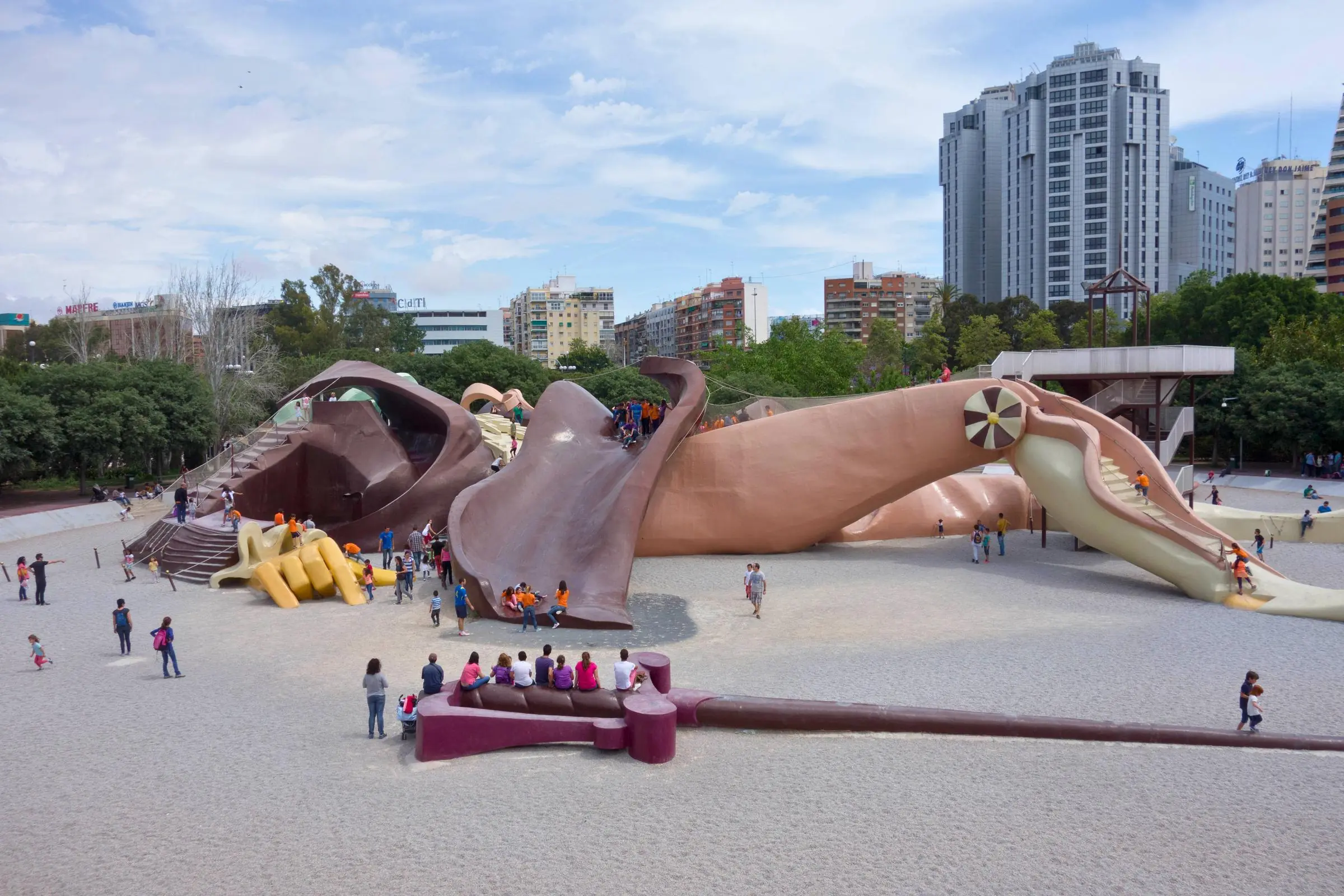
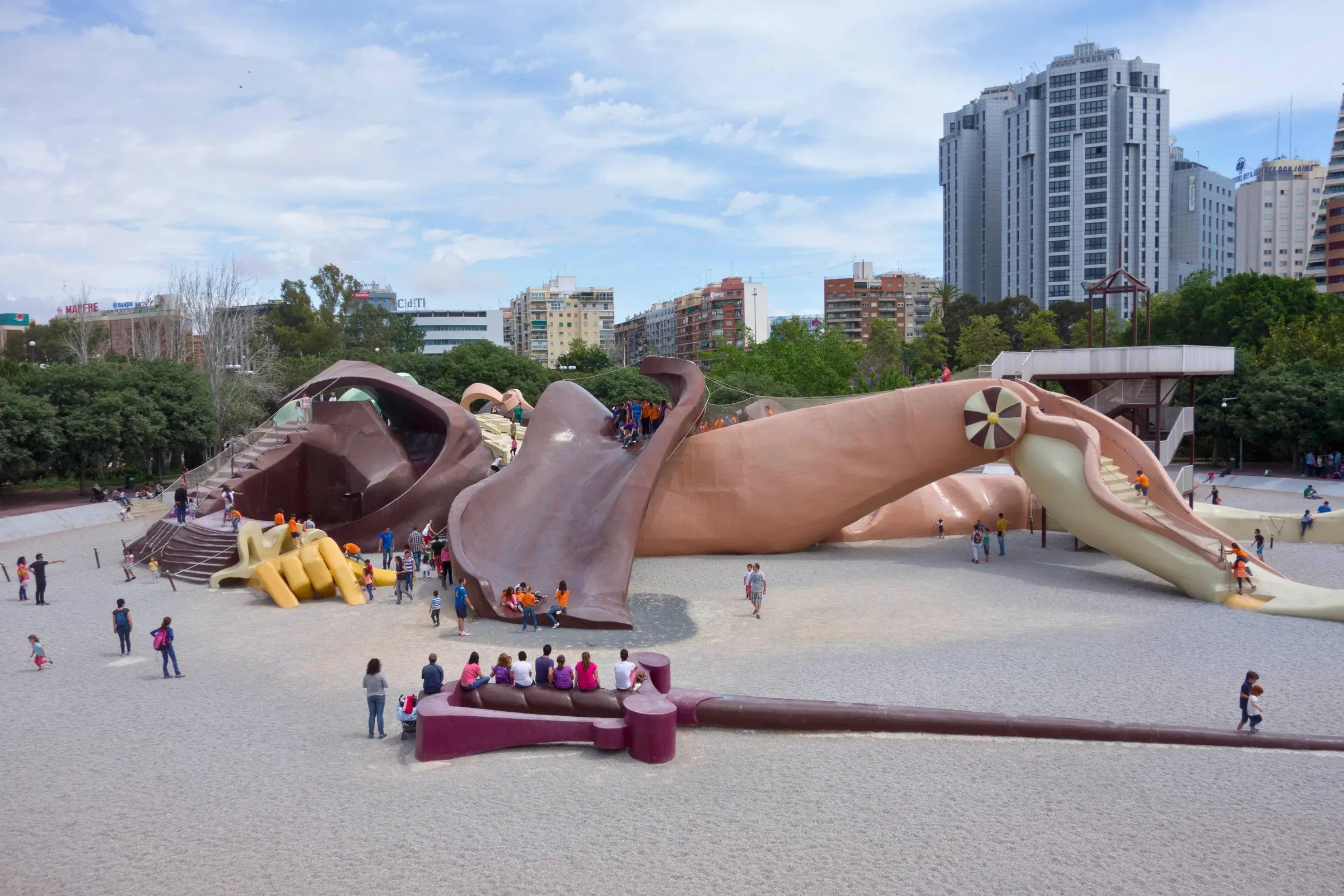
- For Families: Focus your energy on Section 12. This is where you’ll find Gulliver Park, a massive playground that will easily occupy kids for an hour. Afterward, you can walk east to the Science Museum, which has interactive exhibits.
- For Active Travelers: Bring your running shoes. The park features a dedicated, shock-absorbing 5K running track (the Circuit 5K) that is clearly marked and separated from pedestrian and bike traffic.
The 5 Key Vectors of Turia Gardens
The park is officially divided into 18 sections (tramos). To make it digestible, we’ve grouped the highlights into five distinct zones, moving from west to east.
1. Parque de Cabecera & The Swan Lake (West End)
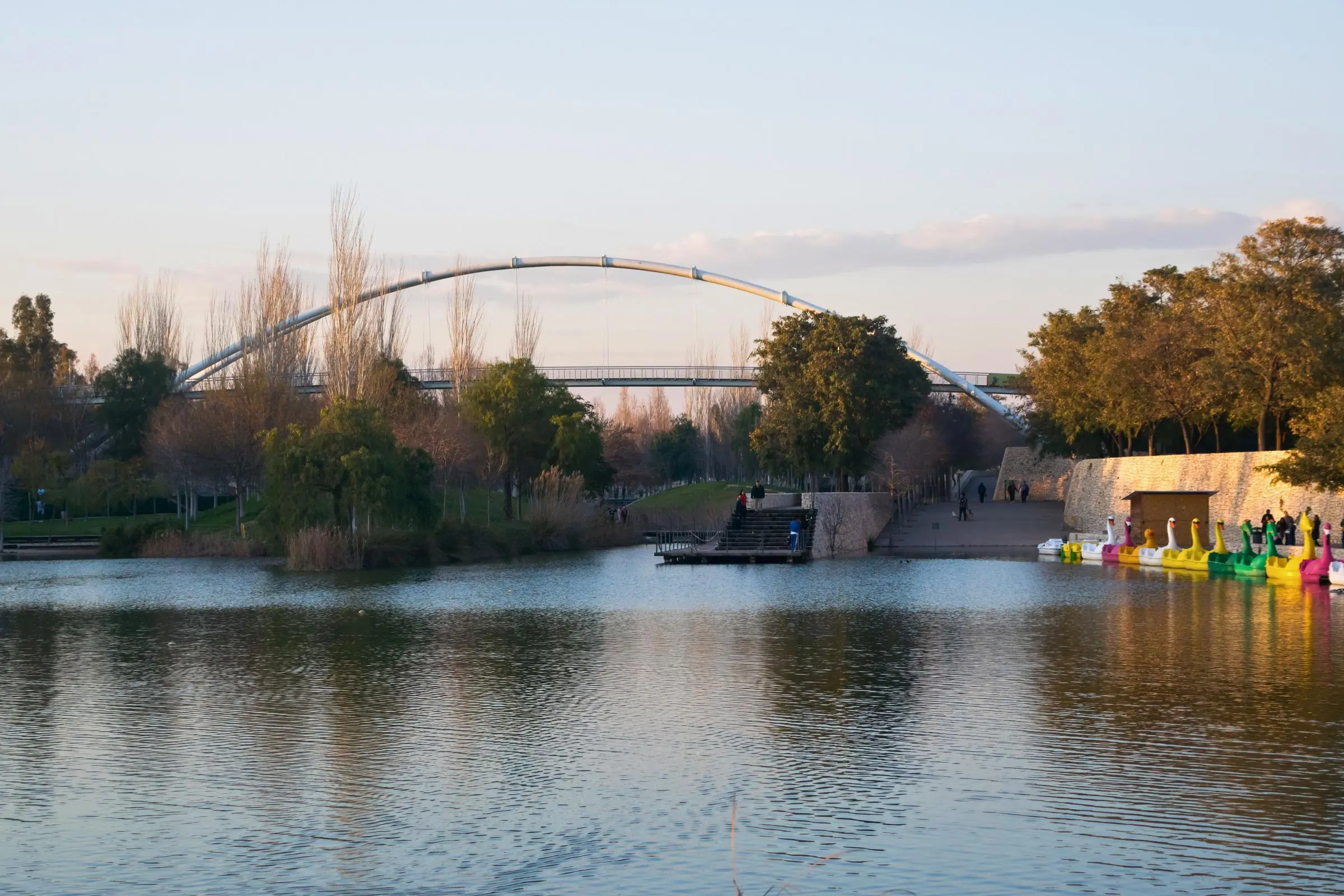
Located at the far western tip of the park, Cabecera Park feels more wild and less manicured than the rest of the Turia. The centerpiece is a large, artificial boating lake where you can rent swan-shaped pedal boats.
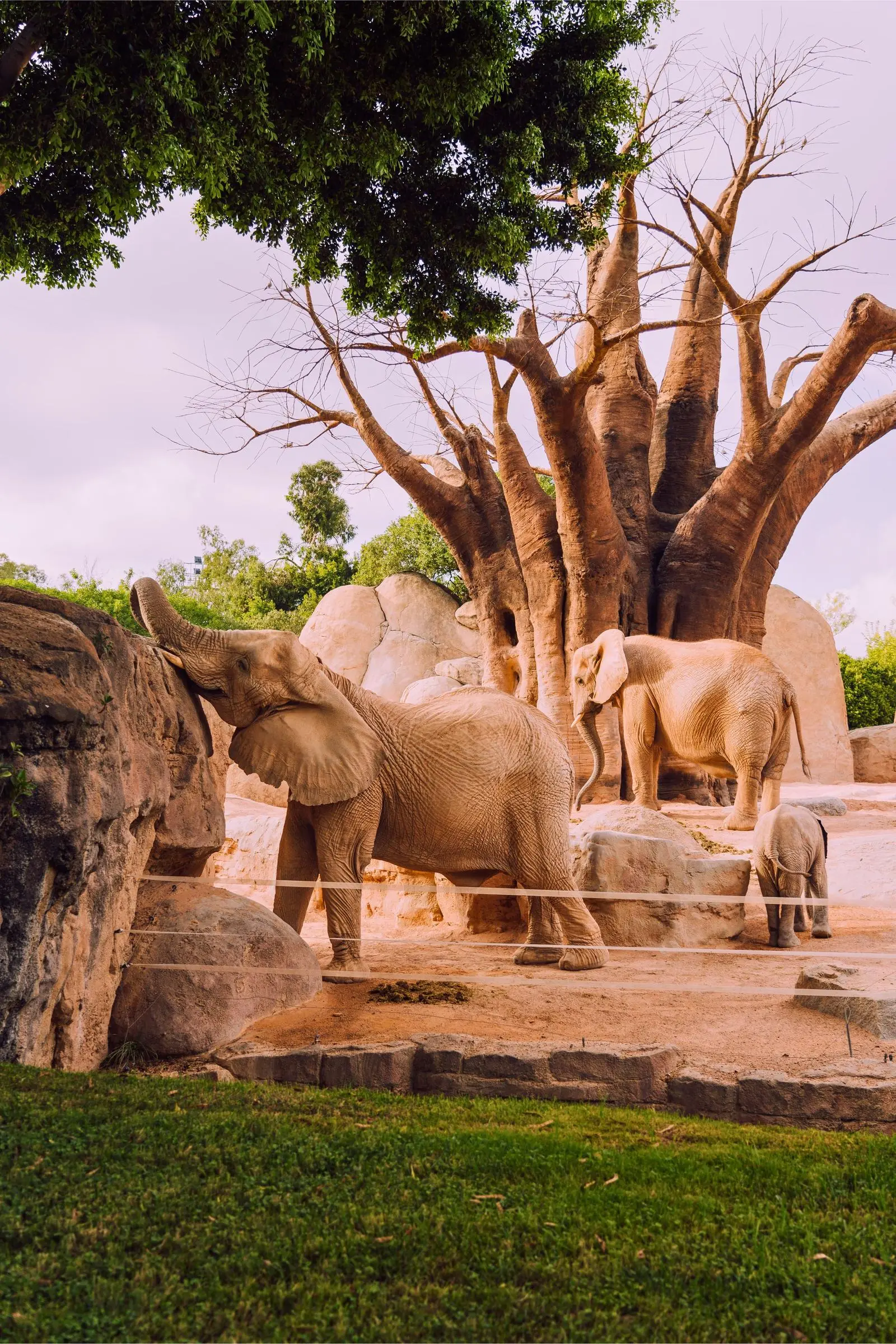
This area is heavily shaded by weeping willows and features large grassy hills perfect for picnics. It is also the direct entry point to the Bioparc Valencia, the city’s highly rated immersive zoo. If you are staying in the city center, you can take the Metro (Line 3 or 5) to Nou d’Octubre to start your walk here.
2. The Orange Groves & Athletic Tracks (Sections 1-6)
As you move east from Cabecera, the park transitions into a highly active zone. This stretch is characterized by dense groves of orange trees, palm-lined avenues, and extensive sports facilities. You’ll pass rugby pitches, baseball diamonds, and outdoor gyms.
This is where the Circuit 5K begins. Funded by the Trinidad Alfonso Foundation, this purpose-built running track uses a special resin and sand surface designed to reduce joint impact.
Stay in your lane: The park has strict lane etiquette. The brown resin path is for runners only. The paved grey paths are for bicycles and scooters. The dirt and tile paths are for pedestrians. Do not walk in the bike lane—locals commute fast and will ring their bells aggressively if you block the way.
3. The Historic Stone Bridges (Sections 7-9)
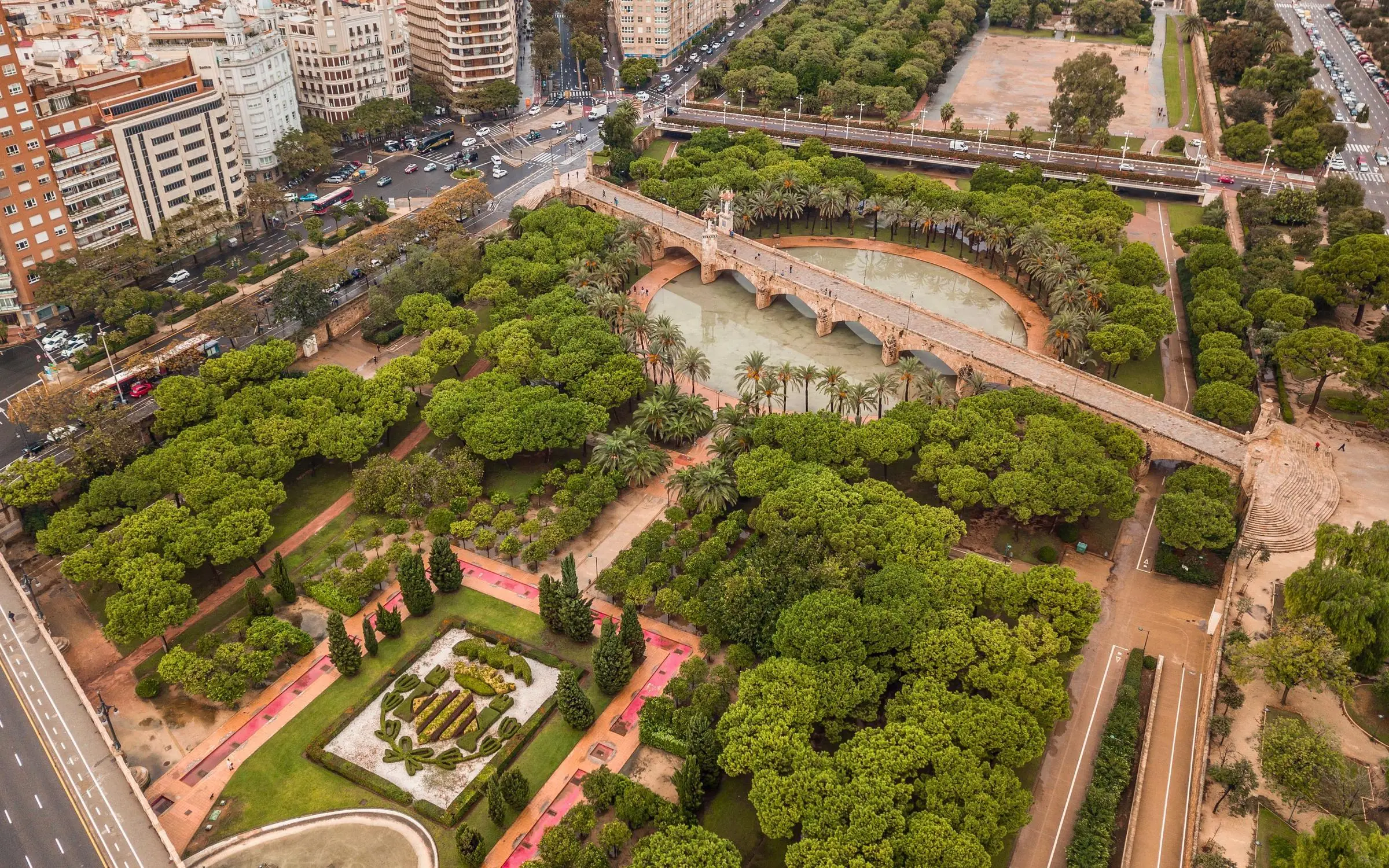
Because this was once a roaring river, the city is stitched together by 18 bridges. As you reach the historic center, you’ll pass beneath the oldest and most impressive of them.
- Puente de San José (17th Century): Features statues of San Luis Bertrán and San Tomás de Villanueva.
- Puente de los Serranos (16th Century): A pedestrian-only stone bridge that leads directly to the imposing Serranos Towers, the old medieval city gates.
- Puente de la Trinidad (15th Century): The oldest surviving bridge in the city, built in the Gothic style.
- Puente de las Flores (Modern): A newer bridge famously lined with thousands of potted flowers that are changed seasonally.
Walking under these bridges gives you a unique perspective on the city’s medieval engineering, and the shaded arches are a popular spot for buskers and street musicians.
4. Palau de la Música & The Fountains (Sections 10-11)
As you leave the old town behind, the park opens up into wide, formal French-style gardens. The focal point here is the Palau de la Música, a massive glass-domed concert hall.
In front of the Palau is a vast reflecting pool lined with fountains that occasionally perform synchronized water shows to classical music. The smooth, flat concrete surrounding the pool is the unofficial headquarters for Valencia’s roller-skating and skateboarding communities. It’s a great place to sit on the grass and people-watch.
5. Gulliver Park & The Approach to the Future (Sections 12-18)
Section 12 is home to Gulliver Park, one of the most unique playgrounds in the world. Based on Jonathan Swift’s Gulliver’s Travels, the playground is a massive fiberglass figure of Gulliver tied to the ground by the Lilliputians. His hair, arms, and legs form a complex network of slides, ramps, and climbing ropes. (Note: It is completely free to enter, but the slides get very hot by 2:00 PM in the summer. Wear long pants to avoid friction burns).
Past Gulliver, the landscaping becomes increasingly modern, featuring shallow water features and futuristic pergolas. This acts as the visual runway leading you directly into the spectacular, white-ribbed architecture of the City of Arts and Sciences.
Bike Rental Logistics & Cross-City Routes
Because the park is flat, paved, and completely free of cars, cycling is the absolute best way to experience it.
Renting a Bike
You have two main options: public bike share or private rental shops.
1. Valenbisi (Public Bike Share) Valencia’s public bike system has docking stations all over the city, including several just outside the park entrances. You can buy a short-term 7-day pass at any terminal with a credit card.
- Pros: Cheap, drop it anywhere.
- Cons: The bikes are heavy, clunky, and you only get the first 30 minutes free per ride (you must dock it and take another to avoid small overage fees).
2. Private Rental Shops If you want to ride the full length of the park without worrying about docking stations, rent a bike from a shop. There are dozens of rental shops clustered near the Serranos Towers and in the Ruzafa neighborhood.
City Bike Rental
- Classic Dutch-style city bike
- Includes lock and map
- Keep the bike from morning until evening
Highlights Bike Tour
- Local guide included
- Covers Turia Gardens and Old Town
- Great for first-time visitors wanting context
A Suggested 2-Hour Cycling Itinerary
If you rent a bike near the historic center, here is a simple, high-reward route:
The Classic Turia Ride
⏱️ Total: 2 hStart at Serranos Towers
Enter the park at the Puente de los Serranos. Take a moment to look up at the massive medieval gates before dropping down the ramp into the riverbed.
Ride East to Palau de la Música
Follow the grey bike path east. You’ll pass under several historic bridges and ride through the formal gardens until you reach the glass-domed concert hall and its reflecting pool.
Pass Gulliver Park
Continue east. You’ll see the giant Gulliver playground on your right. If you have kids, lock the bikes up here and take 30 minutes to explore.
Explore the City of Arts and Sciences
The park culminates at Santiago Calatrava’s futuristic complex. The bike paths weave right through the shallow blue pools surrounding the Hemisfèric and the Science Museum. This is the best photo spot in the city.
Continue to the Marina (Optional)
If you still have energy, the bike path continues past the Oceanogràfic, connects to the street-level bike lanes, and takes you straight to the Valencia Marina and Malvarrosa Beach in about 15 minutes.
Keep Planning: If you plan to visit the museums at the end of the park, check our guide to the City of Arts and Sciences for ticket tips and exhibit breakdowns.
Where to Stay Near the Park
Because the Turia Gardens wrap around the city, staying near the park is highly recommended. It gives you instant access to a quiet walking route and a fast bike commute to the beach or the museums.
- El Carmen (North Bank): Staying near the Serranos Towers puts you in the heart of the medieval old town, with immediate access to the historic bridge section of the park.
- L’Eixample / Ruzafa (South Bank): Staying near the Puente del Reino or Puente de las Flores puts you close to the city’s best restaurants and cafes, right in the middle of the park’s length.
Frequently Asked Questions
Are there public bathrooms in Turia Gardens?
Yes, but they are spread out. There are public facilities near Cabecera Park, Gulliver Park, and underneath several of the major bridges (often near the park maintenance sheds). The cleanest bathrooms are inside the Palau de la Música (during opening hours) or at the City of Arts and Sciences at the far east end.
Is it safe to walk in Turia Gardens at night?
Yes. The park is well-lit and heavily used by locals for jogging and dog walking well past 10:00 PM. However, like any large urban park, it empties out after midnight. Late at night, it is generally safer and more comfortable to walk on the street level rather than down in the riverbed.
Are there places to buy food or water in the park?
Yes. There are several small kiosks and outdoor cafes scattered throughout the park, particularly near the Palau de la Música and Cabecera Park, selling water, coffee, and ice cream. There are also free public drinking fountains located along the running tracks.
Can I bring my dog to the park?
Absolutely. Turia Gardens is incredibly dog-friendly. There are several fenced-in dog parks (parques caninos) along the route where dogs can run off-leash. Outside of these fenced areas, dogs must be kept on a leash.
Does the park ever flood now?
No. The Turia River was permanently diverted south of the city in the 1960s. The water you see in the park today (at Cabecera, the Palau de la Música, and the City of Arts) is from artificial, controlled decorative pools.
How long does it take to walk the whole park?
The park is roughly 9 kilometers (5.5 miles) long. Walking at a moderate pace from Cabecera Park in the west to the City of Arts and Sciences in the east will take about 2 to 2.5 hours without stopping.