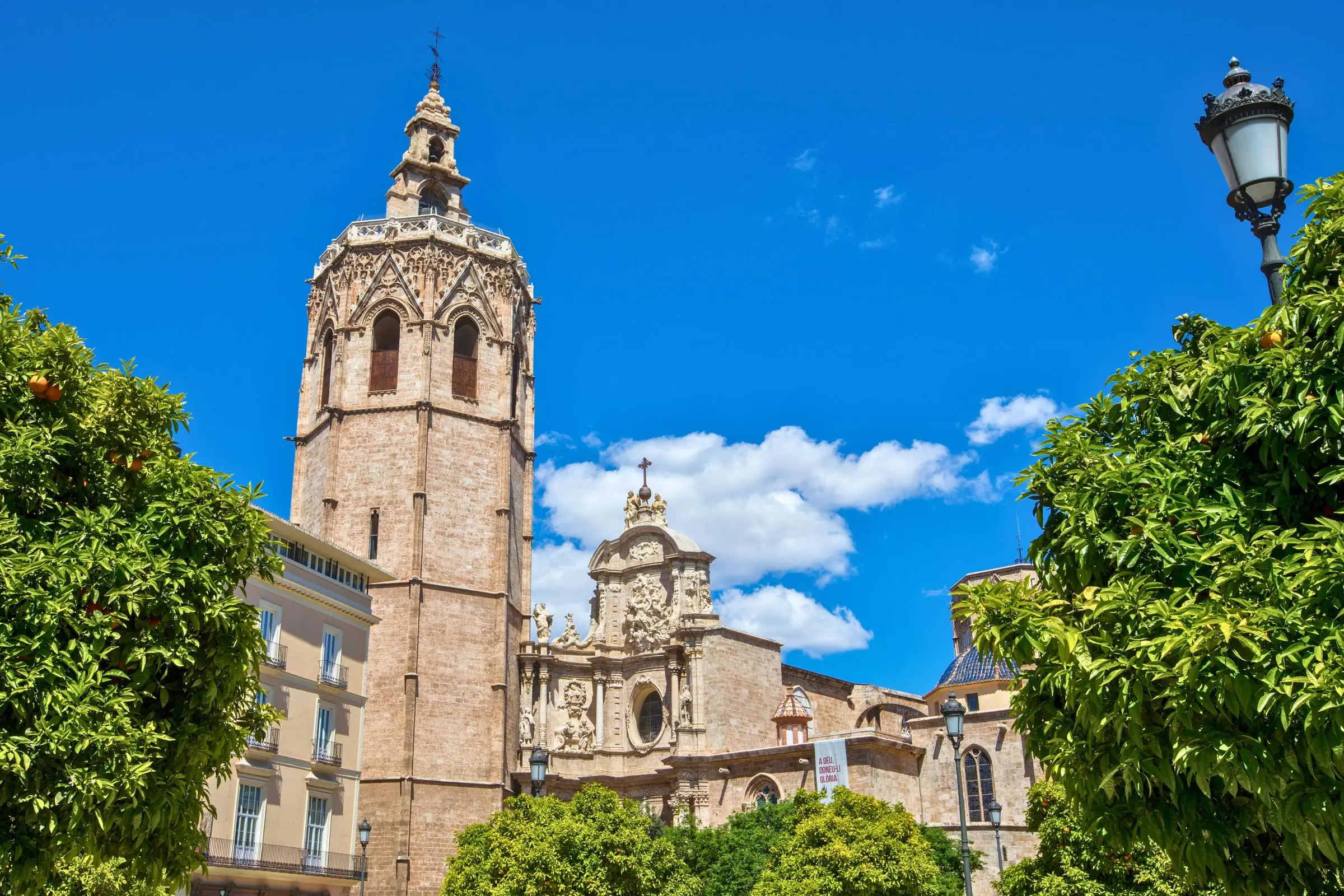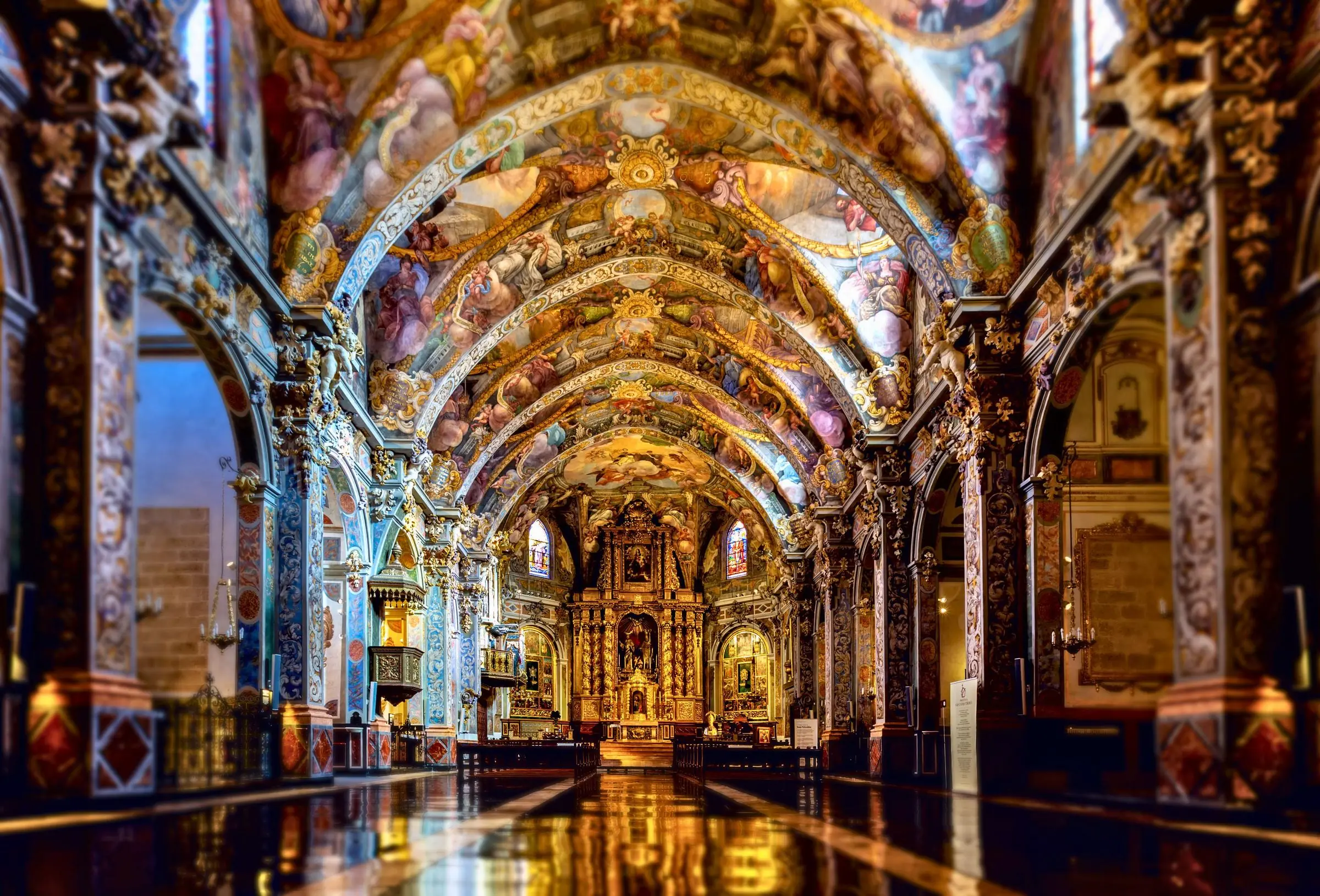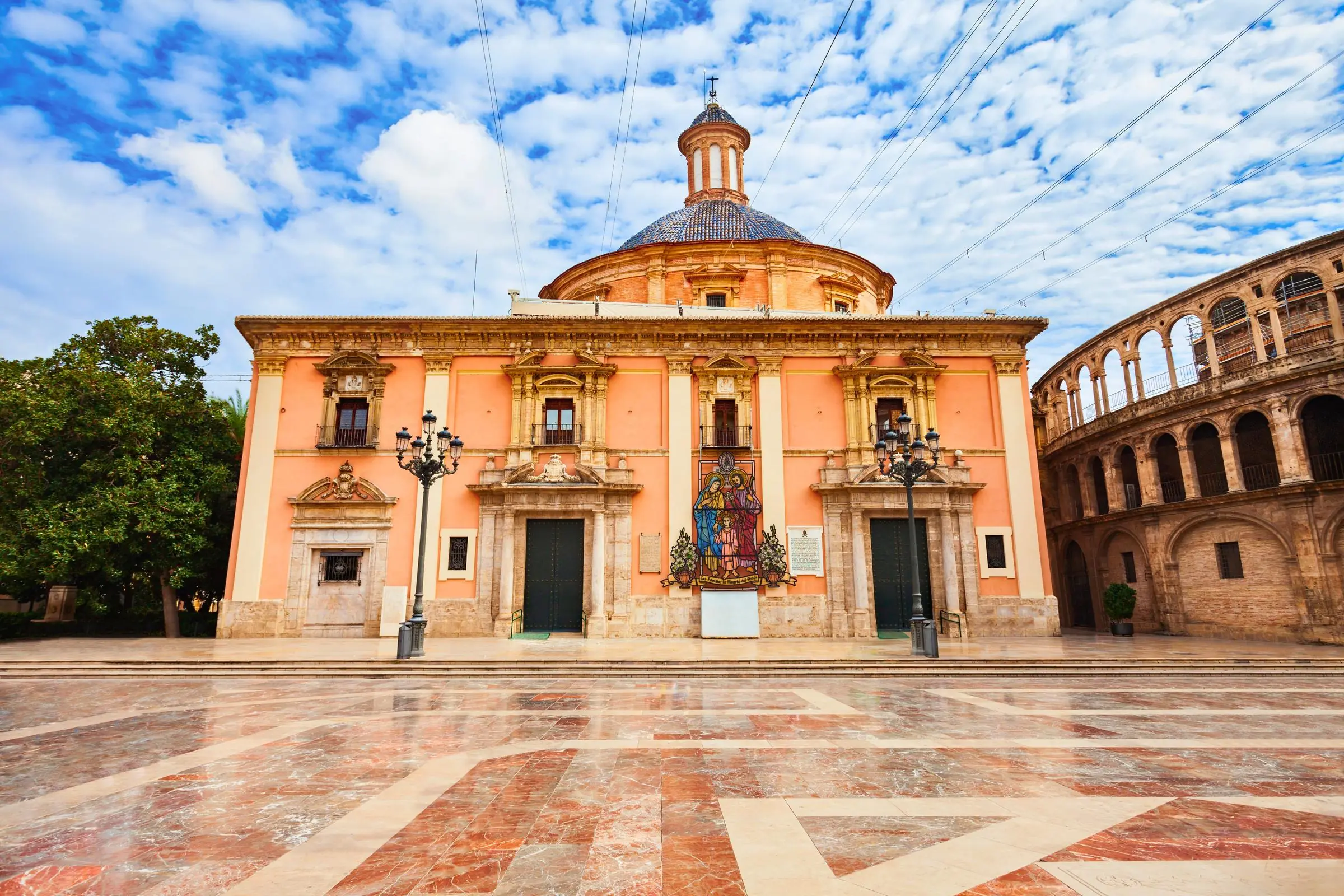
The Basilica de la Virgen de los Desamparados (Basilica of the Virgin of the Forsaken) is the spiritual epicenter of Valencia. While the neighboring Valencia Cathedral draws the bulk of international tourists, the Basilica is where locals go. Built between 1652 and 1667, it is the first newly built Baroque church in Valencia and holds the city’s patron saint.
Because it sits right on Plaza de la Virgen, you will almost certainly walk past it. But stepping inside reveals an unusual oval floor plan, a massive illusionistic dome, and centuries of layered history—including Roman tombstones embedded right into the exterior walls.
This guide breaks down exactly what to look for, how to navigate the active worship schedule, and how to fit it into your broader exploration of the Ciutat Vella.
Is the Basilica Right for Your Trip?
The Basilica is free to enter, but understanding how to approach it depends on your travel style.
- For the Time-Poor: You only need 10 to 15 minutes here. Step inside, look up at the dome, observe the statue above the altar, and step back out into the plaza. It’s an easy addition to a quick walk through the historic center.
- For Architecture & History Buffs: Plan for 30 to 45 minutes. The transition from Renaissance strictness to Baroque theatricality is on full display here. Take time to walk the exterior perimeter to spot the Roman inscriptions on the Plaza de la Almoina side.
- For Families: It is an active, quiet place of prayer, which can be tough for restless toddlers. Keep the visit brief. Point out the “rotating statue” to older kids as a neat piece of 17th-century engineering.
While the Basilica is free to enter on your own, its history is deeply tied to the Cathedral and the Silk Exchange. If you want context, a guided walking tour is highly recommended.
5 Highlights of the Basilica
Unlike standard cross-shaped basilicas, this sanctuary was designed with an off-center oval nave. This unique shape was chosen to fit the tight urban space between the Cathedral and the surrounding streets. Here is what you should focus on once you arrive.
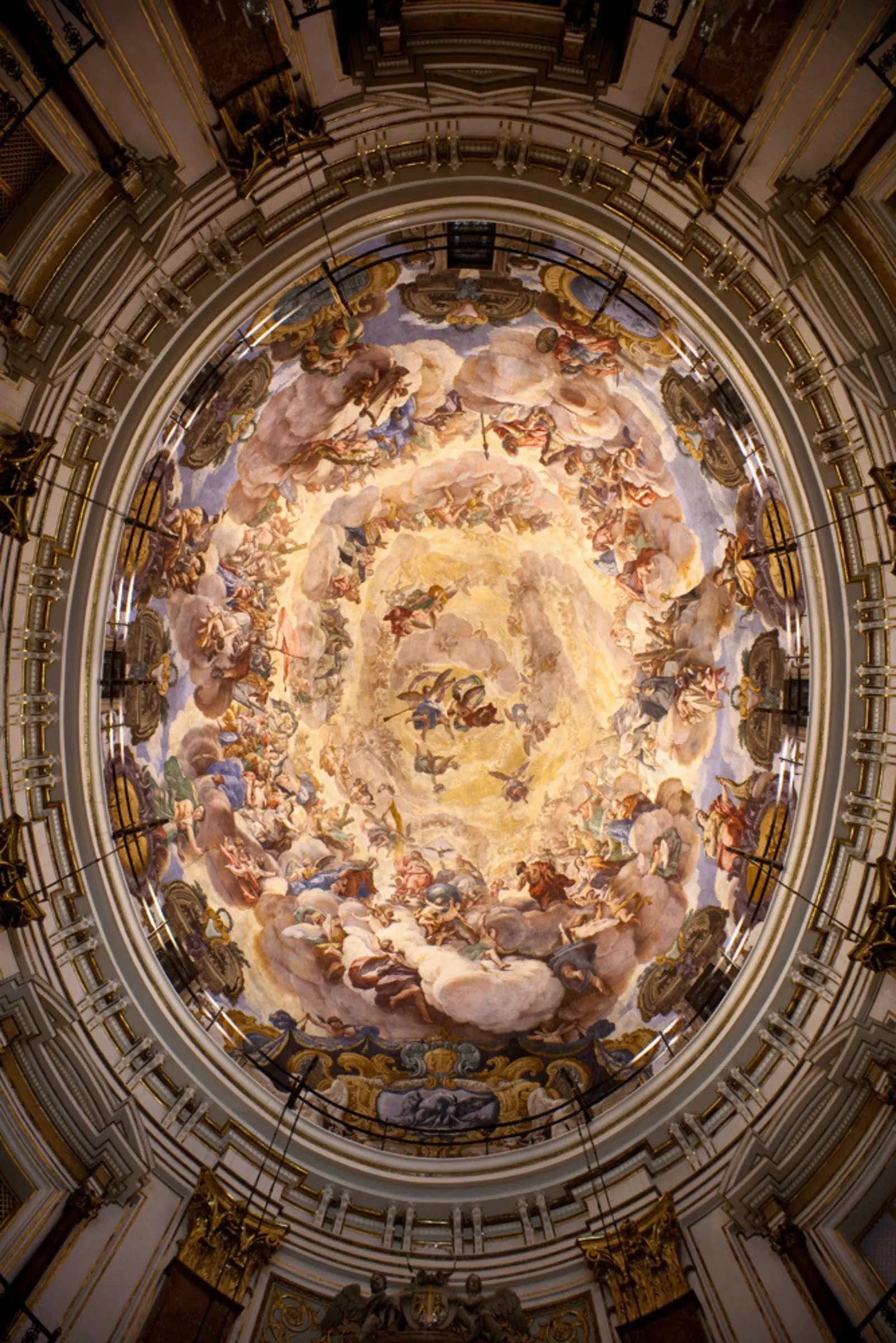
1. Antonio Palomino’s Vault Dome Frescoes
When you walk in, look straight up. The massive oval dome was painted in 1701 by Antonio Palomino, a court painter to King Charles II.
Palomino used a technique called trompe l’œil (deceiving the eye) to make the solid ceiling look like it opens up directly into the heavens. The fresco depicts the Holy Trinity, the Virgin Mary, and a host of angels and saints. It is considered one of the most important Baroque frescoes in Spain.
Local Tip: The best place to view the dome without straining your neck is by standing near the back of the nave, slightly off-center. The lighting is best in the mid-morning when the sun hits the upper lantern windows.
2. The Mechanical Rotating Statue
The focal point of the main altar is the statue of the Virgen de los Desamparados (Virgin of the Forsaken). The statue itself dates back to the 15th century and is characterized by her slight forward tilt—a posture that earned her the affectionate local nickname La Geperudeta (The Little Hunchback).
What many visitors miss is that the statue sits on a mechanical pivot. During regular mass, she faces outward into the main nave. However, she can be rotated 180 degrees to face the Camarín—a highly decorated, intimate chapel located directly behind the main altar. This allows devotees in the smaller chapel to pray directly to her face.
3. The Private Prayer Side Chapels
Because of the building’s oval shape, the side chapels are not deep, rectangular rooms like you find in Gothic churches. Instead, they are shallow, curved alcoves integrated smoothly into the walls.
These chapels are heavily used by locals for private prayer. You will often see people lighting candles or sitting quietly here, away from the flow of tourists in the center aisle. The artwork in these chapels features dark, moody Baroque paintings that contrast sharply with the bright, airy dome above.
4. Exterior Roman Tombstone Insertions
You don’t even need to go inside to see one of the building’s most fascinating features. Walk around the exterior of the Basilica to the back, facing the Plaza de la Almoina (near the archaeological center).
Look closely at the stone walls. When the Basilica was being built in the 1600s, workers unearthed ruins from Valentia Edetanorum—the original Roman city founded in 138 BC. Rather than discarding the stones, the builders incorporated several Roman tombstones and Latin inscriptions directly into the exterior walls. You can clearly see the carved Latin letters at eye level.
5. The Aerial Walkway Bridge
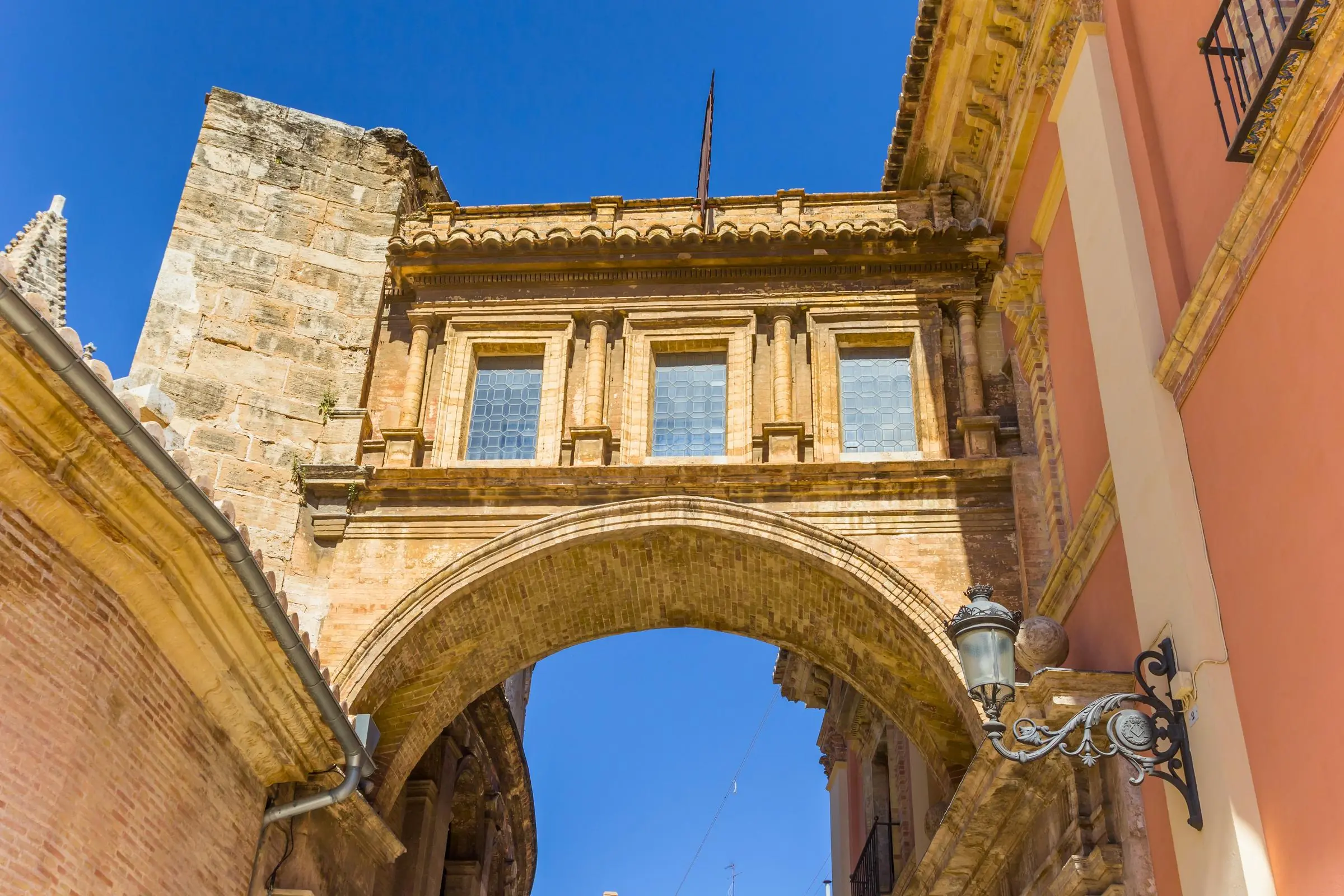
If you stand in Plaza de la Virgen and look at the narrow street separating the Basilica from the Cathedral (Calle de la Barchilla), you will see a beautiful Renaissance-style enclosed bridge connecting the two buildings.
Built in 1667, this aerial walkway allowed the clergy to move between the Cathedral and the Basilica without stepping out into the street. While it is closed to the public, it is one of the most photographed architectural details in Valencia.
How to Plan Your Visit
Logistics and Opening Hours
- Location: Plaza de la Virgen, Ciutat Vella.
- Entry Fee: Free.
- Hours: Generally open daily from 7:30 AM to 2:00 PM, and 4:30 PM to 9:00 PM. (Hours can fluctuate slightly based on the liturgical calendar).
- Dress Code: This is a strictly enforced active place of worship. Shoulders and knees must be covered. If you are wearing a tank top or short shorts, you will be asked to leave by the attendants at the door.
Getting There
The Basilica is entirely pedestrianized.
- By Metro: The closest station is Pont de Fusta (Tram Line 4) or Colón (Lines 3, 5, 7, 9), followed by a 10-minute walk through the old town.
- By Bus: EMT buses 4, 6, 11, 16, 26, 28, and 73 drop you near the edges of the historic center (Plaza de la Reina or Torres de Serranos).
Quick Tips for the Basilica
Entry is Free
- No tickets required.
- Avoid visiting during Sunday morning mass unless you are attending the service.
- Photography is allowed, but turn off your flash and be respectful of worshippers.
Combining the Basilica with the Cathedral
Because the Basilica and the Cathedral are practically touching, it makes sense to visit them back-to-back.
A Morning in Plaza de la Virgen
⏱️ Total: 2 h 30 minThe Basilica
Start here right when it opens after the morning rush (around 10:00 AM) to see the dome and the Roman inscriptions outside.
Valencia Cathedral
Walk next door to the Cathedral. You will need a ticket for this. Don’t miss the Holy Grail chapel and the Goya paintings.
Climb the Miguelete Bell Tower
Finish your morning by climbing the 207 steps of the Cathedral’s bell tower for panoramic views of the city.
If you prefer to have a guide explain the complex history of these buildings, there are several excellent walking tours that cover the area.
Keep Planning: For a deeper dive into the adjacent Cathedral and its claim to the Holy Grail, read our complete Valencia Cathedral Guide.
Where to Stay Nearby
Staying in the Ciutat Vella (Old Town) puts you within a five-minute walk of the Basilica, the Cathedral, and the Central Market. The area around Plaza de la Virgen is highly pedestrianized, making it quiet at night but busy during the day.
Frequently Asked Questions
Is there an entrance fee for the Basilica de la Virgen?
No, entry to the main nave of the Basilica is completely free. However, donations are accepted at the door and near the candle-lighting stations.
Can I walk across the bridge connecting the Basilica to the Cathedral?
No, the 17th-century aerial walkway is closed to the general public and is only used by the clergy. You can get excellent photos of it from the ground on Calle de la Barchilla.
How long does it take to visit the Basilica?
Most visitors spend about 15 to 20 minutes inside. If you want to study the Palomino frescoes in detail or walk around the exterior to find the Roman tombstones, allow for 30 minutes.
What is the dress code for the Basilica?
The dress code is strict. Both men and women must have their shoulders and knees covered. Hats must be removed upon entering. Attendants will turn away visitors in beachwear or revealing clothing.
When is the best time to see the Palomino frescoes?
Mid-morning (around 10:30 AM to 11:30 AM) offers the best natural lighting through the dome’s lantern windows, illuminating the frescoes without the need for artificial light.
Why is the statue called 'La Geperudeta'?
The original 15th-century statue was designed to be placed flat on the coffins of the deceased, with her head resting on a pillow. When the statue was later stood upright, this posture gave her a slight forward tilt, leading locals to affectionately call her La Geperudeta (The Little Hunchback).