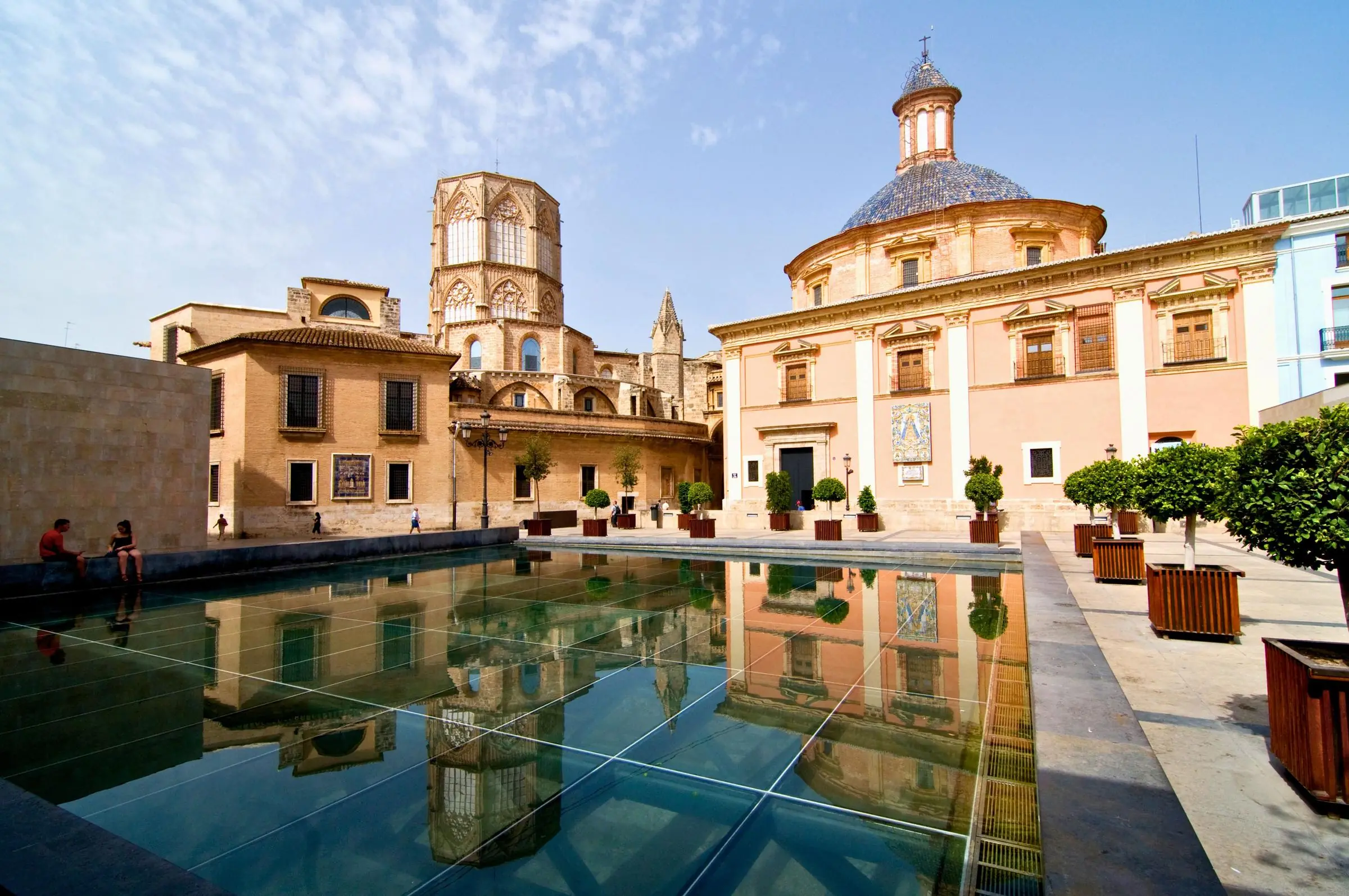
Tucked away in a narrow, quiet alley in the Ciutat Vella, the Baños del Almirante (Baths of the Admiral) is a rare architectural survivor. While Valencia is famous for its futuristic science museums and grand Gothic cathedrals, this small, unassuming building offers a direct window into the daily social life of the 14th century.
Best of all? It is completely free to enter.
If you are exploring the historic center, this compact site takes only 20 to 30 minutes to visit, making it an easy addition to your itinerary. Here is everything you need to know about the history, the architecture, and how to plan your visit to Valencia’s medieval bathhouse.
A Brief History: Islamic Style in a Christian City
There is a common misconception that the Baños del Almirante are “Arab Baths” left over from the Moorish rule of Valencia. In reality, they were built in 1313 by Pere de Vilarasa, a knight and nobleman, well after King James I conquered the city for the Christians in 1238.
So why do they look Islamic?
Even after the Christian reconquest, the bathing culture and architectural techniques of the Moors remained highly influential. The baths were constructed by Mudéjar craftsmen (Muslims who remained in Iberia after the Christian conquest) using traditional Islamic bathhouse layouts. For centuries, public baths were essential for hygiene, as private plumbing did not exist for the masses. They were also vital social hubs. Men and women bathed on separate days, and despite strict rules against gambling and prostitution, historical records suggest the local authorities frequently had to step in to enforce order.
The 19th-Century “Fake” Restoration: In the 19th century, the baths were remodeled in a Neo-Arab style to look more Moorish, adding ornate tiles and plasterwork that were never part of the original 1313 design. A major restoration in the 1980s stripped away these romanticized additions, returning the building to its authentic, austere 14th-century masonry.
The baths operated continuously until the 20th century, making them one of the longest-running public bathhouses in Europe. Today, they are a dry museum protected by the Generalitat Valenciana.
5 Structural Highlights to Look For
The Baños del Almirante follow the classic hammam structure, divided into three main temperature zones. As you walk through the building, pay attention to these five specific architectural details.
1. The Mudéjar Horseshoe Arches
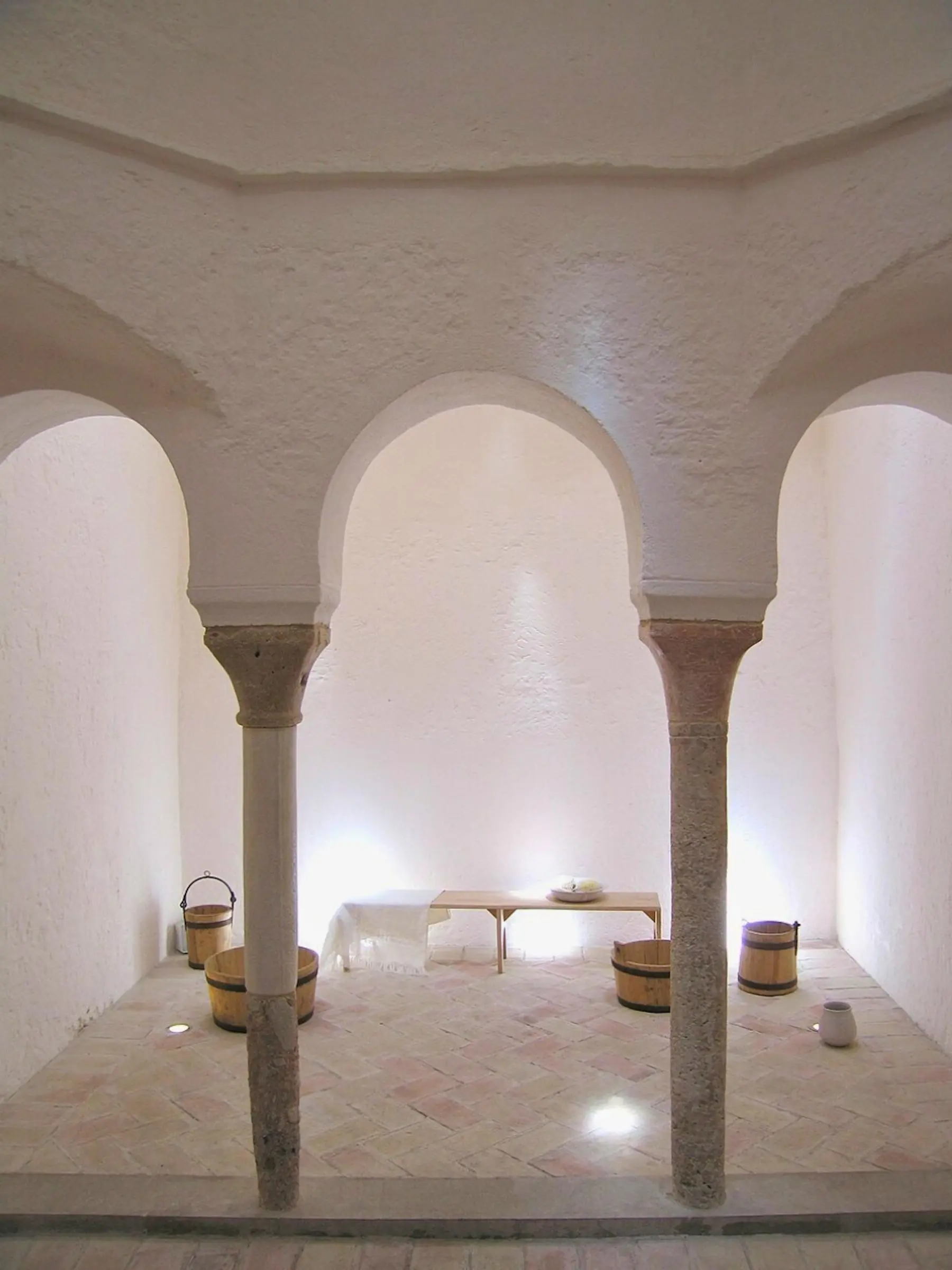
As you enter the vestibule (the original reception and locker area), you will immediately notice the distinct horseshoe arches. These arches are a hallmark of Islamic and Mudéjar architecture. They bear the weight of the thick walls while providing a graceful, curved aesthetic that separates the entrance from the bathing areas.
2. The Cold Room (Sala Freda / Frigidarium)
The first room you enter is the cold room. Historically, this was a transitional space. Bathers would come here to cool down, splash themselves with cold water from a central basin, and relax after their hot steam sessions. The room is rectangular with a simple vaulted ceiling, designed to keep the air temperature low.
3. The Warm Room (Sala Tèbia / Tepidarium)
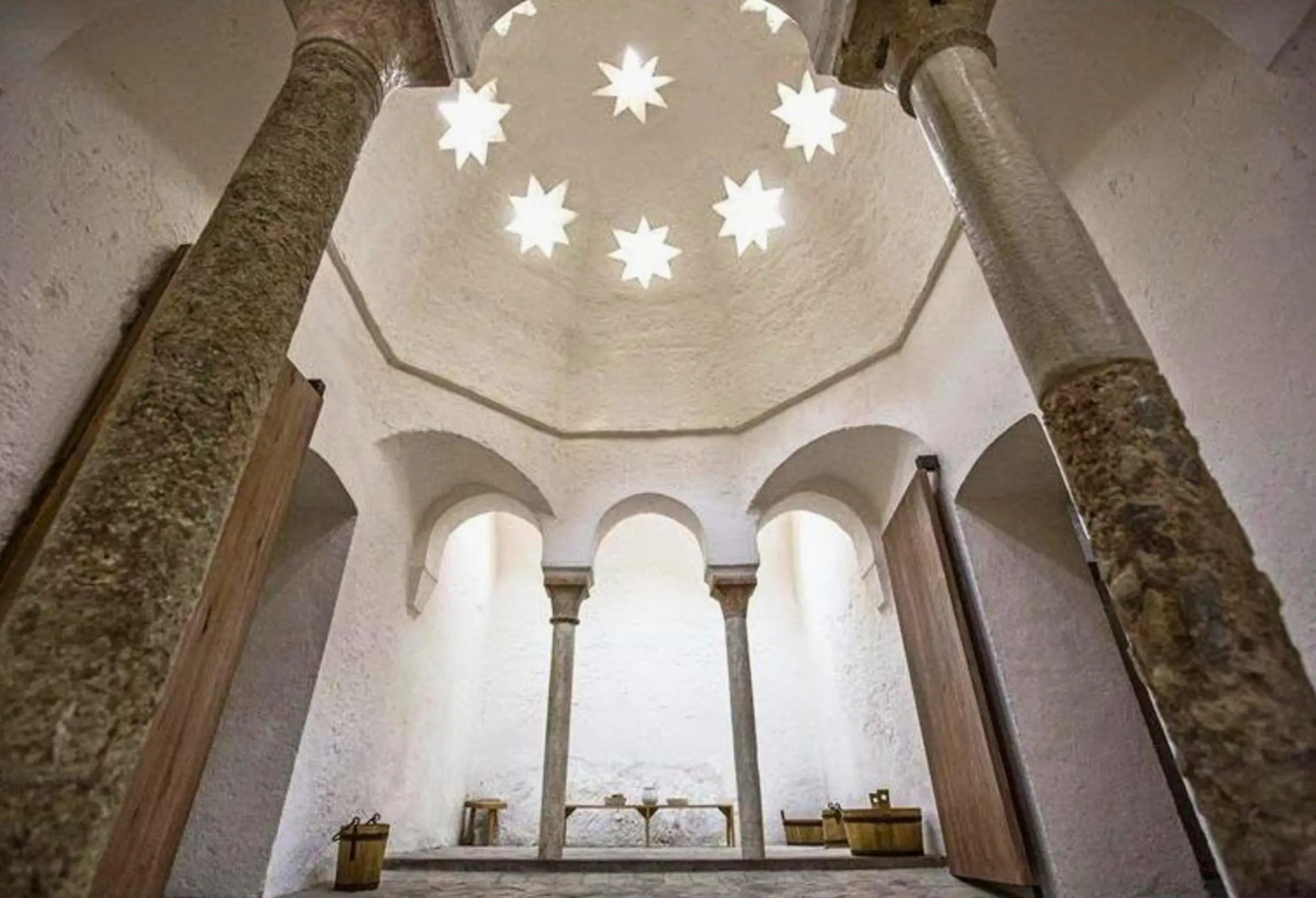
This is the largest and most visually striking room in the complex. It is divided into three naves by thick columns. Bathers spent most of their time here, socializing, getting massages, and acclimatizing to the heat.
Look up at the ceiling to see the star-shaped skylights (lucernarios). These eight-pointed stars are fitted with colored glass. They served a dual purpose: they allowed natural light to filter into the dark, steamy room, and they could be opened or closed to regulate the temperature and let excess steam escape.
4. The Hot Room (Sala Calenta / Caldarium)
The smallest of the three main rooms is the hot room, located directly above the boiler. This room functioned like a modern steam room or sauna. The floor was heated from below using a Roman-style hypocaust system—a network of underground pillars that allowed hot air and smoke from the furnace to circulate directly under the stone floor. Bathers would wear wooden clogs to keep their feet from burning.
5. The Ancient Boiler Furnace
At the very back of the complex, you can view the remains of the original furnace and boiler area. This is where workers (often slaves or low-paid laborers) would continuously burn firewood to heat the massive copper cauldrons of water. The hot water was piped into the baths, while the smoke and hot air were channeled under the floor of the hot room and up through flues in the walls.
How to Visit (Logistics & Practical Tips)
The Baños del Almirante is a small, straightforward attraction, but knowing the logistics will help you slot it seamlessly into your day.
- Location: Carrer dels Baños del Almirante, 3-5. It is located just a two-minute walk from the Valencia Cathedral and the Almoina Archaeological Center.
- Entry Fee: Permanent free entry. No tickets or advance reservations are required.
- Opening Hours: Generally open Tuesday to Friday from 10:00 AM to 6:00 PM, and Saturdays from 10:00 AM to 2:00 PM. Closed on Sundays, Mondays, and major public holidays. (Always verify current hours on the official tourism board site before visiting).
- Duration: You only need about 20 to 30 minutes to see the entire complex.
- Accessibility: The entrance and main rooms are on the ground floor, but the historical nature of the building means there are some uneven stone floors and narrow doorways. Wheelchair users can access the main rooms, but navigating the tighter corners may require assistance.
While the baths are free to enter on your own, the surrounding medieval streets are full of hidden history. Consider booking a guided walking tour to get the full context of the Ciutat Vella. View Walking Tours
Advice for Different Traveler Types
For the Time-Poor
If you only have a weekend in Valencia, you might wonder if this is worth a stop. Because it is free and takes less than half an hour, it is incredibly easy to fit in. We recommend visiting immediately after seeing the Cathedral and before heading south toward the Marqués de Dos Aguas Palace.
For Budget Travelers
This is one of the best free historical sites in the city. To make a completely free (or very cheap) morning out of it, pair the baths with a walk through the Turia Gardens and a visit to the nearby Almoina Archaeological Center (which is free on Sundays and public holidays).
If you plan on using public transport and visiting paid museums later, grab the 24, 48, or 72-Hour Valencia Tourist City Card to save money on buses, trams, and municipal museum entries.
For Families
Kids usually enjoy the Baños del Almirante because it is highly visual and doesn’t require reading long plaques to appreciate. The star-shaped colored glass on the ceiling and the underground furnace are easy concepts for children to grasp. Plus, since it’s a quick visit, you won’t test their attention spans.
What to Pair with the Baths
Because the bathhouse is so central, you are within a five-minute walk of several major Valencia landmarks. Here are the top nearby sites you should consider booking in advance:
Top Nearby Attractions in the Ciutat Vella
Valencia Cathedral & Holy Grail
- Just a 2-minute walk away.
- Climb the Miguelete bell tower for city views.
- Home to the Vatican-recognized Holy Chalice.
La Lonja de la Seda
- A 10-minute walk through the Old Town.
- Valencia’s 15th-century Silk Exchange.
- Stunning Gothic twisted columns.
Church of San Nicolás
- Known as the “Sistine Chapel of Valencia.”
- Incredible Baroque frescoes covering the ceiling.
- Includes an excellent audio guide.
Keep Planning: If you want to dive deeper into the city’s Roman and medieval roots, check out our guide to the Almoina Archaeological Center, located just around the corner from the baths.
Where to Stay Nearby
The Baños del Almirante is located in the heart of the Ciutat Vella (Old Town), specifically in the La Seu neighborhood. This is arguably the best area to stay in Valencia if you want to be within walking distance of historical sites, tapas bars, and the central market.
Use the map below to find hotels and apartments near the baths.
Frequently Asked Questions (FAQ)
Are the Baños del Almirante Roman baths?
No. While they use a Roman-style hypocaust underfloor heating system, they were built in 1313 during the medieval Christian era, using Islamic (Mudéjar) architectural designs. If you want to see Roman ruins in Valencia, visit the nearby Almoina Archaeological Center.
Can you actually bathe in the Baños del Almirante?
No, the building is a preserved historical monument and operates as a dry museum. There is no water in the pools, and bathing is not permitted.
Do I need to book tickets in advance?
No. Entry is completely free and you do not need a ticket. You can simply walk in during opening hours. If the building is at capacity (which is rare), you may be asked to wait outside for a few minutes.
How long does a visit take?
The complex is quite small, consisting of a vestibule, three thermal rooms, and a furnace area. Most visitors spend between 15 and 30 minutes exploring the site.
Is there an audio guide available?
There is no official audio guide provided at the door, but there are informational plaques (in Spanish, Valencian, and English) in each room that explain the architecture and history clearly.
Is the site air-conditioned?
Because it is a 14th-century stone building, it does not have modern central air conditioning. However, the thick stone walls naturally keep the interior relatively cool, even during the hot Valencia summers.