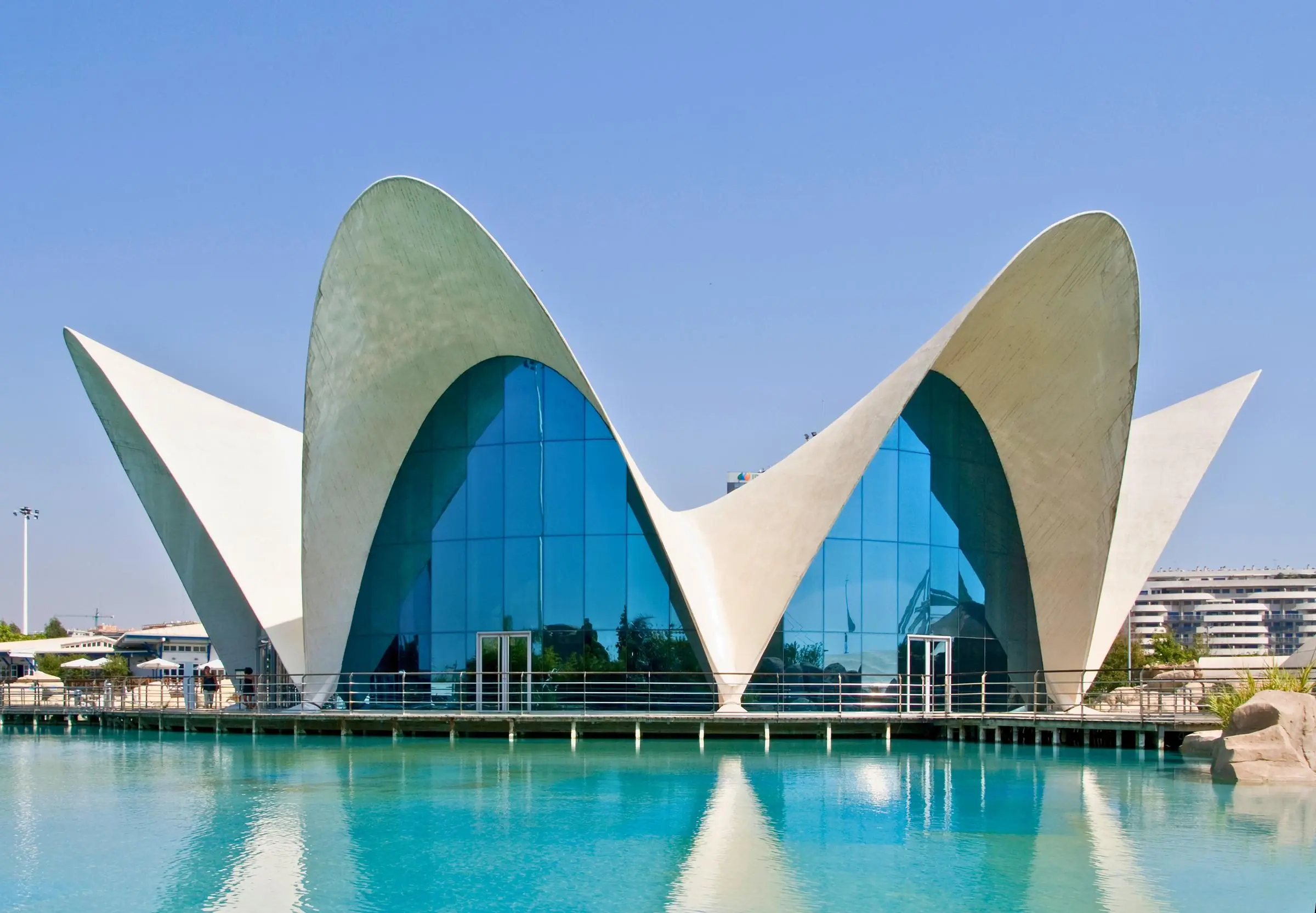
Stretching for two kilometers at the eastern end of the Turia Gardens, the City of Arts and Sciences (Ciudad de las Artes y las Ciencias) is Valencia’s most recognizable landmark. Designed primarily by local architect Santiago Calatrava, this sprawling complex of white concrete, glass, and shallow reflection pools looks like a space station dropped into the Mediterranean.
Because the complex is so large—and because it houses multiple distinct venues with separate entry fees—planning a visit can be confusing. You can easily spend an entire day here, or you can simply walk through the exterior for free in an hour.
This guide breaks down the architecture, compares the multi-venue combo tickets, and provides practical advice for dealing with the complex’s notorious lack of shade.
How to Approach the Complex
Your strategy for visiting depends heavily on your budget, your travel companions, and how much time you have in Valencia.
- For the Time-Poor: If you only have a weekend in Valencia, do not spend a full day inside the museums. Instead, rent a bike or book a guided Segway tour to glide through the exterior pathways. The buildings are most impressive from the outside.
- For Families: The Oceanogràfic (aquarium) and the Science Museum are the main draws for children. The Science Museum is highly interactive, and the aquarium is the largest in Europe. Buy a two-venue combo ticket and dedicate about 5 to 6 hours to both.
- For Budget Travelers: You do not need a ticket to walk around the complex. The promenades, the reflection pools, and the L’Umbracle garden are completely free to access.
The Heat Factor: The City of Arts and Sciences is built almost entirely of bright white concrete and glass. In July and August, it acts like a solar reflector. Visit the exterior early in the morning or late in the evening to avoid the intense midday heat.
5 Structural Highlights: A Deep Dive
Santiago Calatrava’s designs are heavily inspired by nature—specifically skeletons, eyes, and marine life. Even if you don’t go inside, understanding what you are looking at makes the walk much more interesting.
1. L’Umbracle (The Promenade)
This is the gateway to the complex. L’Umbracle is a 320-meter-long, open-air arcade covered by a series of 55 fixed arches and 54 floating arches. Inside, it functions as a landscaped garden filled with palm trees, bougainvillea, and rosemary—plants indigenous to the Valencian community.
- Practical Tip: This is one of the few places in the complex with consistent shade. It is free to walk through during the day. On summer nights, the eastern end turns into an upscale outdoor nightclub (Mya/L’Umbracle Terraza).
2. Palau de les Arts Reina Sofia (The Opera House)
Standing 75 meters tall, this is the tallest opera house in the world. Its sweeping, curved roof resembles a Spartan helmet or the shell of a deep-sea crustacean. The exterior is covered in trencadís—a mosaic made from broken white ceramic tiles, a technique popularized by Antoni Gaudí.
- Inside: It houses four distinct auditoriums for opera, theater, and classical music. If you want to see the interior without buying a concert ticket, you can book a guided backstage tour.
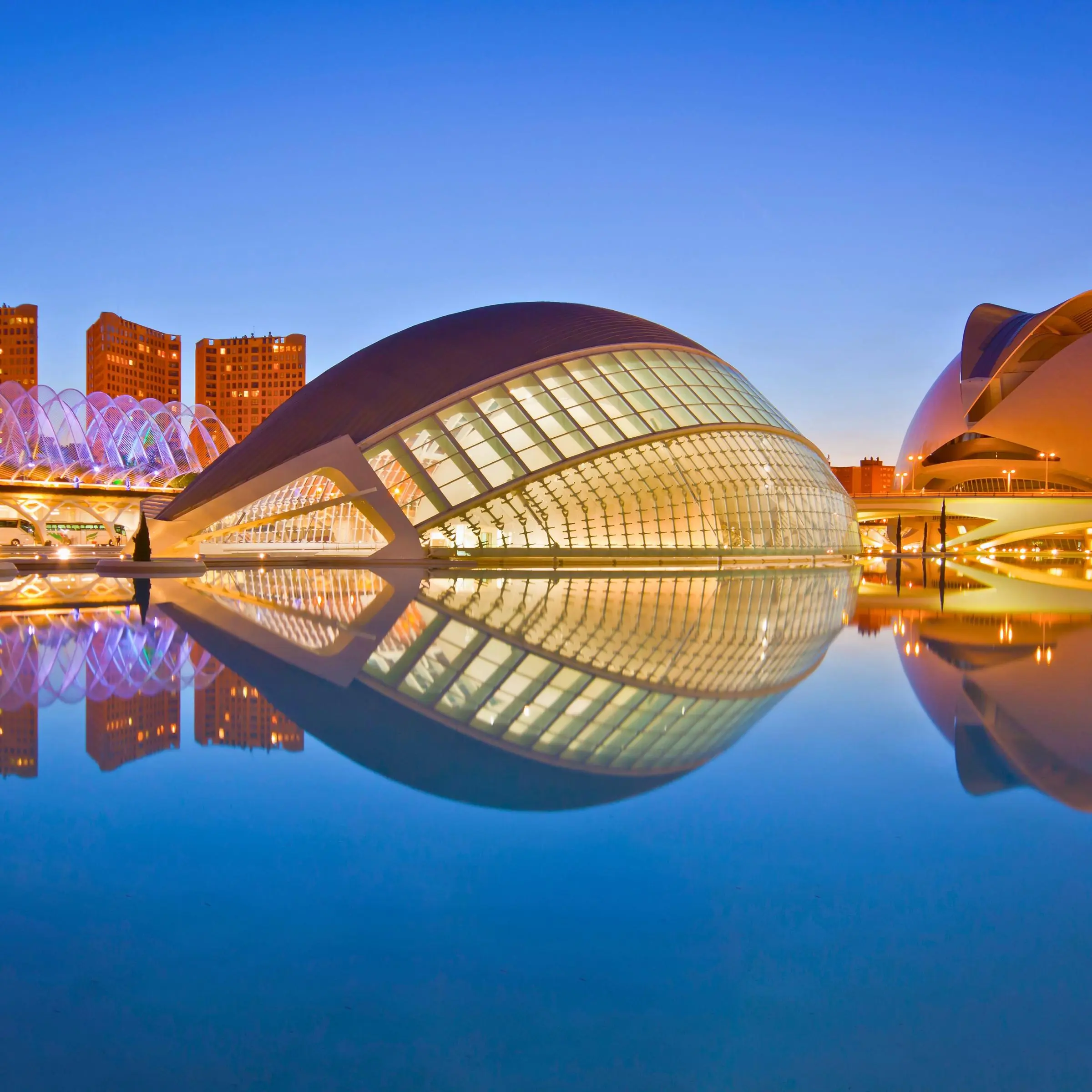
3. Hemisfèric (The Eye)
The first building completed in the complex (1998), the Hemisfèric is designed to look like a giant human eye. The “pupil” is an IMAX dome theater, and the “eyelid” is made of glass and steel awnings that can actually open and close. When viewed across the adjacent 24,000-square-meter reflection pool, the reflection completes the oval shape of a full eye.
- Inside: It shows 45-minute 3D and IMAX documentaries. You can book skip-the-line tickets for specific showtimes.
4. Museu de les Ciències Príncipe Felipe (The Whale Skeleton)
This massive, asymmetrical building looks like the bleached ribcage of a prehistoric whale. It is 220 meters long and relies on a complex geometry of repeating white concrete ribs.
- Inside: It is a three-story, interactive science museum. While the architecture is stunning, the exhibits inside are geared heavily toward school-aged children. If you are an adult without kids, you might prefer to just admire the Science Museum from the outside.
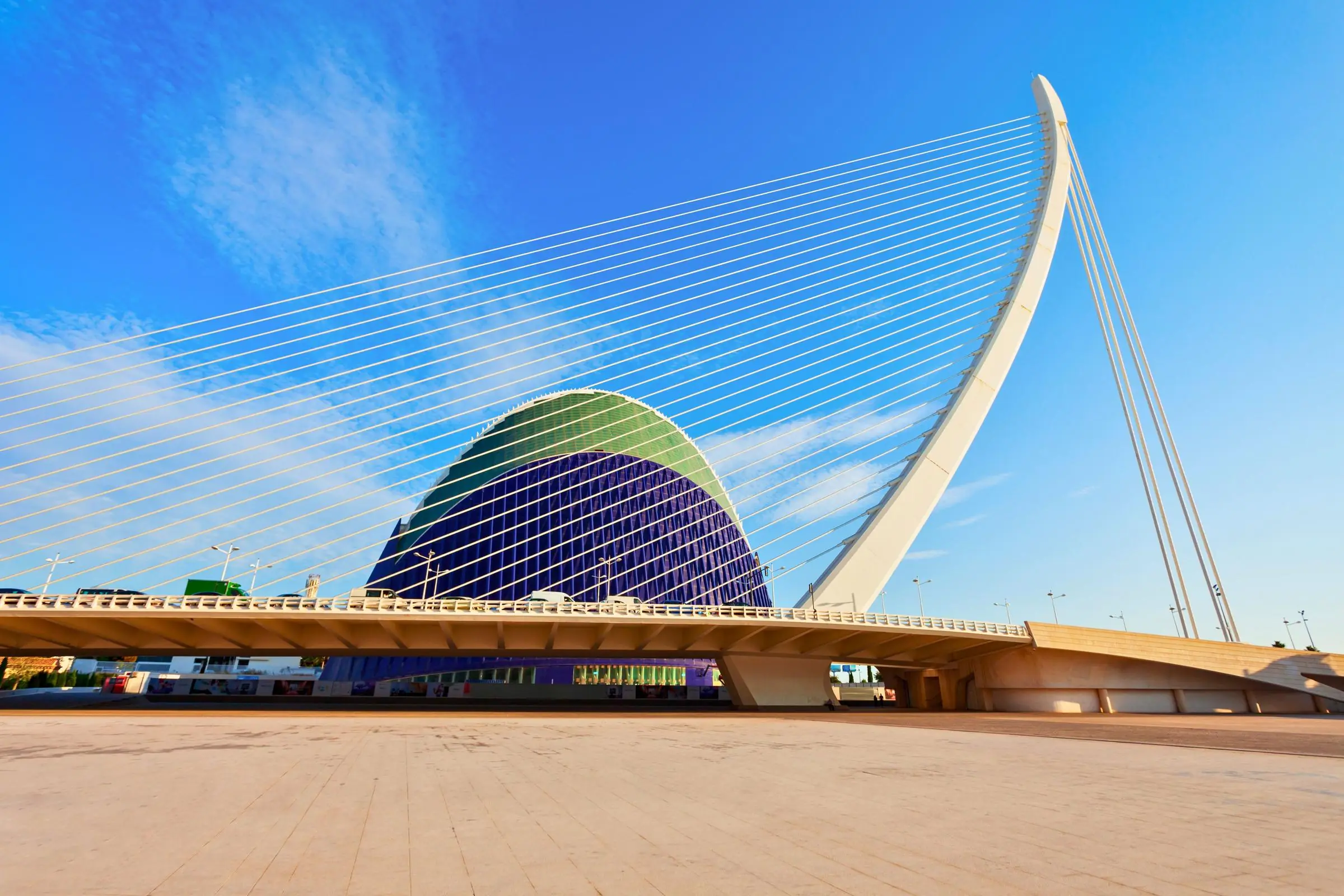
5. L’Assut de l’Or Bridge (The Harp)
Spanning the dry riverbed between the Science Museum and the Oceanogràfic, this white cable-stayed bridge looks like a giant harp. Its single curved pylon leans backward at a 46-degree angle and reaches 125 meters high, making it the highest point in the city of Valencia.
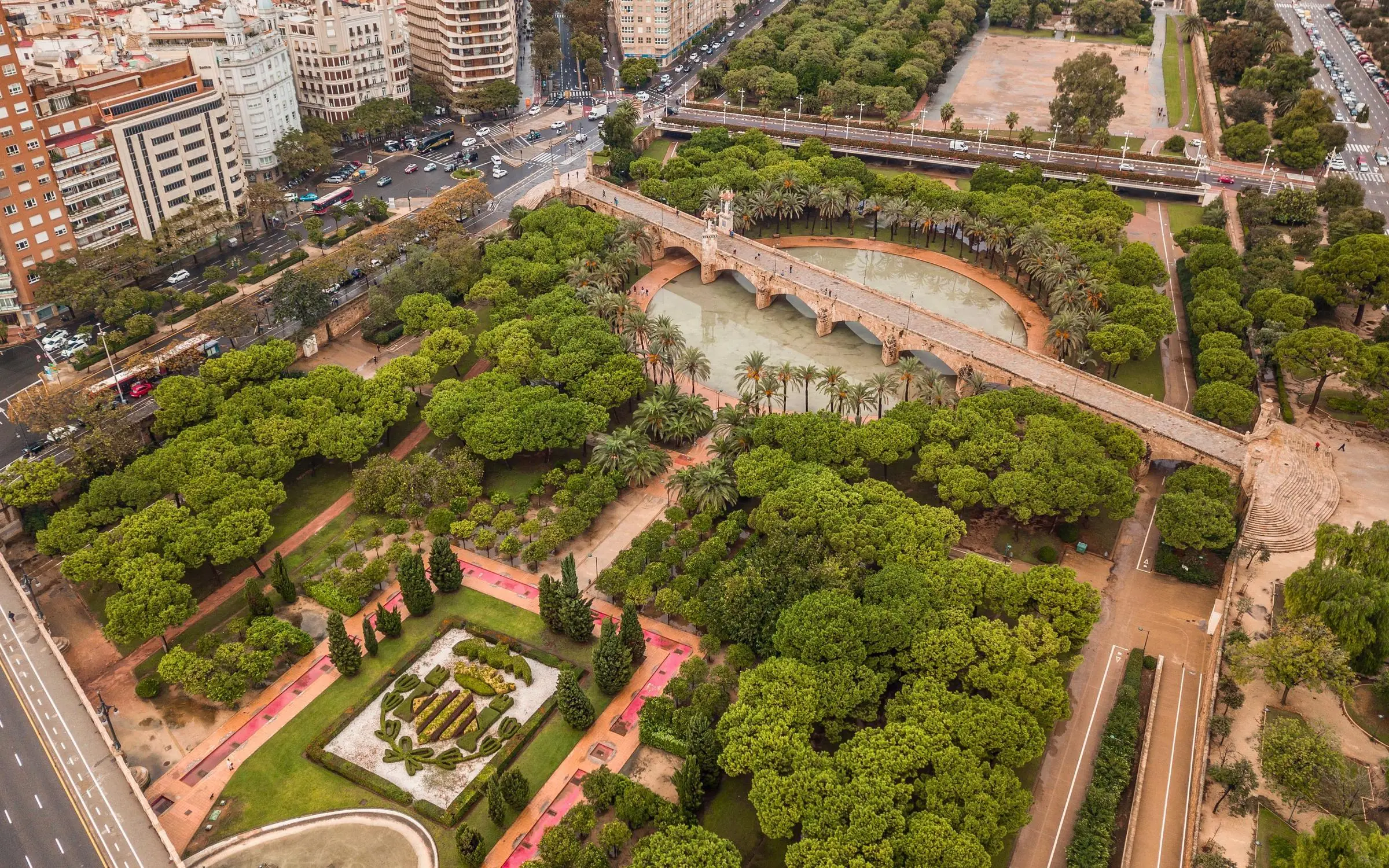
Keep Planning: If you want to explore the park that leads up to the complex, read our complete guide to the Turia Gardens.
Ticket Guide: Single vs. Combo Passes
The ticketing system here is modular. You can buy entry to individual buildings, or you can buy combo tickets that save you money if you plan to visit two or three venues.
During peak season (April to October) and school holidays, the ticket queues at the physical box offices can take 45 minutes. The Oceanogràfic also frequently sells out of its daily capacity. Buy your combo tickets online to bypass the main lines.
Which Ticket Should You Buy?
Top Ticket Options for the Complex
Oceanogràfic + Science Museum + Hemisfèric
- Grants entry to all three major venues.
- Valid for up to three consecutive days (you cannot repeat venues).
- Best for families spending a full weekend in Valencia.
Oceanogràfic + Science Museum
- Skips the IMAX movie (which many travelers find skippable).
- Covers the two largest and most time-consuming attractions.
- Can easily be done in a single 6-hour day.
Oceanogràfic Entry Ticket
- Standard entry to Europe’s largest aquarium.
- Includes access to the dolphinarium and underwater tunnels.
- Best if you only have a half-day available.
Ticket Validation: If you buy a multi-day combo ticket, you do not have to visit all the venues on the same day. You can spread them out over two or three consecutive days, which is highly recommended to avoid museum fatigue.
Logistics: Getting There from the Center
The City of Arts and Sciences is located about 3 kilometers southeast of Valencia’s historic center (Ciutat Vella). Walking from the center through the Turia Gardens takes about 40 minutes. If you prefer to ride, you have several options:
By Bus (EMT): The red city buses are the most direct way to reach the complex from the center.
- Line 95: This is the best route. It runs the entire length of the Turia Gardens. You can catch it near the Serranos Towers and it drops you off right in front of the Science Museum.
- Lines 13, 15, 19, 24, 25, 35, and 40: All have stops near various parts of the complex.
By Metro / Tram: Valencia’s Metro network recently expanded to serve the complex better.
- Take Line 10 (Tram) from the Alacant station (near the Estació del Nord train station) and get off at the Ciutat Arts i Ciències - Justícia stop. It leaves you a 3-minute walk from the Hemisfèric.
By Bike: Valencia is incredibly flat and bike-friendly. Renting a bike and riding down the dedicated paths in the Turia Gardens is the most scenic way to arrive. There are multiple Valenbisi (public bike share) docking stations around the complex.
Shade and Tips
Visiting the City of Arts and Sciences requires a bit of tactical planning, especially from June through September.
- Beware the Glare: The complex is a vast expanse of white concrete and reflective water. Sunglasses are absolutely mandatory. Sunscreen is highly recommended, even if you are just walking between buildings.
- Where to Find Shade: The L’Umbracle promenade offers dappled shade under its arches. Otherwise, the overhangs of the Science Museum provide a narrow strip of shade depending on the position of the sun.
- Food and Drink: The cafes inside the Science Museum and Oceanogràfic are expensive and serve mediocre cafeteria food. For a better meal, exit the complex. The Saler Shopping Center is directly across the street and has air conditioning, a food court, and clean bathrooms. Alternatively, walk 15 minutes west into the Ruzafa neighborhood for excellent cafes and tapas.
- Water: Bring a reusable water bottle. There are a few public drinking fountains scattered along the Turia Gardens path just before you enter the complex.
- Photography: The best time for photos is the “golden hour” just before sunset, or at night when the buildings and pools are illuminated. The water is usually calmest in the early morning, providing perfect mirror reflections.
Where to Stay Nearby
Staying near the City of Arts and Sciences puts you halfway between the historic center and the Malvarrosa beach. The immediate surrounding area (Penya-Roja and Quatre Carreres) is modern, quiet, and features several large hotels with pools.
Frequently Asked Questions
How much time do you need at the City of Arts and Sciences?
If you are only walking the exterior to take photos, you need about 1 to 1.5 hours. If you plan to visit the Oceanogràfic and the Science Museum, you should budget at least 5 to 6 hours.
Is the City of Arts and Sciences free to enter?
Walking around the exterior of the buildings, the reflection pools, and the L’Umbracle garden is completely free. You only need to buy tickets to go inside the specific venues (the aquarium, the science museum, the IMAX theater, or the opera house).
Can you swim in the pools at the City of Arts and Sciences?
No. The water surrounding the buildings consists of shallow reflection pools. Swimming or wading is strictly prohibited. However, you can rent small transparent kayaks or water bikes to paddle around the pools near the Hemisfèric during the summer months.
Are dogs allowed in the complex?
Dogs are allowed in the outdoor, public areas of the complex, including L’Umbracle and the walkways around the reflection pools. However, pets are not allowed inside any of the buildings or the Oceanogràfic (with the exception of registered guide dogs).
Is the complex illuminated at night?
Yes, the City of Arts and Sciences is beautifully lit up at night. The lighting usually turns on just after sunset, making it a popular spot for evening walks and night photography. The exterior remains accessible 24/7.
Can I bring my own food and drinks?
You can bring your own food and eat it in the outdoor public areas or the Turia Gardens. However, you cannot bring outside food into the Oceanogràfic or the Science Museum, though you can bring a water bottle.