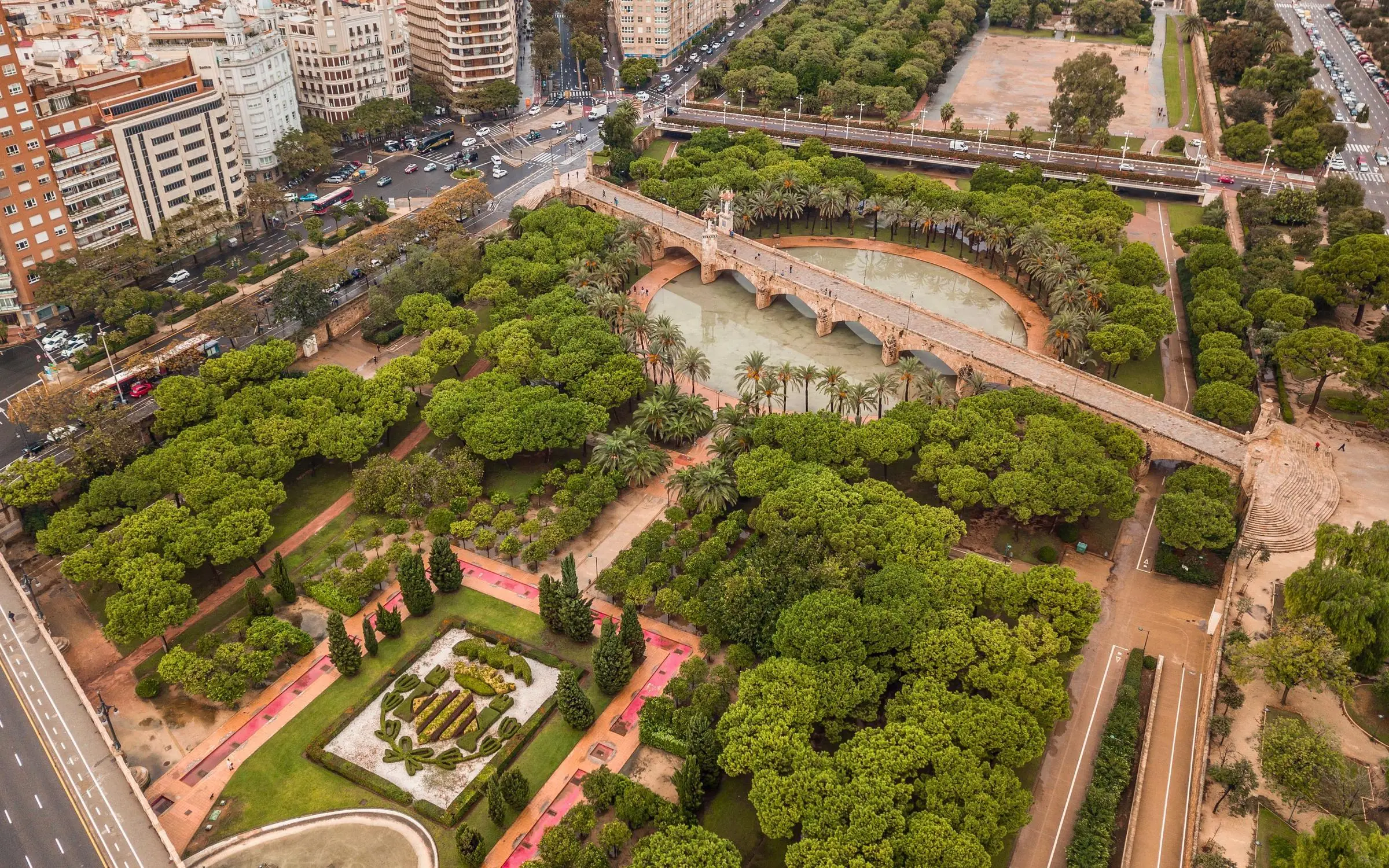
While most visitors flock to the sprawling Turia Gardens to cycle, run, or picnic, Jardines de Monforte offers a completely different experience. Tucked away in the Pla del Real neighborhood, this 19th-century neoclassical garden is heavily structured, meticulously pruned, and almost entirely devoid of crowds.
Originally a vegetable patch, the land was purchased in 1841 by the Marquis of San Juan, Juan Bautista Romero, who commissioned architect Sebastián Monleón to transform it into a recreational estate. Today, it is a protected Artistic Garden. You won’t find playgrounds, bike lanes, or sprawling lawns for sunbathing here. Instead, you get gravel paths, classical statuary, and a rigid silence that makes it an ideal escape from the midday heat or the busy city streets.
If you are planning to use public transit to reach the gardens, grabbing a Valencia Tourist Card covers your metro and bus fares, making the short trip from the historic center seamless.
Is Jardines de Monforte Right for You?
Because this garden has a very specific atmosphere and strict rules, it appeals to different travelers in different ways.
- For the Time-Poor: You can walk the entire garden in 30 to 45 minutes. It is small (about 12,000 square meters) and located just a 10-minute walk from the Alameda metro station. It pairs easily with a visit to the adjacent Jardines del Real.
- For Families: Kids usually enjoy running through the small geometric hedge maze and looking for frogs in the lily ponds. However, be aware that ball games, scooters, and running on the grass are strictly prohibited. If your kids need to burn off serious energy, head to Gulliver Park instead.
- For Budget Travelers: Entry to Jardines de Monforte is completely free. It is one of the best zero-cost places in the city to sit with a book or take photographs.
- For Photographers: The light here is best in the early morning (around 10:30 AM when the gates open) or late afternoon. The ivy tunnels and marble statues provide excellent natural framing.
Garden Rules to Know: Security guards actively patrol Jardines de Monforte. You cannot bring bicycles inside, eat meals or picnic on the benches, or walk on the grass. Dogs are also not allowed.
Deep Dive: 5 Landmarks Inside the Garden
The garden is split into two distinct styles: a highly manicured French geometric garden near the entrance, and a slightly wilder, shaded romantic garden toward the back. Here are the five key features to look for.
1. The Marble Lion Entrance Gates
As you approach the garden from Calle de Monforte, you are greeted by a grand entrance flanked by marble lions. These statues have a fascinating backstory. They were originally sculpted by José Bellver to sit on the steps of the Congress of Deputies in Madrid. However, when they were finished, officials in Madrid deemed them too small for the massive building. Juan Bautista Romero purchased the rejected lions at a discount and placed them at the entrance of his new estate. Today, they serve as the stoic guardians of the garden.
2. The 19th-Century Palatial Pavilion
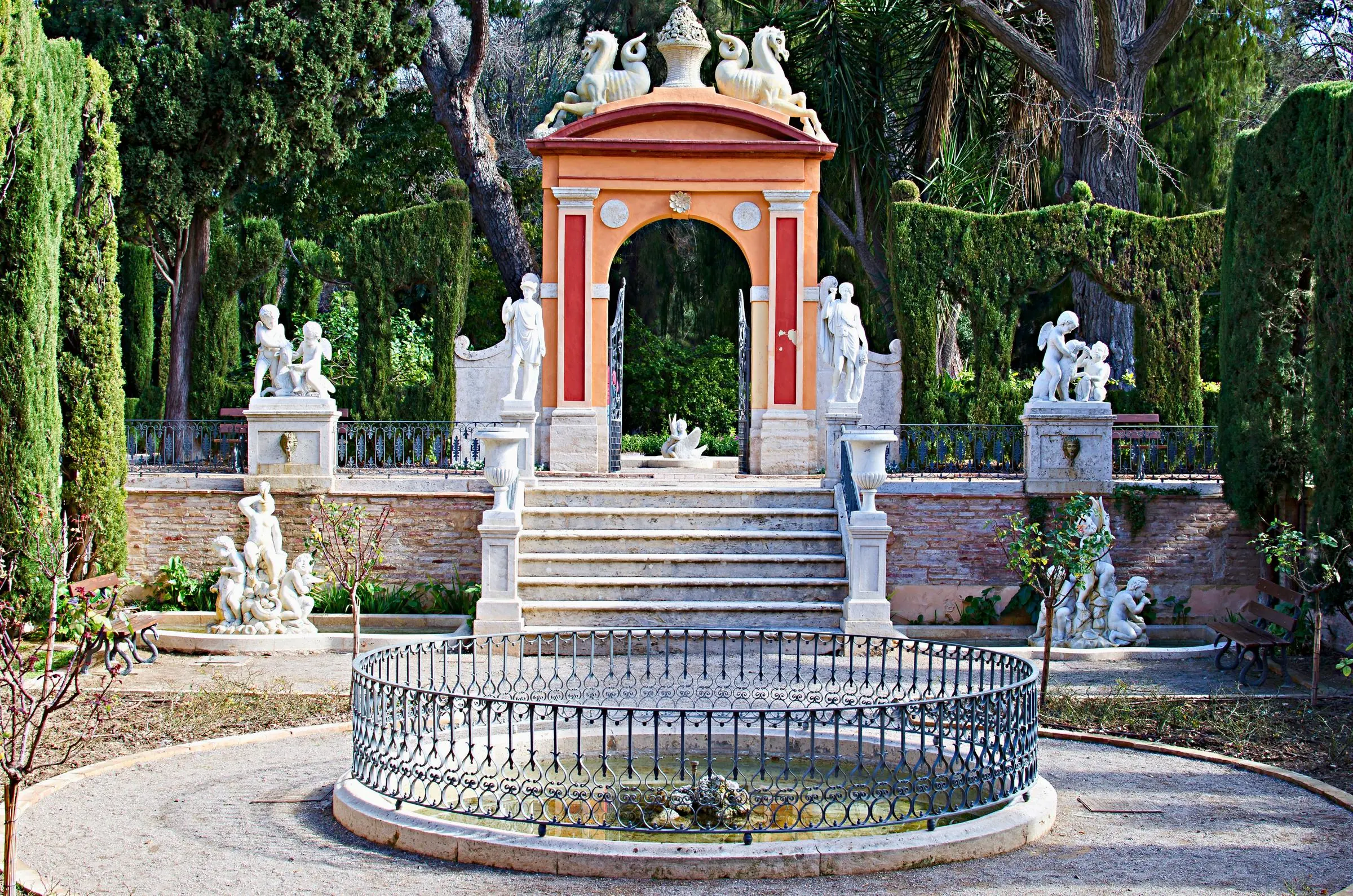
Immediately inside the gates sits the pavilion. This small, elegant building was the Marquis’s recreational palace, designed for resting and entertaining guests. It features a classical portico, tall arched windows, and a soft terracotta-colored facade that contrasts sharply with the green hedges. While the interior is generally closed to the public (it is currently used by the Valencia City Hall for civil wedding ceremonies), the exterior terrace and the sweeping staircases leading down into the gardens are fully accessible.
3. The French Geometric Hedge Maze
Directly in front of the pavilion is the French garden. This area is defined by low, tightly clipped myrtle and boxwood hedges arranged in symmetrical, geometric patterns. At the center of this section is a small, waist-high maze. While it won’t challenge an adult to navigate, the precision of the pruning is impressive. The gravel paths crunch underfoot, and the layout forces you to slow down and walk deliberately.
4. The Ivy-Covered Rose Tunnel
As you transition from the formal French garden into the romantic garden, you will pass through a long, arched iron trellis covered in climbing ivy, bougainvillea, and climbing roses. During the spring and early summer, the tunnel blooms with vibrant pinks and reds. Even in the height of summer, the dense foliage blocks out the sun, dropping the temperature by several degrees. It is the most photographed spot in the garden, providing a long, shaded perspective that feels entirely removed from the urban environment outside the walls.
5. The Ornamental Lily Ponds & Statuary
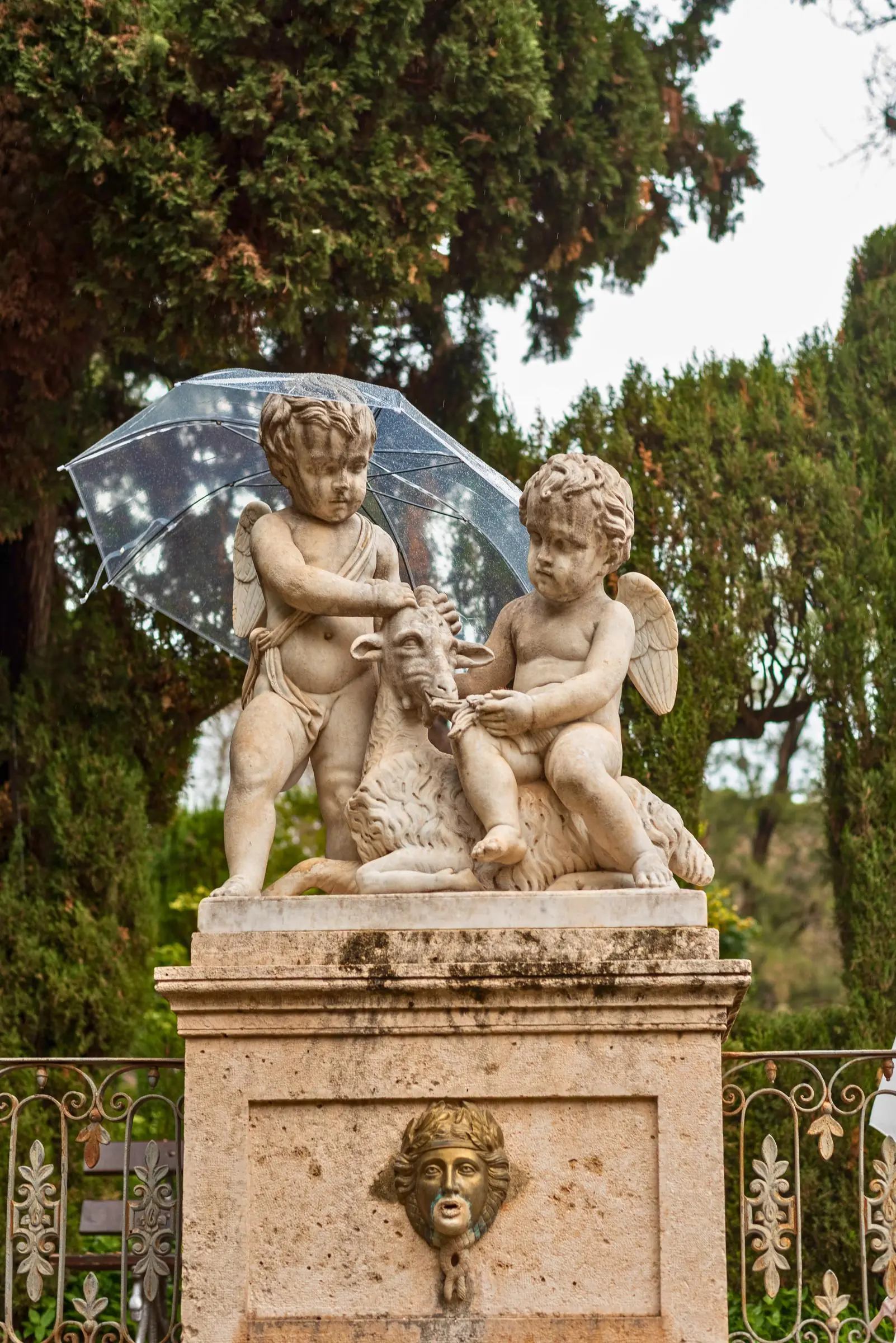
The rear of the garden embraces the 19th-century romantic style, characterized by larger, older trees (including massive magnolias and ginkgos), winding paths, and water features. You will find several ornamental ponds dotted with water lilies and surrounded by classical statues depicting mythological figures like Daphnis and Chloe. The sound of water trickling from the central fountains masks the distant traffic noise. Take a moment to sit on one of the tiled benches near the water—this is where the garden’s zero-crowd profile is most apparent.
Monforte Gardens Highlights
Marble Lions
- Originally carved for the Spanish Congress in Madrid.
- Purchased after being deemed “too small” for the capital.
The Pavilion
- 19th-century neoclassical design.
- Currently used for local civil weddings.
The Rose Tunnel
- Arched iron trellis covered in ivy and bougainvillea.
- Provides excellent shade during the summer.
Suggested Walking Route (45 Minutes)
Because the garden is small, you don’t need a map, but following a logical path ensures you don’t miss the hidden statues in the back corners.
A Stroll Through Monforte
⏱️ Total: 45 minEnter and Admire the Pavilion
Walk past the marble lions. Stand on the pavilion terrace to get a slightly elevated view of the French geometric hedges below.
Navigate the French Garden
Descend the steps and walk through the symmetrical boxwood hedges. Find the center of the small maze and view the central fountain.
Walk the Trellis Tunnel
Enter the shaded ivy and rose tunnel. Walk slowly to the end, taking advantage of the cooler air and the dappled sunlight for photos.
Rest by the Lily Ponds
Explore the romantic garden at the back. Find the statue of Daphnis and Chloe, sit by the lily pond, and listen to the water before heading back to the exit.
Logistics: How to Visit
Jardines de Monforte is located just north of the old riverbed, near the university district.
Address: Plaza de la Legión Española, s/n, 46010 València.
Opening Hours:
- Spring/Summer (March 21 - September 20): 10:30 AM to 8:00 PM.
- Autumn/Winter (September 21 - March 20): 10:30 AM to 6:00 PM.
- Note: The garden closes during heavy rain or high wind alerts for safety reasons due to the old trees.
Getting There:
- By Metro: Take Line 3, 5, 7, or 9 to Facultats-Manuel Broseta station. The garden entrance is a 5-minute walk from the station.
- By Bus: EMT bus lines 11, 16, 26, 32, and 71 all stop near the garden.
- By Bike: If you rent a city bike, you can ride through the Turia Gardens, exit near the Puente del Real, and lock your bike at the racks just outside the Monforte gates. (Remember, bikes are not allowed inside).
Jardines de Monforte is located directly across the street from the much larger Jardines del Real (Viveros). You can easily visit both in a single morning.
Local Tips for the Best Experience
- Avoid Saturday Mornings: Because the pavilion is used for civil weddings, Saturday mornings often see the entrance and French garden occupied by wedding parties taking photos. If you want total silence, visit on a weekday morning.
- The Siesta Sweet Spot: Between 2:00 PM and 4:00 PM, the garden is usually completely empty. The dense tree canopy and the ivy tunnel make it a surprisingly cool place to sit out the hottest part of the day.
- Combine with a Museum: The Museum of Fine Arts (Museo de Bellas Artes) is only a 10-minute walk away. You can view classic Valencian art in the morning and digest it in the quiet of Monforte afterward.
- Bring Mosquito Repellent: The combination of dense foliage, shade, and standing water in the lily ponds means mosquitoes can be active here, especially in late spring and early autumn.
Where to Stay Nearby
The area surrounding Jardines de Monforte is known as Pla del Real. It is an upscale, residential neighborhood characterized by wide, tree-lined avenues and proximity to the universities. Staying here keeps you close to the historic center (just across the bridge) but removes you from the late-night noise of the tourist hubs.
Keep Planning: If you enjoy green spaces, read our guide to the Botanical Garden, another walled, quiet oasis located on the opposite side of the city center.
Frequently Asked Questions
Is there an entrance fee for Jardines de Monforte?
No, entry to Jardines de Monforte is completely free for all visitors. You do not need a ticket or a reservation.
Are there public restrooms inside the garden?
No, there are no public restrooms available for visitors inside the garden walls. Plan to use facilities at a nearby cafe before entering.
Can I bring food or have a picnic in the garden?
No. Security guards enforce a strict no-picnic policy to maintain the cleanliness and historical integrity of the garden. You can bring a bottle of water, but eating meals on the benches is not allowed.
Is Jardines de Monforte wheelchair accessible?
Partially. The main entrance and the paths around the French geometric garden are flat and covered in fine gravel, which is manageable for most wheelchairs. However, the pavilion has stairs, and some paths in the romantic garden at the back are uneven.
How does it compare to the Botanical Garden?
Jardines de Monforte is a highly structured, architectural garden focused on aesthetics, statuary, and symmetry. The Botanical Garden is a scientific institution focused on plant diversity, featuring greenhouses, medicinal plants, and a much wider variety of species.
Can I take professional photographs here?
Casual photography is fine, but if you are planning a professional shoot (like a wedding or commercial fashion shoot) that requires tripods, lighting equipment, or blocking pathways, you must obtain a permit from the Valencia City Hall Parks Department in advance.