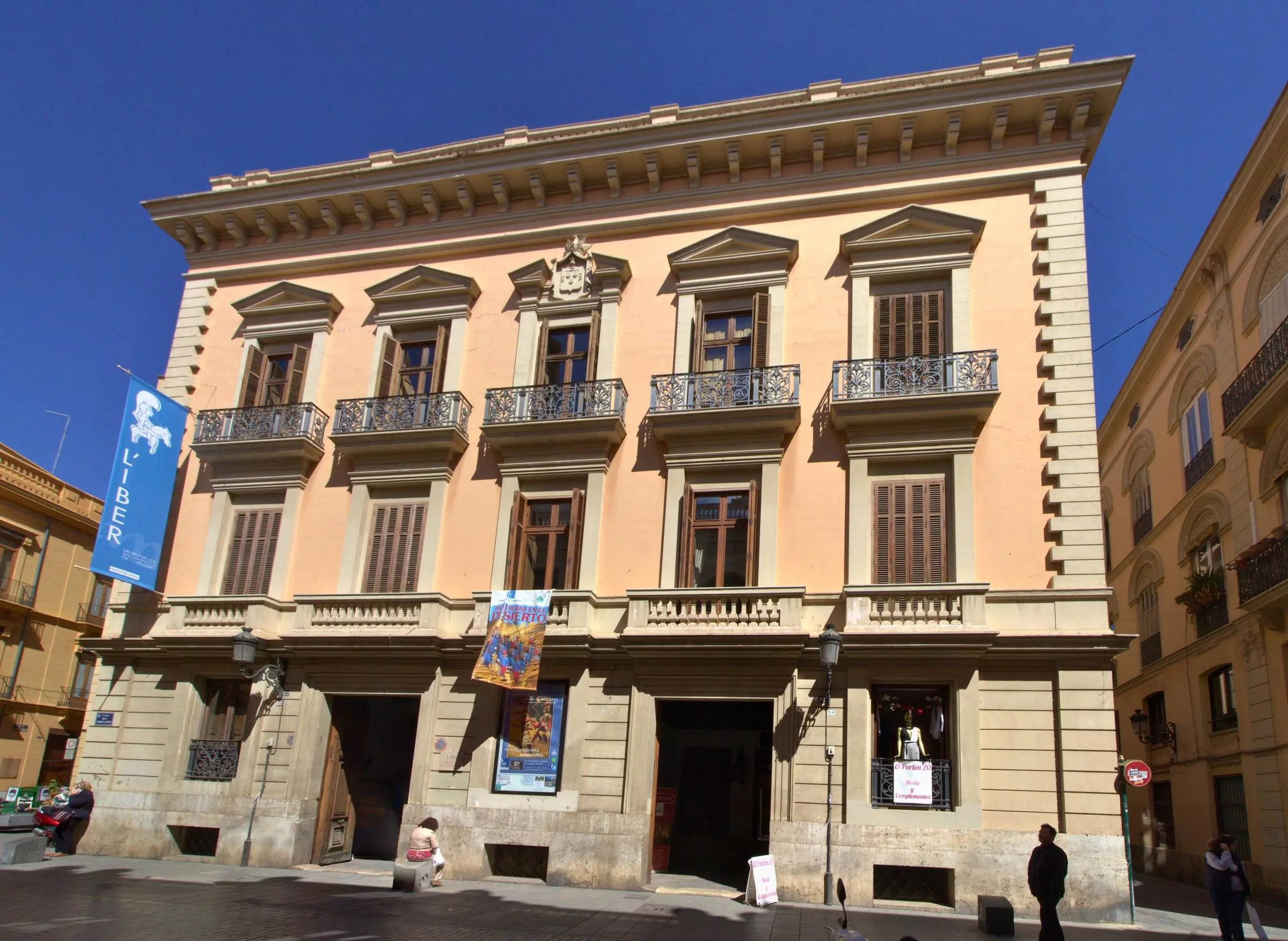
Walking down Calle Caballeros in Valencia’s Ciutat Vella, it’s easy to get distracted by the tapas bars and street performers. But if you step through the heavy wooden doors at number 22, the noise of the city drops away. You find yourself in the quiet, palm-shaded courtyard of the 14th-century Malferit Palace.
This Gothic building is home to L’Iber, the Museo de los Soldaditos de Plomo (Tin Soldier Museum). With over 95,000 miniature figures on public display—and more than a million in its archives—it is the largest collection of its kind in the world.
This isn’t just a museum for military historians or hobbyists. The dioramas here recreate everything from the Jurassic period to the Spanish Civil War, offering a highly visual, three-dimensional walk through world history. Because the scale is so small and the collection so vast, visiting requires a bit of strategy so you don’t burn out halfway through. Here is how to tackle it.
Who Should Visit (and How to Pace Yourself)
Looking at thousands of two-inch-tall figures requires a lot of focus. “Museum fatigue” sets in faster here than in a traditional art gallery. How you approach the rooms should depend entirely on who you are traveling with.
For Families with Kids
If you are visiting with kids, treat the museum like a giant game of “I Spy.” Do not try to read every plaque or look at every single figure. Instead, give them specific things to find: a soldier falling off a horse, a campfire, a specific flag, or a dinosaur. Keep your visit to a strict 60 to 90 minutes. Any longer, and their attention spans will vanish.
For History & Military Buffs
You will easily need two to three hours. The level of historical accuracy in the uniforms, troop formations, and terrain in the Napoleonic and Spanish Civil War rooms is staggering. The museum was a passion project of the late Álvaro Noguera Giménez, and the dedication to historical precision is evident in every display case.
For the Time-Poor
If you only have 45 minutes to spare while exploring the Old Town, focus entirely on the ground floor courtyard, the Battle of Almansa diorama, and the Tirant lo Blanc medieval halls. These are the most visually striking areas and give you a solid feel for the collection without requiring a deep time commitment.
Discount Tip: The museum is privately run, but if you have a Valencia Tourist Card, you can usually get a small discount on the entry fee at the door.
The Venue: Malferit Palace & The Palm Patio
Before you even look at a single miniature figure, take a moment to appreciate the building itself. The Malferit Palace is one of the best-preserved noble homes in Valencia.
Originally built in the 14th century and heavily renovated in the 19th century, the palace features classic Mediterranean Gothic architecture. The highlight is the central courtyard, known as the Palm Patio. It is an oasis of calm, featuring towering palm trees, a central fountain, and shaded archways.
When you buy your ticket, you’ll start your route around this courtyard. It also serves as a great resting point if you are visiting with a group and people are moving at different speeds. You can sit on the benches here and enjoy the architecture while waiting for the rest of your party.
Deep-Dive: The 5 Key Exhibits
The museum is spread across multiple rooms, generally organized by historical era. While there are exhibits covering Ancient Egypt, Rome, and the 20th century, these five areas are the undisputed highlights.
1. The Sheer Scale of the Collection
While not a single “exhibit,” the sheer volume of the collection is the first thing that hits you. There are over 95,000 figures on display. They are not just lead; you will spot figures made of plastic, wood, and paper, though traditional lead and tin dominate. The figures range from mass-produced vintage toys to custom-painted, one-of-a-kind historical replicas. Take a moment in the first few rooms to just appreciate the logistics of dusting and maintaining a collection of this size.
2. The Battle of Almansa Diorama
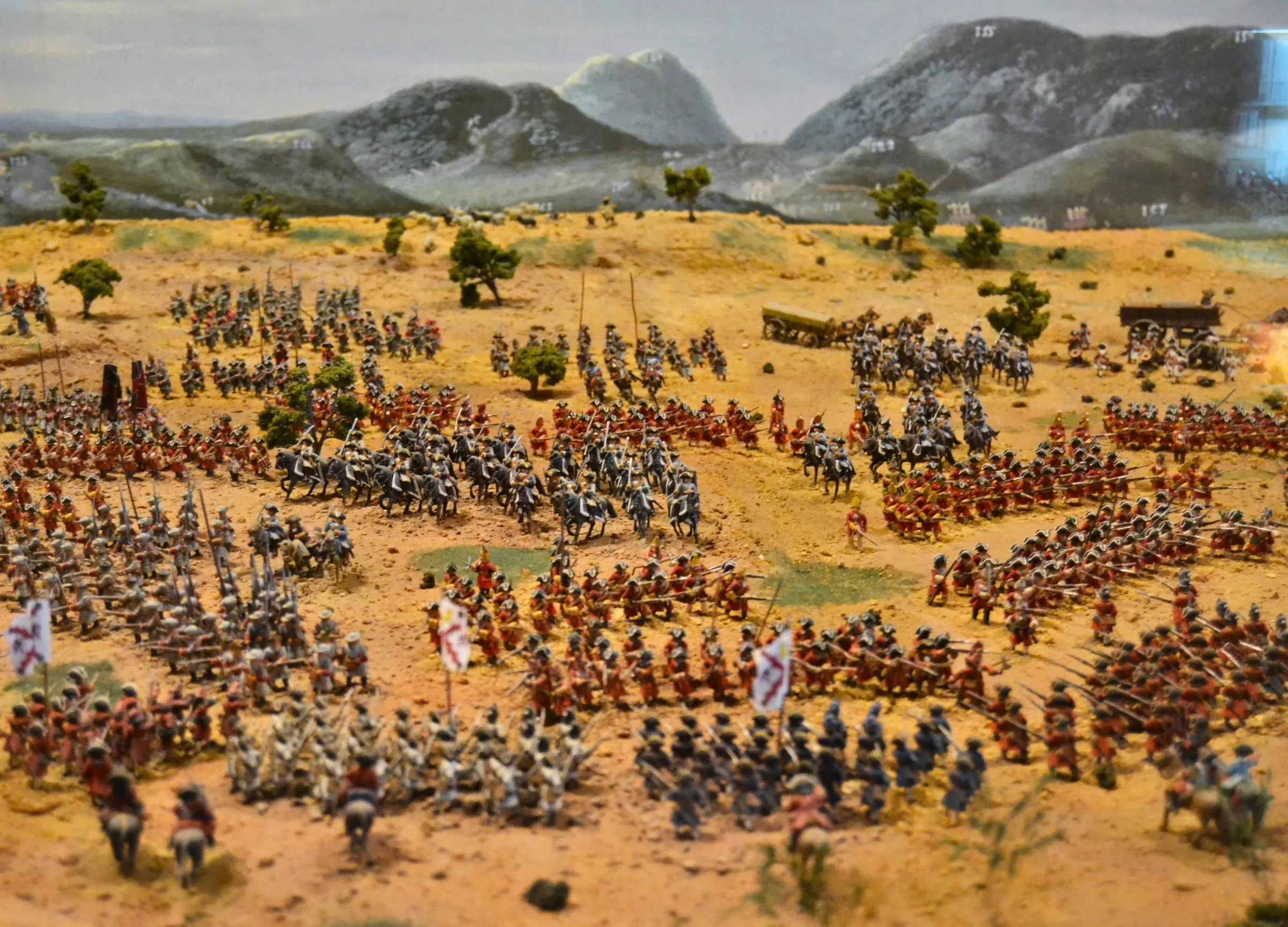
This is the crown jewel of L’Iber. The Battle of Almansa (1707) was a decisive conflict in the War of the Spanish Succession, and its outcome heavily impacted the history of Valencia.
The diorama is massive, featuring over 9,000 individual figures. It doesn’t just show lines of troops; it shows the chaos of battle. Look closely, and you will see supply wagons, wounded soldiers, artillery crews firing cannons, and cavalry charges. The terrain itself is meticulously crafted to match the actual topography of the Almansa battlefield.
3. Tirant lo Blanc Medieval Halls
Tirant lo Blanc is a famous 15th-century Valencian chivalric romance novel (often cited as an inspiration for Don Quixote). This room brings the medieval world of the novel to life.
Instead of just military formations, these dioramas show medieval daily life, jousting tournaments, castle sieges, and royal courts. It is one of the most colorful rooms in the museum, filled with heraldic banners, knights in shining armor, and intricate castle models. It’s usually a favorite for younger visitors.
4. The Napoleonic War Rooms
The Napoleonic era was the golden age of the tin soldier, and L’Iber dedicates significant space to it. These rooms cover major European battles, including Waterloo, as well as the Peninsular War in Spain.
The detail here is aimed squarely at military history buffs. The uniforms of the French, British, and Spanish troops are painted with exacting accuracy, right down to the color of the lapels and the style of the shakos (hats).
5. The Spanish Civil War & 20th Century
Moving into modern history, the museum features detailed scenes from the Spanish Civil War. Because this is local history, the dioramas often depict specific, recognizable locations in Spain. The transition from the bright, colorful uniforms of the Napoleonic era to the drab khaki and mechanized warfare of the 20th century is a stark visual shift.
Family Viewing Pace: A Suggested Itinerary
If you have children in tow, use this timeline to keep the visit moving before fatigue sets in.
A 75-Minute Family Route
⏱️ Total: 1 h 15 minThe Palm Patio & Introduction
Start in the courtyard. Let the kids look at the fountain and the architecture. Explain that they are about to see thousands of tiny toys, and challenge them to find the funniest or strangest figure in the museum.
Antiquity & The Middle Ages
Move through the early rooms. Kids usually respond well to the Ancient Egypt displays and the medieval knights in the Tirant lo Blanc room. Keep the pace brisk.
The Giant Dioramas (Almansa)
Spend the bulk of your time at the Battle of Almansa. Play “I Spy.” Ask them to find a horse rearing up, a broken wagon, or a specific flag. The sheer scale of this table usually holds their attention.
The 20th Century
Do a quick walk-through of the modern warfare rooms. The tanks and early airplanes are usually a hit, but by this point, their eyes will be getting tired.
The Gift Shop
End at the shop. Be warned: they sell individual, high-quality miniature figures here. It’s a great souvenir, but set a budget before you walk in.
Logistics, Tickets & Local Tips
Visiting L’Iber is generally straightforward, but knowing a few practical details helps.
- Location: Calle Caballeros, 22. It is right in the heart of the El Carmen neighborhood.
- Tickets: Standard entry is usually around €8. You rarely need to book in advance; you can almost always walk up and buy a ticket at the door.
- Language: Most of the informational plaques are in Spanish. However, because the museum is entirely visual, you do not need to read Spanish to enjoy the dioramas.
- Accessibility: Because it is housed in a 14th-century palace, accessibility is a challenge. There are stairs to navigate between some rooms. If you use a wheelchair, it is highly recommended to call the museum ahead of time to discuss access.
- Photography: You are allowed to take photos, but flash photography is strictly forbidden as it degrades the paint on the figures.
Calle Caballeros is packed with history. To get the most out of the area, consider taking a guided tour of the Old Town before or after your museum visit. It provides great context for the palace and the surrounding streets.
What to Do Nearby
L’Iber’s location is unbeatable. When you step back out onto Calle Caballeros, you are within a five-minute walk of several major Valencia landmarks.
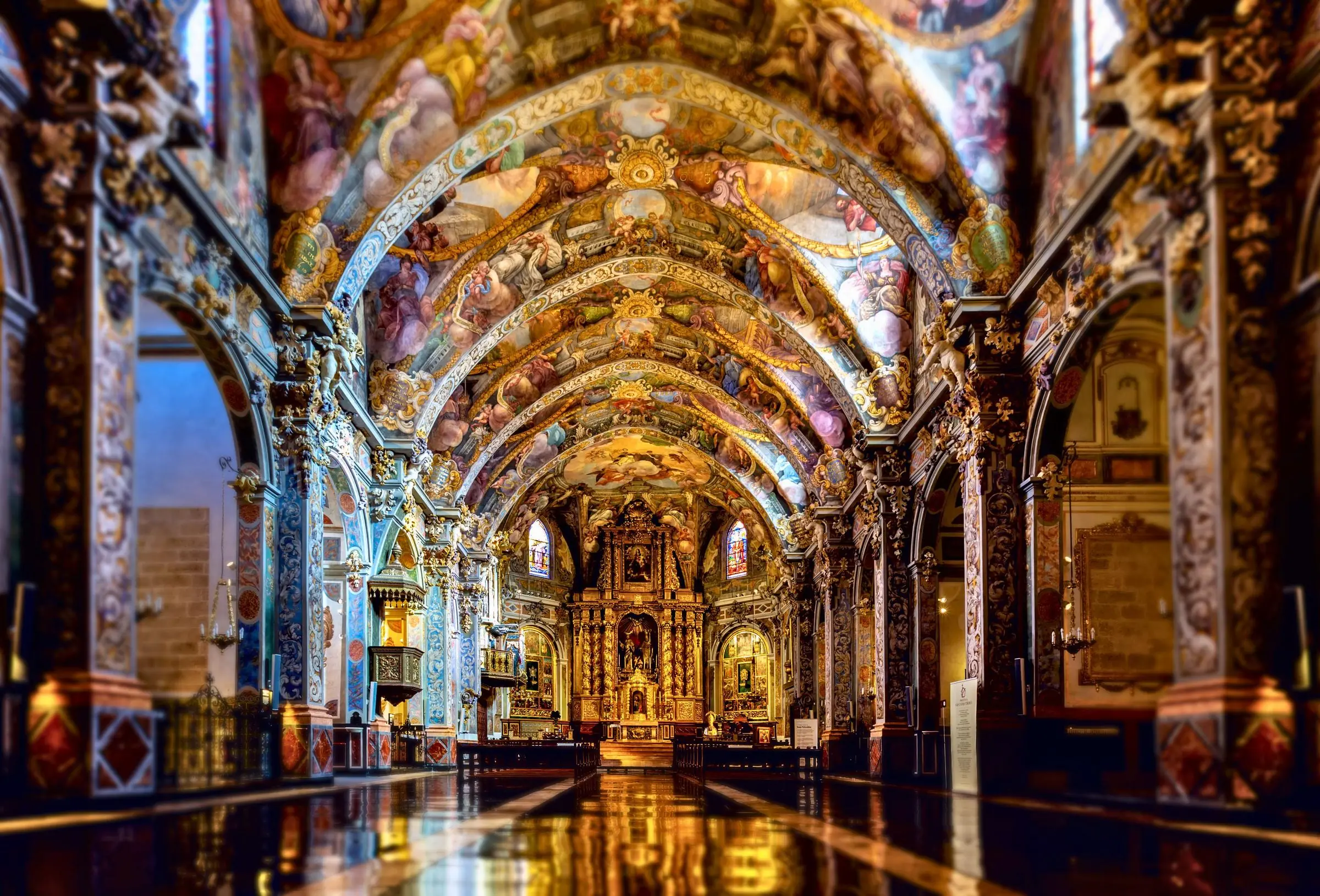
Church of San Nicolás: Literally a one-minute walk down the street is the Church of San Nicolás. Known as the “Sistine Chapel of Valencia,” its ceiling is covered in spectacular frescoes. Unlike L’Iber, San Nicolás gets incredibly crowded, so booking an entry ticket in advance is highly recommended.
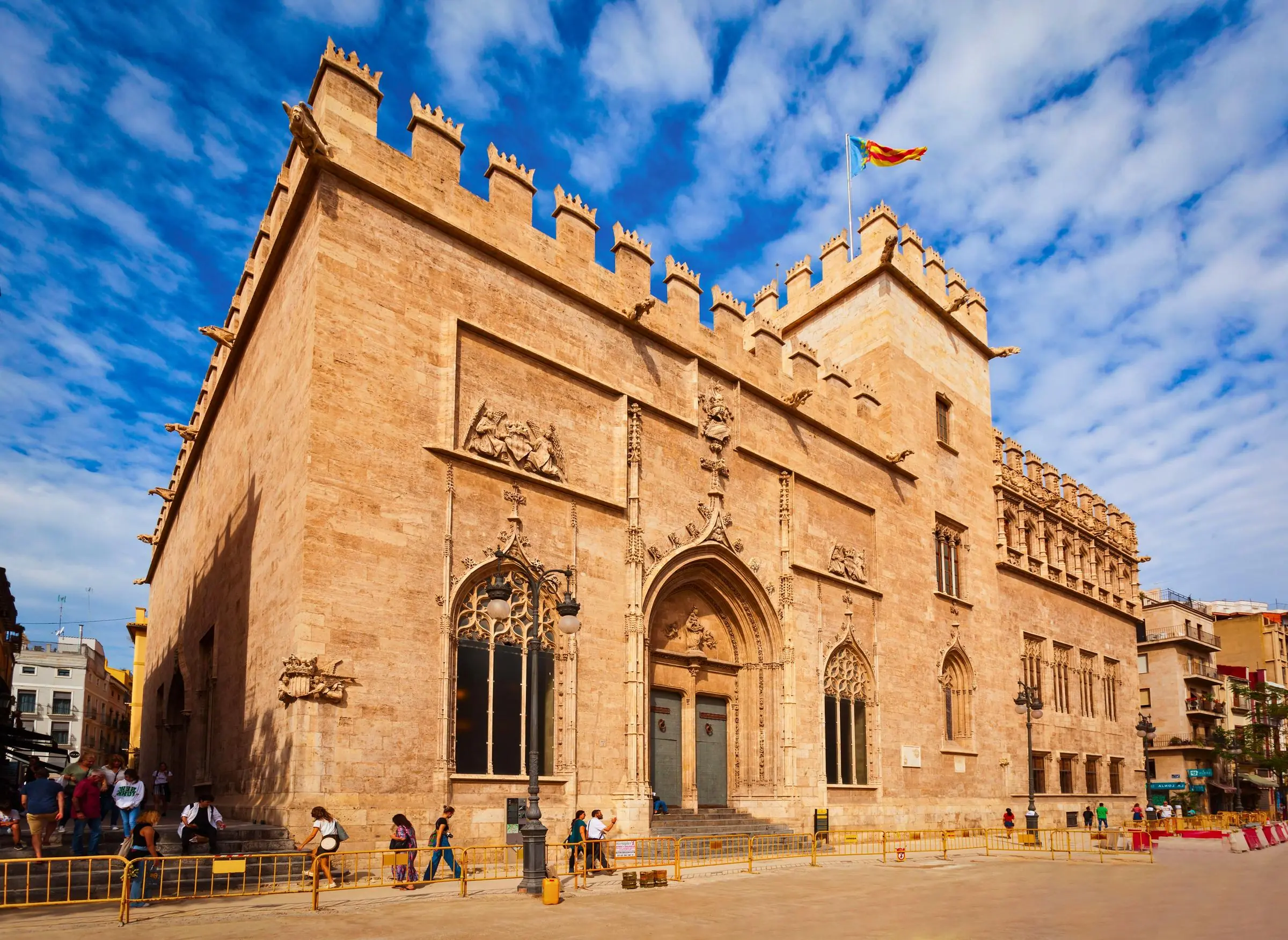
La Lonja de la Seda: A five-minute walk away is the Silk Exchange, a UNESCO World Heritage site and a masterpiece of late Gothic architecture. If you want to see both, you can book a Guided Walking Tour that includes La Lonja and San Nicolás.
Keep Planning: For a full day of sightseeing in this area, read our complete guide to Valencia’s Ciutat Vella (Old Town).
Where to Stay in El Carmen
If you love history and want to be within walking distance of L’Iber, San Nicolás, and the Cathedral, the El Carmen neighborhood is the place to stay. It is highly walkable, packed with restaurants, and full of character. Use the map below to find accommodations near Calle Caballeros.
Frequently Asked Questions
How long does it take to walk through the L'Iber Tin Soldier Museum?
Most visitors spend about 1 to 1.5 hours in the museum. If you are a military history enthusiast who wants to examine the formations and uniforms closely, plan for at least 2 to 2.5 hours.
Is the museum air-conditioned?
Yes, the museum is air-conditioned, making it a great place to escape the midday heat during the Valencia summer. However, because it is a historic palace, some rooms may feel slightly warmer than others.
Are the descriptions available in English?
The majority of the detailed informational plaques are in Spanish. However, the museum is highly visual, and the context of the dioramas (like Ancient Egypt or the Napoleonic Wars) is usually obvious without needing to read the text.
Can I buy miniature figures at the museum?
Yes. The gift shop at the entrance sells a wide variety of miniature figures, ranging from affordable plastic toys for children to highly detailed, hand-painted lead figures for serious collectors.
Is the museum wheelchair accessible?
Accessibility is limited. The museum is located inside a 14th-century palace with uneven floors and stairs between certain sections. While there is an elevator, it does not reach every single exhibit room. Visitors with mobility issues should contact the museum directly before visiting.
Do I need to buy tickets in advance?
No, it is rarely necessary to buy tickets in advance for L’Iber. You can easily purchase them at the ticket desk when you arrive.