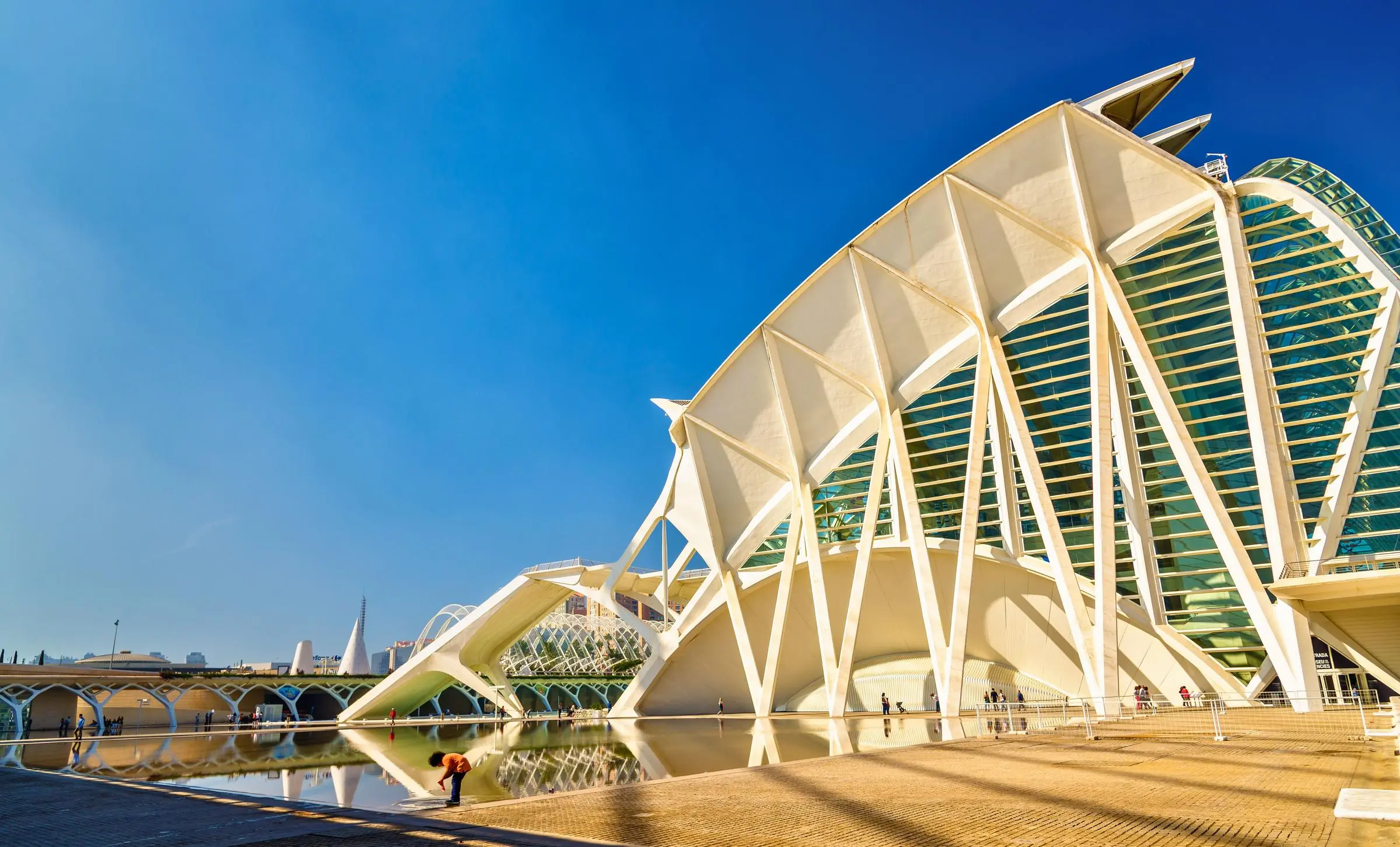
Designed by local architect Santiago Calatrava, the Museu de les Ciències Príncipe Felipe (Science Museum) is impossible to miss. Stretching 220 meters along the Turia Gardens, the building’s white, ribbed exterior looks exactly like the bleached skeleton of a massive prehistoric whale.
Inside, the museum operates on a strict philosophy: “Prohibido no tocar, no sentir, no pensar” (It is forbidden not to touch, not to feel, not to think). Spread across 40,000 square meters and three main floors, this is a loud, chaotic, and highly interactive space designed primarily for children and teenagers.
If you are traveling with kids, this is one of the most reliable ways to spend a morning in the city—especially if you need to escape the midday heat or a rare rainy day. Here is exactly how to navigate the exhibits, avoid the worst of the school group crowds, and figure out which ticket combination actually makes sense for your trip.
5 Hands-On Highlights You Should Prioritize
The museum is vast, and it is easy for kids to burn out before seeing the best sections. While the ground floor (Calle Menor) is free to enter and houses the ticket desks, cafes, and bathrooms, the real exhibits require a ticket to access the upper floors. Here is what you should map out first.
1. The Chromosome Forest (Bosque de Cromosomas)
Located on the third floor, this massive exhibit is a physical representation of the human genome. You walk through 23 pairs of giant chromosomes, each towering over you. Around each chromosome, interactive modules explain the specific genes located on that pair and what they do in the human body. You can test your balance, measure your body’s water content, and see how your physical traits are mapped out on a cellular level.
2. Zero Gravity Space Hub (Gravedad Cero)
Developed in collaboration with the European Space Agency (ESA), this section on the third floor is a favorite for older kids and adults. You can walk through a mock-up of the International Space Station (ISS) and view real artifacts from European space missions. The exhibit does an excellent job of explaining the physical realities of living in space, from how astronauts sleep to how they use the bathroom in zero gravity.
3. Space Academy Simulators
Tucked near the space exhibits, the Space Academy features actual motion simulators. Visitors strap in to experience the turbulence of a rocket launch and the disorientation of docking with a space station. Local Tip: The simulators often require a small supplemental fee (usually around €2.50 to €3.00) paid directly at the exhibit, and they have strict height requirements. Check the queue here early, as it builds up by midday.
4. The Foucault Pendulum
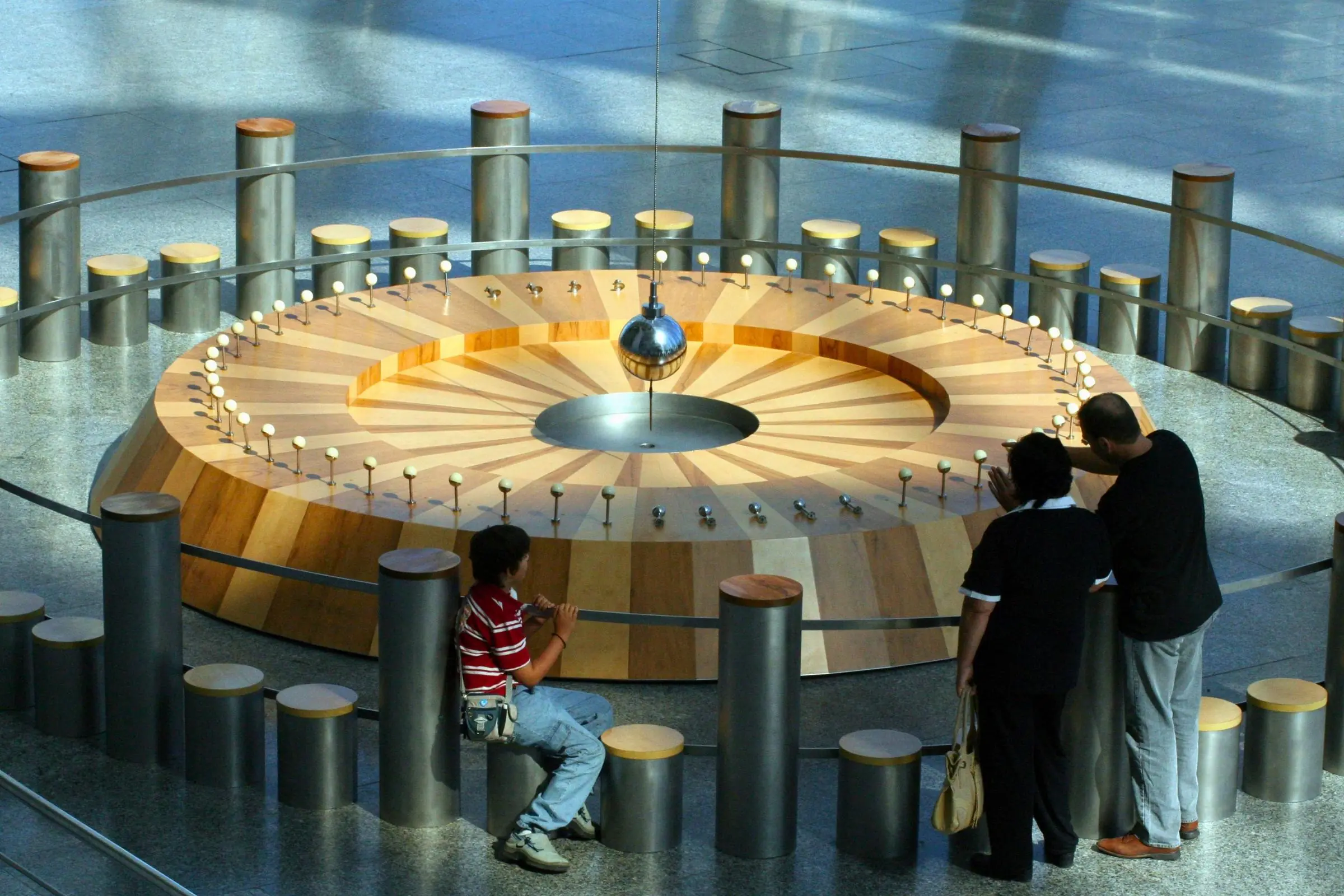
As you enter the main paid area, look for the massive brass sphere swinging methodically back and forth. Suspended from a 34-meter cable attached to the highest point of the building’s glass roof, this is one of the longest Foucault pendulums in the world. It is a mesmerizing, physical proof of the Earth’s rotation. Over the course of the day, you can watch it slowly knock down the small pegs set up in a circle around its base.
5. The 26-Meter DNA Sculpture
You cannot miss this. Spanning the height of the museum’s interior atrium, a 26-meter-tall representation of the DNA double helix serves as the visual anchor of the building. It is less of an interactive exhibit and more of a striking architectural feature, but it provides the best photo backdrop inside the museum.
Ticket Types and Skip-the-Line Passes Compared
The ticketing system for the City of Arts and Sciences can be confusing because the complex is split into three main ticketed venues: the Science Museum, the Oceanogràfic (aquarium), and the Hemisfèric (IMAX dome).
You can buy a single ticket for just the Science Museum, or you can buy combo tickets that bundle two or three of the venues together at a discount.
The ticket queues on the ground floor of the Science Museum can take 30–45 minutes during summer, local holidays, and weekends. If you plan to visit the Oceanogràfic as well, buying a combo ticket online saves you both time and money.
Science Museum Only
- Full access to all three floors of exhibits
- Skip the physical ticket desk line
- Best if you only have 2 hours to spare
- Does not include simulator fees
Science Museum + Oceanogràfic
- Entry to both the Science Museum and Aquarium
- Valid for 1, 2, or 3 consecutive days
- Saves roughly 15% compared to buying separately
- Allows you to split the venues across two days
Museum + Aquarium + Hemisfèric
- Includes all three major venues
- Requires booking a specific time slot for the Hemisfèric film
- Best spread over two full days
- Ideal for families with older children
Keep Planning: If you are trying to decide which tourist card makes the most sense for your trip, read our breakdown of Valencia’s tourist passes compared.
Audience Guide: Who is this actually for?
For Families with Kids
This museum is built for children. From ages 4 to 14, kids will find endless buttons to push, levers to pull, and screens to interact with. There is a dedicated “L’Espai dels Xiquets” (Children’s Space) for kids aged 3 to 8, which features guided activities about the human body, animals, and building houses with foam bricks. If you have energetic kids, you can easily spend three hours here.
For Adults and Couples
If you are traveling without children, temper your expectations. Unlike the Science Museum in London or the Exploratorium in San Francisco, some of the exhibits here can feel a bit dated, and because it is so heavily trafficked by school groups, you will inevitably find a few broken interactive screens. If you are an architecture fan, the €10 entry ticket is worth it just to walk the upper floors and photograph Calatrava’s interior structural work. Otherwise, adults are usually better off spending their time and money at the Oceanogràfic.
For Time-Poor Travelers
If you only have one day in Valencia, skip the inside of the Science Museum. Walk around the exterior, take photos of the reflective pools, and spend your time exploring the historic Ciutat Vella or eating paella by the beach.
A Family Rainy-Day Itinerary
Valencia gets over 300 days of sunshine a year, but when it rains, the city’s outdoor attractions (like the Bioparc and the beaches) become difficult to navigate. The City of Arts and Sciences is the perfect indoor refuge.
The Indoor Science & Sea Route
⏱️ Total: 6 hArrive at the Science Museum
Start right when the doors open to beat the mid-morning rush of local school groups. Head straight to the third floor for the Zero Gravity and Chromosome exhibits while they are quiet.
Lunch on the Ground Floor
The museum has a cafeteria on the ground floor (Calle Menor). The food is standard museum fare (sandwiches, basic pasta), but it is convenient. Alternatively, if the rain has stopped, walk 10 minutes to the nearby Saler Shopping Center for better, cheaper food court options.
Catch a Film at the Hemisfèric
Walk across the plaza to the Hemisfèric (the eye-shaped building). Book a 2:00 PM showing of an IMAX nature documentary. It’s a great way to sit down and rest your feet for 45 minutes. You can book a Museum & Hemisfèric combo ticket to cover both.
Head to the Oceanogràfic
Walk down the covered walkways to the aquarium. Spend the rest of the afternoon walking through the underwater tunnels and visiting the Arctic beluga whale pavilion.
Logistics: Getting There and Navigating
How to Get There
The Science Museum is located at the eastern end of the Turia Gardens.
- By Bus: EMT Bus lines 13, 15, 24, 25, 35, 95, and 99 all stop near the complex. Bus 95 is the most useful for tourists, as it runs the entire length of the Turia park.
- By Metro: Take Metro Line 10 (the green line) to the Ciutat Arts i Ciències - Justícia stop. From there, it is a 5-minute walk to the museum entrance.
- By Bike: Valencia is incredibly flat and bike-friendly. You can rent a bike in the city center and ride down the dedicated paths in the Turia Gardens straight to the museum in about 15 minutes.
Practical Tips for Your Visit
- Lockers: There are coin-operated lockers on the ground floor near the bathrooms. They cost €1 or €2 (refundable), which is perfect for storing heavy backpacks or winter coats, as the museum gets warm.
- Accessibility: The entire museum is fully wheelchair and stroller accessible, with large glass elevators connecting all floors.
- Noise Levels: Because of the hard surfaces, glass, and open-plan design, the museum gets incredibly loud when busy. If you or your children are sensitive to noise, bring earplugs or visit after 3:00 PM when the school groups leave.
Where to Stay Near the Museum
If your trip is heavily focused on the City of Arts and Sciences, staying in the Quatre Carreres or Penya-Roja neighborhoods puts you within a 10-minute walk of the museum. This area is modern, quiet, and features newer hotels with larger rooms than you will find in the medieval center.
Frequently Asked Questions
How long does it take to visit the Science Museum?
Most visitors spend between 2 and 3 hours inside the museum. Families with young children who want to interact with every exhibit should budget closer to 3.5 hours. If you are just walking through to see the architecture, you can do it in 90 minutes.
Is the ground floor of the Science Museum free?
Yes. The ground floor (Calle Menor) is open to the public without a ticket. You can walk the entire length of the building, view the architecture from the inside, use the restrooms, and access the cafeteria and gift shop for free. Tickets are only checked when you go up the escalators to the exhibit floors.
Can I bring my own food into the museum?
You cannot eat your own food inside the paid exhibition areas on the upper floors. However, you are welcome to bring food and eat it in the designated picnic areas on the free ground floor, or take it outside to eat by the reflecting pools.
Do I need to print my tickets?
No. If you buy a skip-the-line digital ticket, you can simply scan the barcode directly from your smartphone at the turnstiles leading to the upper floors.
Is the Science Museum air-conditioned?
Yes, the museum is air-conditioned, making it a great escape during Valencia’s sweltering July and August afternoons. However, because of the massive glass windows, the side of the building facing the sun can still feel quite warm.
Are the exhibits in English?
Yes. Almost all of the interactive exhibits, informational placards, and videos are presented in three languages: Spanish, Valencian, and English.