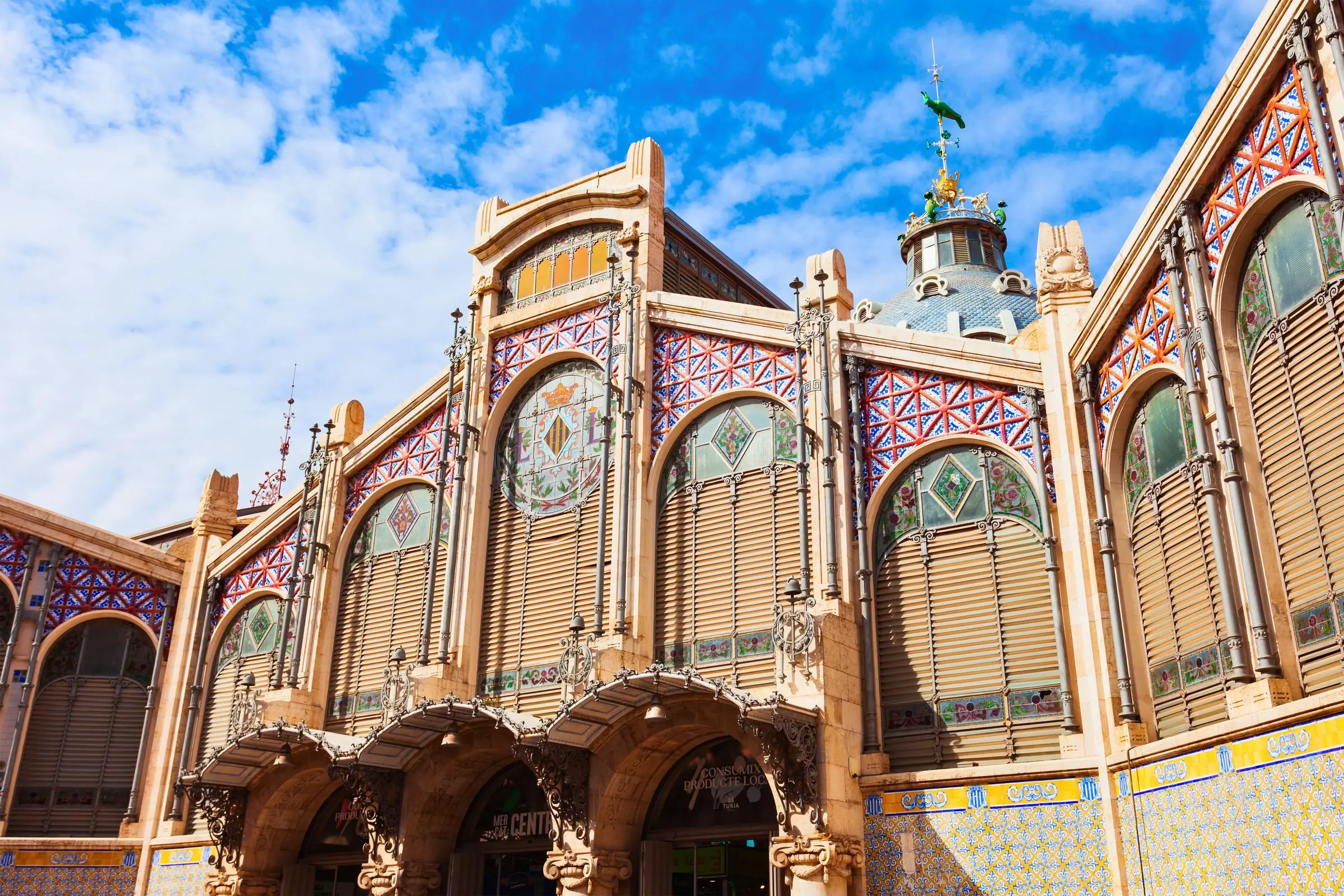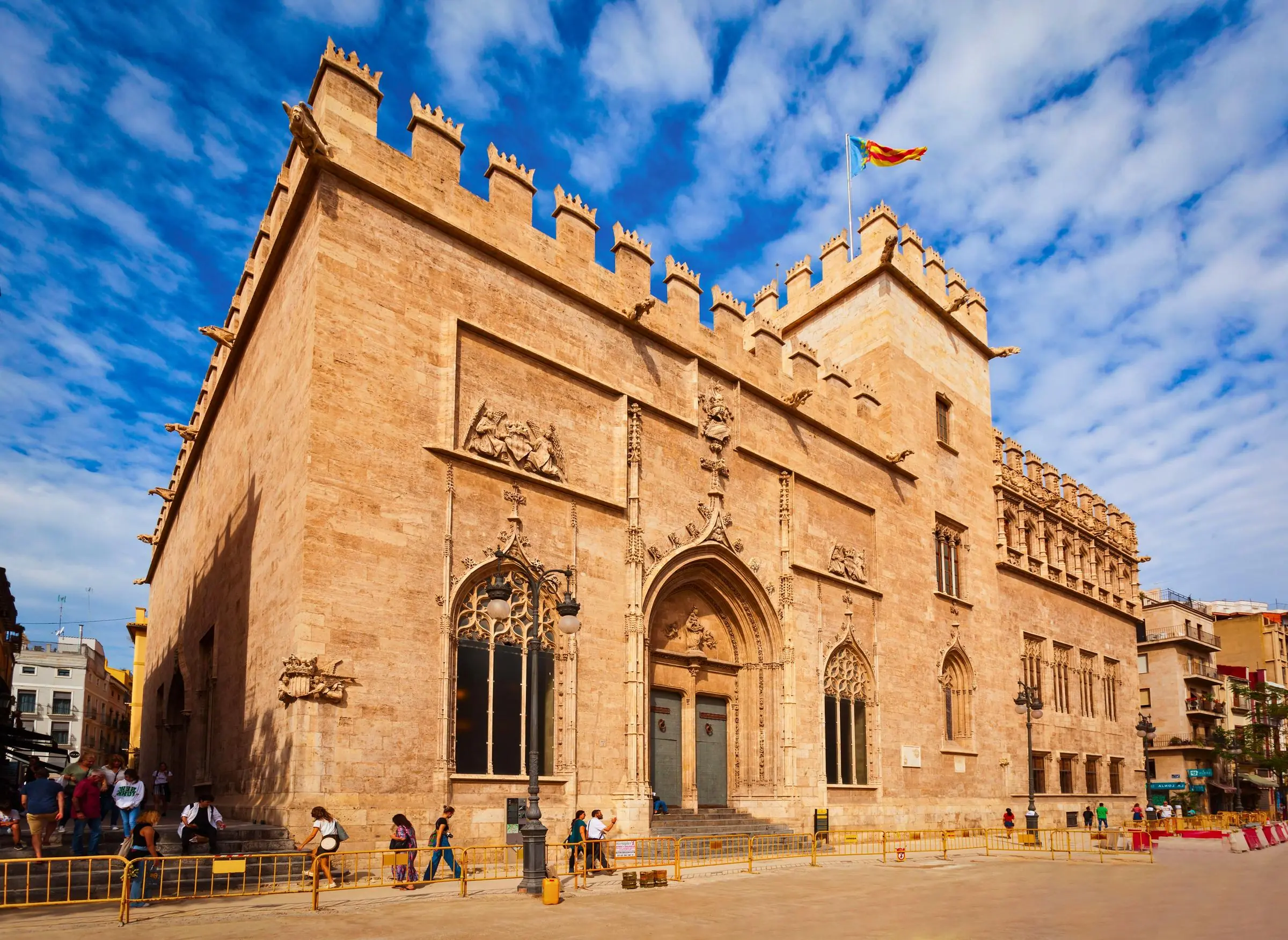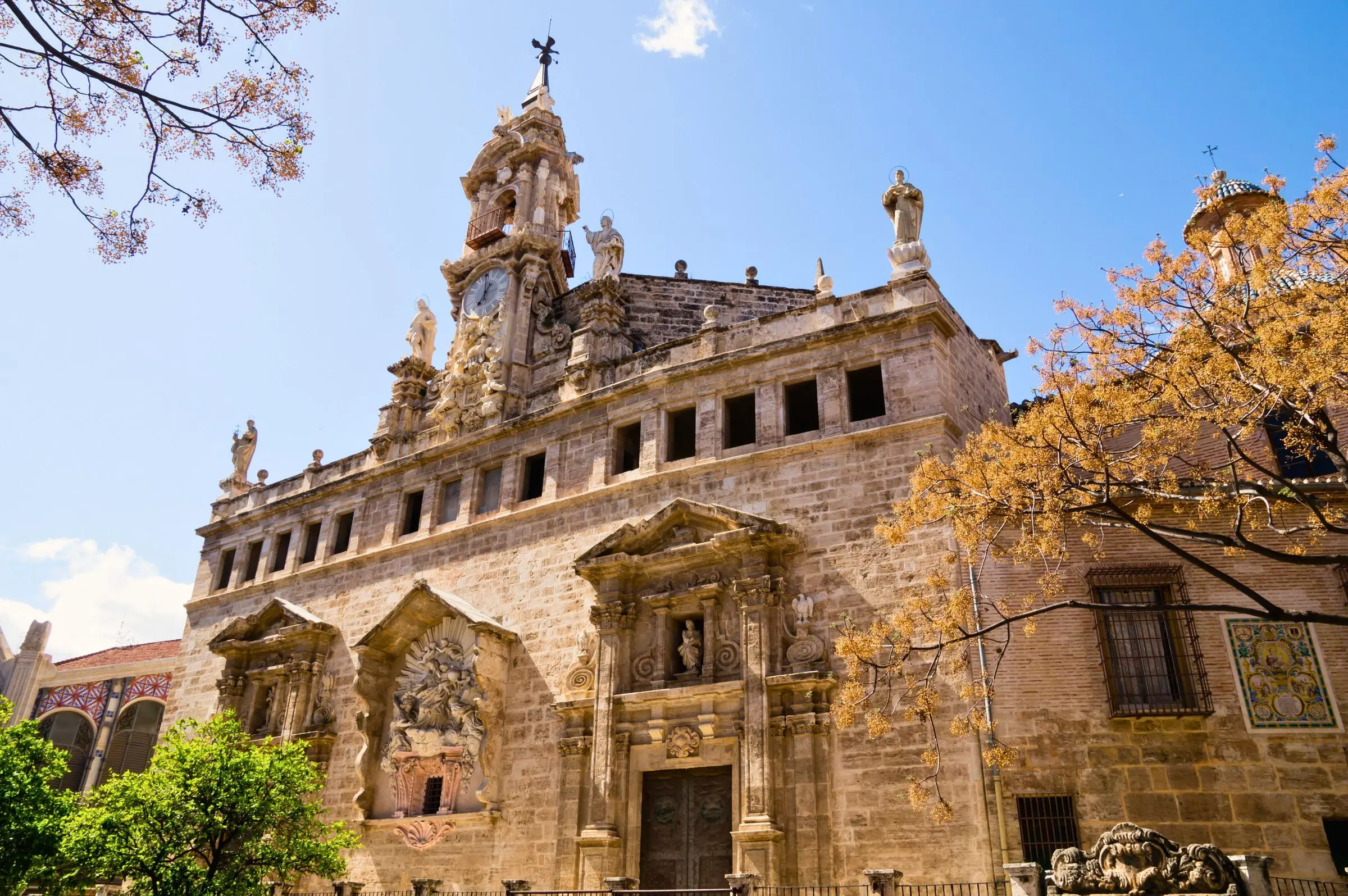
If you spend any time in Valencia’s historic center, you will inevitably find yourself standing between three massive architectural landmarks: the Central Market, the Silk Exchange, and a large, slightly weathered church with a blind rose window. That church is the Real Parroquia de los Santos Juanes (Royal Parish of the Two Saint Johns), known locally as Sant Joan del Mercat.
While many visitors take a quick photo of its exterior and move on to buy jamón at the market, stepping inside reveals one of the most dramatic architectural stories in the city. This is a building defined by fire, destruction, and a massive, ongoing Baroque reconstruction.
Here is exactly what you need to know to plan your visit, understand the ongoing restoration of the Antonio Palomino frescoes, and choose the right entry pass.
Is Santos Juanes Church Right For You?
Because it sits directly on the main tourist trail, Santos Juanes is easy to fit into any itinerary. However, how you experience it depends on your travel style.
- For the Time-Poor: If you only have 10 minutes, you don’t need to buy a ticket. Stand in the Plaza del Mercado, admire the exterior Virgen del Rosario niche, and look up at the “O de Sant Joan” (the massive rose window).
- For Art & History Buffs: This is a highly recommended stop. The church is currently undergoing a massive restoration project. Buying the Immersive Baroque Experience allows you to learn exactly how conservators are saving 18th-century frescoes that were nearly destroyed in the 1930s.
- For Budget Travelers: At €15, the entry fee is slightly higher than some smaller parish churches, but the ticket includes a high-quality audio guide, and the funds directly support the multi-million euro restoration effort.
If you plan to visit multiple historic churches in Valencia, consider looking into combo tickets that include Santos Juanes, the Church of San Nicolás, and the Silk Museum.
A History of Fire and Rebirth
To understand what you are looking at inside Santos Juanes, you have to understand its relationship with fire.
The church was originally built in 1240 on the site of a former mosque. Like many medieval structures, it suffered a major fire in the 14th century, leading to a Gothic rebuild. However, it was the catastrophic fire of 1592 that truly changed the building’s trajectory. The blaze gutted the interior, forcing the parish to reconstruct the church in the prevailing style of the time: exuberant, theatrical Baroque.
The most recent tragedy occurred during the Spanish Civil War in 1936. The church was set on fire, and it burned for days. The intense heat calcined the stucco statues, destroyed the altarpieces, and severely blackened the massive ceiling frescoes painted by Antonio Palomino.
When you visit the attraction today, you are not looking at a pristine, untouched historical artifact. You are looking at a survivor, and the ongoing restoration is as much a part of the experience as the original art.
5 Highlights Inside (and Outside) the Church
Rather than wandering aimlessly, focus your attention on these five specific architectural and artistic elements.
1. The Antonio Palomino Ceiling Frescoes
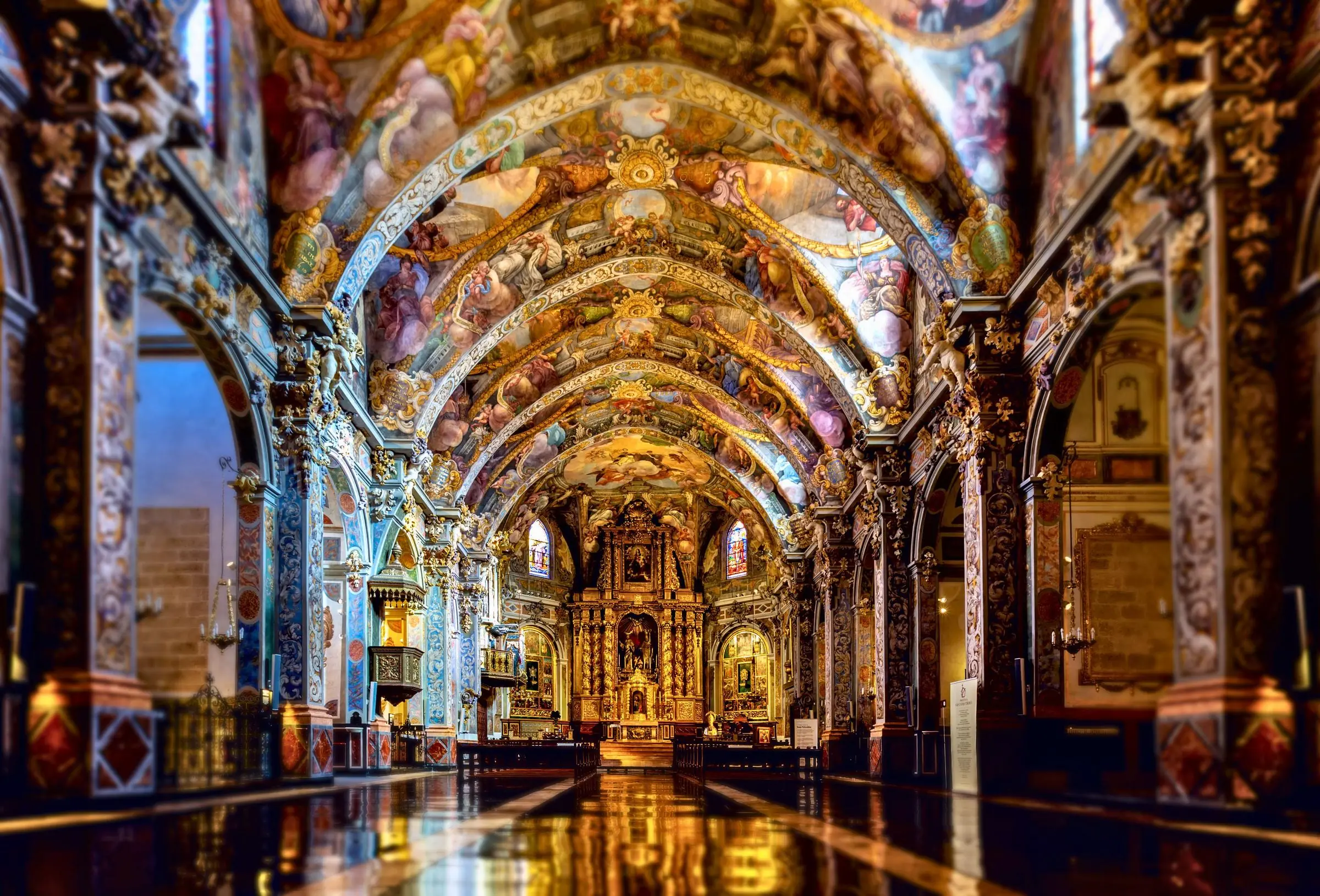
In 1700, King Charles II’s court painter, Antonio Palomino, was commissioned to paint the vault of Santos Juanes. He covered nearly 1,200 square meters with vibrant frescoes depicting the Book of Revelation, the Holy Trinity, and the two Saint Johns (John the Baptist and John the Evangelist).
The 1936 fire nearly destroyed them. For decades, they remained blackened and peeling. Today, a highly advanced restoration project (funded by the Hortensia Herrero Foundation) is using lasers and micro-cleaning techniques to reveal Palomino’s original colors. The audio guide explains this process in detail, pointing out the stark contrast between the restored sections and the fire-damaged areas.
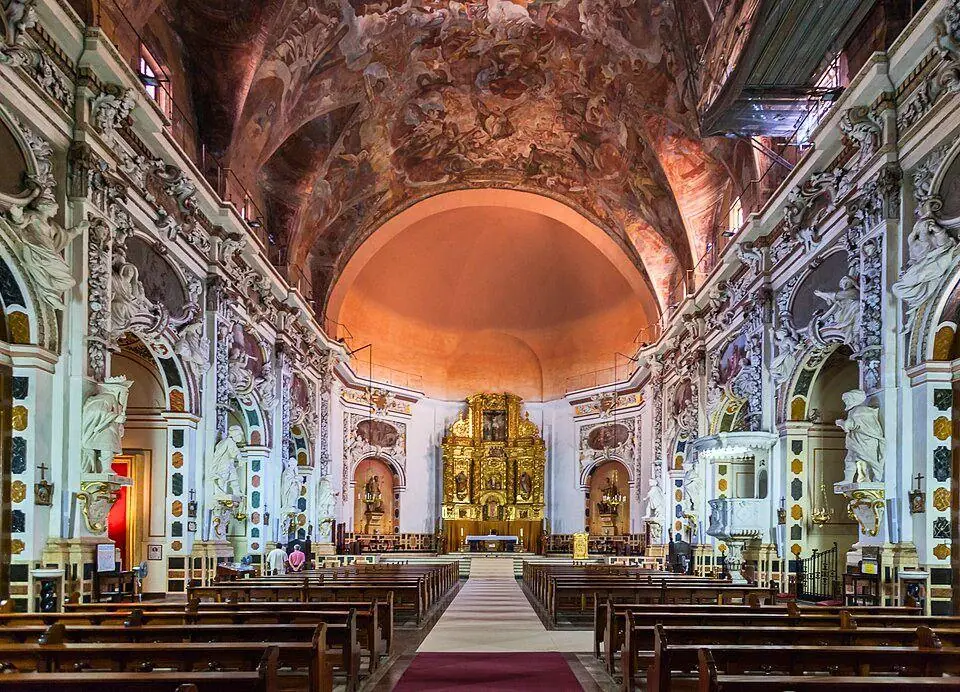
2. The Churrigueresque Stucco Statues
Lining the nave are massive, dynamic stucco statues designed by Jacopo Bertesi and later finished by other sculptors. These figures represent the twelve tribes of Israel and various biblical figures. The Churrigueresque style (a highly ornate Spanish Baroque) means these statues are incredibly detailed, with flowing robes and dramatic postures. Notice how the heat from the 1936 fire permanently altered the texture and color of the stucco in certain areas.
3. The Covarrubias Rose Window (L’O de Sant Joan)
If you look at the rear facade of the church (facing the Silk Exchange), you will see a massive, bricked-up rose window. Designed by Vicente García, it is known locally as “L’O de Sant Joan” (The O of Saint John) because of its perfect circular shape. It was originally designed to let light into the church, but structural changes during the Baroque reconstruction required it to be sealed. It remains one of the most recognizable architectural features of the Ciutat Vella.
4. The Exterior Virgen del Rosario Niche
Walk around to the side of the church facing the Central Market. Here, you will find a large, open-air niche containing a sculpture of the Virgin of the Rosary, created by Jacopo Bertesi. Because the market square was the commercial heart of the city, this niche was designed as an open-air chapel so that merchants and shoppers could pray without having to leave their stalls or enter the church.
5. The Historic Crypts
Beneath the main floor lies a series of crypts. While access can sometimes be restricted depending on the phase of the restoration work, the guided audio tours usually provide access or detailed context about the burial practices of the parish. The crypts offer a stark, quiet contrast to the busy, ornate Baroque nave above.
Ticket Options: Standard vs. Immersive Experience
You generally have two ways to experience Santos Juanes as a tourist. Because the church is actively managing a massive restoration, standard “wander in for free” access is heavily restricted outside of specific mass times (and walking around during mass is strictly prohibited).
Entry + Immersive Baroque Experience
- Includes a high-quality audio guide (multiple languages).
- Focuses heavily on the Antonio Palomino fresco restoration.
- Explains the 1936 fire damage and modern conservation techniques.
- Funds directly support the ongoing restoration.
Entry Ticket with Audioguide
- Standard entry via GetYourGuide.
- Includes the basic audio guide.
- Good alternative if the primary immersive ticket is sold out.
- Same price, but slightly less focus on the technical restoration aspects.
Which ticket should you buy?
- The Immersive Experience provides crucial context. Without it, you are just looking at a damaged ceiling; with it, you are witnessing a historic art rescue mission.
- The audio guide is well-paced and doesn’t overwhelm you with dry dates.
- At €15, it is pricier than standard parish churches.
- Scaffolding is often present, which can obstruct some photos.
Morning Lighting Tips & Logistics
Because of its orientation and the density of the surrounding buildings, lighting plays a huge role in how you experience Santos Juanes.
The Best Time to Visit
- For Exterior Photos: The facade facing the Central Market gets excellent morning light. Stand near the market entrance between 9:00 AM and 10:30 AM to photograph the Virgen del Rosario niche and the church’s bell tower against a blue sky.
- For Interior Viewing: Aim to enter the church around 10:30 AM to 11:30 AM. The morning light filters through the high windows, illuminating the Palomino frescoes naturally before the harsher midday sun creates heavy shadows in the nave.
How to Get There
- Location: Plaza del Mercado. It is impossible to miss if you are visiting the Central Market or the Silk Exchange.
- Metro: The closest stations are Xàtiva (Lines 3, 5, 9) and Àngel Guimerà (Lines 1, 2, 3, 5, 9). Both are about a 10-minute walk away.
- Bus: EMT lines 7, 27, and 73 drop you very close to the market square.
Watch Your Belongings: The Plaza del Mercado is one of the busiest pedestrian areas in Valencia. While violent crime is incredibly rare, pickpockets do operate in the crowds moving between the market, the Silk Exchange, and the church. Keep your bags zipped and in front of you.
Keep Planning: Check out our Things to Do in Valencia guide to see how Santos Juanes fits into a broader walking route of the historic center.
Where to Stay Nearby
Staying near Santos Juanes puts you in the absolute center of Valencia’s historic district. You will be within a 5-minute walk of the Cathedral, the Silk Exchange, and dozens of excellent tapas bars in the El Carmen neighborhood. Use the map below to find accommodations near the Plaza del Mercado.
Frequently Asked Questions
Is there a dress code for Santos Juanes Church?
Yes. As it is an active Catholic parish, visitors are required to dress modestly. Shoulders and knees should be covered. If you are visiting in the height of summer, bring a light scarf to drape over your shoulders before entering.
How much time do I need to visit?
Most visitors spend about 45 minutes inside. If you are listening to the full audio guide for the Immersive Baroque Experience, allow for a full hour to properly take in the details of the fresco restoration.
Is the church wheelchair accessible?
The main nave of the church is accessible for wheelchair users, allowing you to view the frescoes and the main altar. However, access to the historic crypts involves stairs and is not fully accessible.
Can I take photos inside?
Yes, photography is allowed for personal use. However, the use of flash is strictly prohibited, as the intense light can further damage the delicate, centuries-old frescoes currently undergoing restoration. Tripods are also not allowed without prior media clearance.
Why is there scaffolding inside the church?
The church is undergoing a massive, multi-year restoration project funded by the Hortensia Herrero Foundation to repair the devastating damage caused by the 1936 fire. The scaffolding is necessary for conservators to reach the 1,200 square meters of ceiling frescoes.
Can I attend mass here instead of buying a ticket?
Yes, you can attend mass for free. However, during mass, you must remain seated in the pews, participate respectfully, and you are not permitted to walk around the perimeter, take photos, or use the audio guide. To properly tour the architecture, you must visit during designated tourist hours.