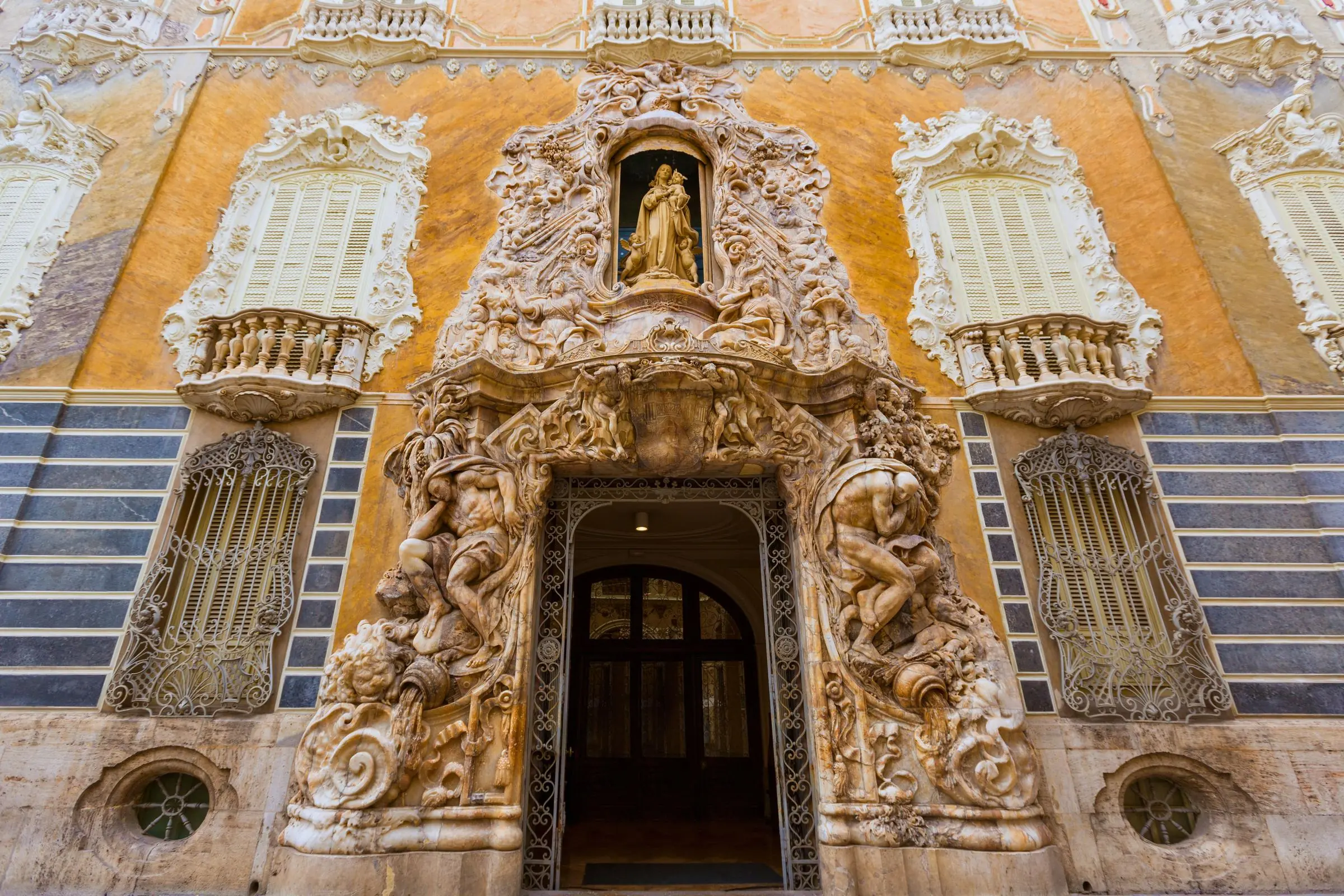
Walking down Calle Poeta Querol, a street known mostly for high-end boutiques and luxury storefronts, you are suddenly confronted by an architectural explosion. The Marqués de Dos Aguas Palace (Palacio del Marqués de Dos Aguas) stops people in their tracks. With its swirling alabaster figures, pastel frescoes, and wrought-iron balconies, it is the most unapologetically extravagant Rococo building in Valencia.
But this palatial townhouse is more than just a photo backdrop. Inside, it houses the González Martí National Museum of Ceramics and Sumptuary Arts. The building offers a two-for-one experience: the first floor preserves the opulent 19th-century living quarters of the Marquis, while the upper floors hold one of the most comprehensive collections of ceramics in Europe, highlighting the region’s deep historical ties to pottery.
Whether you are here to analyze medieval Manises lusterware or just want to see how Valencia’s ultra-wealthy lived in the 1800s, this guide breaks down exactly how to navigate the palace, understand its entry parameters, and make the most of your visit.
Is the Palace Right for Your Trip?
Because the building serves dual purposes—historic house and specialized museum—it appeals to different travelers in different ways.
- For the Time-Poor: If you only have 15 minutes, you don’t even need to buy a ticket. Walk to the Rinconada de Federico García Sanchiz to admire the exterior portal, then step just inside the main doors to view the Carriage Patio. It costs nothing to look at the ground floor lobby. Alternatively, many guided walking tours of the Ciutat Vella stop here to explain the facade’s history.
- For Budget Travelers: This is a state-run museum (Ministry of Culture), which means standard entry is exceptionally cheap (usually €3). Even better, entry is completely free on Saturday afternoons (from 4:00 PM) and all day on Sundays.
- For Families: Children might lose interest quickly in the glass cases of historical plates on the second floor. However, the ground-floor carriages and the first-floor Ballroom—which looks like a set from a fairy tale—usually hold their attention. Keep the visit under 45 minutes.
- For Art & History Buffs: Allocate at least 90 minutes to two hours. The evolution of Islamic pottery techniques into Spanish Christian ceramics is thoroughly documented here, making it a crucial stop for understanding Valencia’s trade history.
Because this is a national museum, ticket lines are rarely long, and you can easily buy tickets at the door. However, if you plan to visit multiple museums and use public transit, the Valencia Tourist Card offers a discount on entry and covers your bus or metro ride to get here.
5 Landmarks to Deep-Dive Inside the Palace
The palace is divided into three distinct sections: the exterior/ground floor, the Piano Nobile (the family’s private rooms), and the second floor (the ceramics museum). Here are the five specific landmarks you should prioritize.
1. The Alabaster Entrance Portal
Before you even buy a ticket, you will spend time staring at the main entrance. Designed by painter Hipólito Rovira and carved by sculptor Ignacio Vergara in 1740, the portal is made entirely of translucent alabaster from nearby quarries in Picassent.
The design is an allegorical nod to the family’s title (“Marquis of Two Waters”). Two massive, muscular atlantes flank the door, representing the two main rivers of the Valencia region: the Turia and the Júcar. Water literally pours from the amphorae they hold, cascading down the stone. Look closely at the intricate details: you’ll see carved crocodiles, lions, ivy, and snakes woven into the composition. At the very top, sitting in a niche, is a statue of the Virgin of the Rosary, the patroness of the house.
2. The Carriage Patio (Patio de Carruajes)
Once you pass through the alabaster doors, you enter the central courtyard. In the 18th century, this is where horse-drawn carriages would pull in to drop off guests. Today, it houses two spectacular original carriages.
The highlight is the Carroza de las Ninfas (Carriage of the Nymphs), built in 1753. Designed by Ignacio Vergara (the same sculptor who did the front door), it is a masterclass in Rococo woodcarving, featuring gilded nymphs, cherubs, and intricate lanterns. Next to it sits the slightly more restrained, but equally impressive, Empire-style carriage belonging to the Marquis of Llanera.
3. The Ballroom (Salón de Baile)
Head up the grand staircase to the first floor, known as the Piano Nobile. These rooms were heavily remodeled in the mid-19th century by Vicente Dasí Lluesma, who inherited the palace and wanted to update it to the tastes of the Victorian era.
The Ballroom is the most opulent space in the building. Designed to intimidate guests with sheer wealth, the room is lined with massive mirrors (to reflect light and make the space look larger), gilded stucco, and silk wall coverings. The focal points are the enormous, multi-tiered crystal chandeliers hanging from the frescoed ceiling. Look up toward the back of the room to spot the elevated musicians’ gallery, where a live orchestra would play out of sight of the dancing guests below.
4. The Porcelain Room (Sala de Porcelana)
Also on the first floor, the Porcelain Room was designed as an intimate sitting room. The walls are completely covered in original, hand-painted ceramic tiles and decorative plates. The furniture in this room is original to the house, featuring delicate chairs and tables imported from France and Germany.
Take note of the Meissen porcelain pieces on display here. In the 18th and 19th centuries, owning imported German porcelain was a massive status symbol, and the Marquis displayed his collection prominently to signal his international connections and wealth.
5. Medieval Manises Ceramic Collections
The second floor shifts from a historic house to a traditional museum layout. This is the core of the González Martí National Museum of Ceramics. Manuel González Martí was a passionate local collector who donated his massive pottery collection to the state in 1947, prompting the government to buy this palace to house it.
The most historically significant section is dedicated to medieval ceramics from the nearby towns of Manises and Paterna.
- Lusterware: Look for the metallic, gold-tinged plates and bowls. This technique was brought to the Iberian Peninsula by the Moors. By the 14th and 15th centuries, Manises was producing the most sought-after luxury pottery in Europe, exporting it to the Popes in Avignon and royalty across the continent.
- Socarrats: Don’t miss the collection of socarrats—large, unglazed clay tiles painted in rust-red and black. These were traditionally placed between the wooden beams of ceilings in medieval Valencian homes.
- Picasso Collection: Tucked away in the modern section, you will find a small but delightful collection of ceramic plates painted by Pablo Picasso, donated by the artist himself.
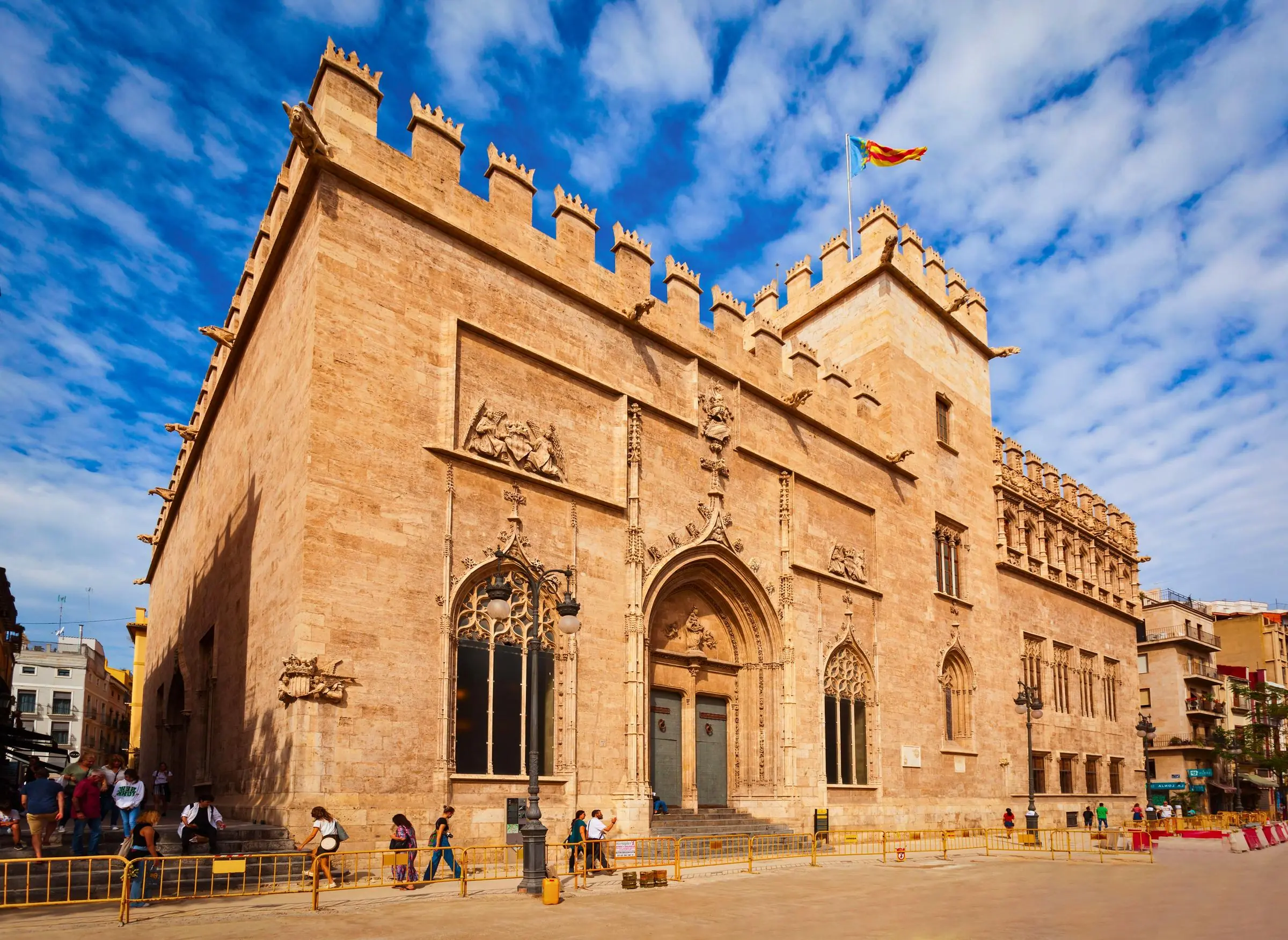
Keep Planning: If you are fascinated by Valencia’s medieval trade history, your next stop should be La Lonja de la Seda, the 15th-century Silk Exchange located just a 5-minute walk away.
Municipal Entry Parameters & Logistics
Because the museum is managed by the Spanish Ministry of Culture (not the local Valencia city council), its entry parameters differ slightly from municipal museums like the Almoina Archaeological Center.
Palace Entry Details
General Admission
- Valid for both the palace rooms and the ceramics museum.
- Tickets are purchased at the physical box office inside the courtyard.
Reduced Entry
- Available for students, large families, and youth card holders (with valid ID).
Free Entry Times
- Saturdays from 4:00 PM until closing.
- Sundays all day.
- Under 18s, over 65s, and unemployed individuals (with proof) enter free anytime.
Opening Hours
- Tuesday to Saturday: 10:00 AM – 2:00 PM and 4:00 PM – 8:00 PM.
- Sundays and Public Holidays: 10:00 AM – 2:00 PM.
- Mondays: Closed.
- Note: The ticket office closes 15 minutes before the museum shuts down.
Accessibility
The ground floor (Carriage Patio) is fully accessible. There is an elevator to take wheelchair users and those with limited mobility to the first and second floors. However, because it is a historic building, some doorways on the first floor are narrow, and the lighting in certain rooms is kept intentionally low to preserve the textiles.
Mapping Poeta Querol Access
The palace is located at Carrer del Poeta Querol, 2, right in the heart of the Ciutat Vella.
Walking
The easiest way to reach the palace is on foot. It is highly central and pedestrian-friendly.
- From Plaza de la Reina (near the Valencia Cathedral): Walk south down Carrer del Mar, then turn right onto Poeta Querol. (5-minute walk).
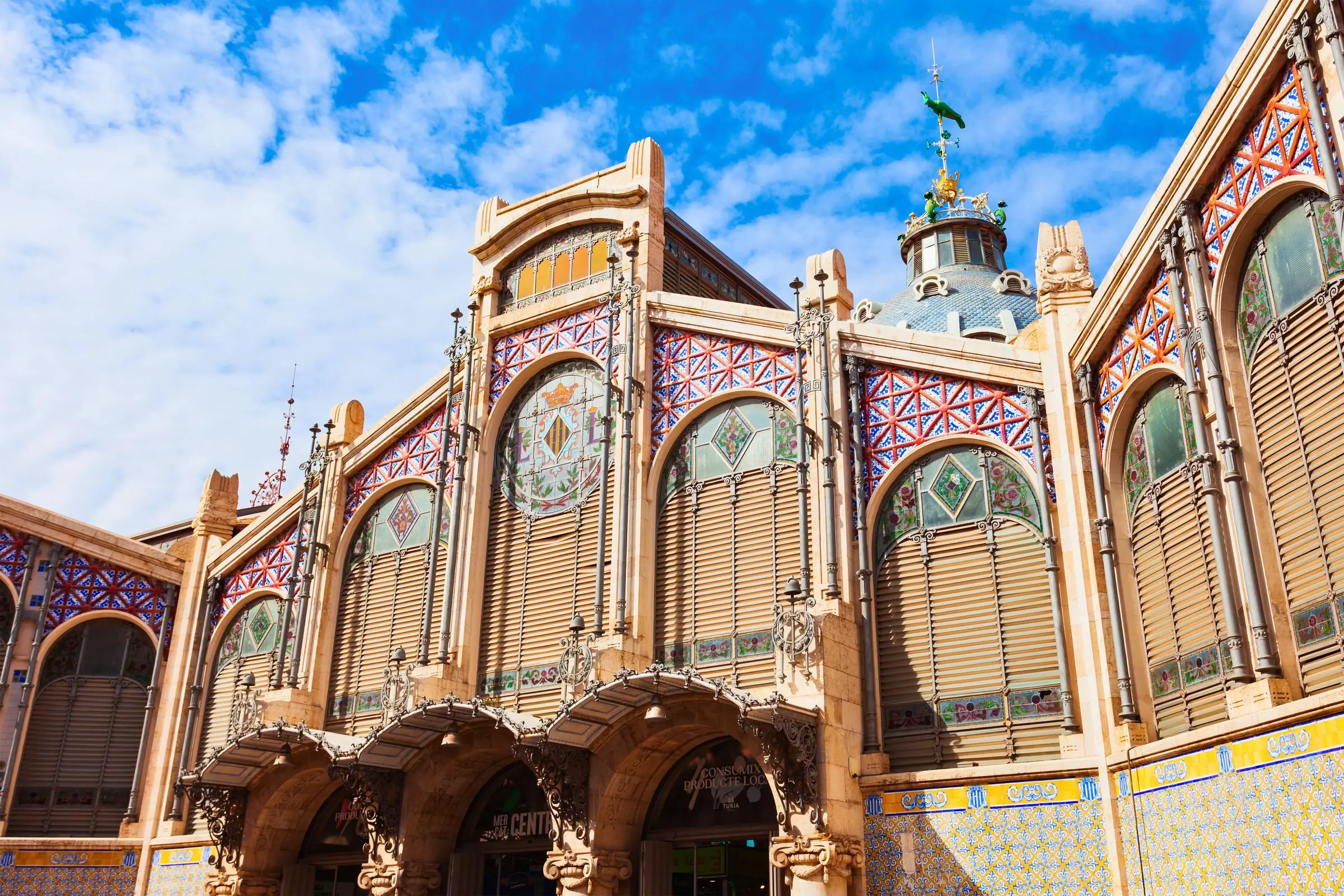
- From the Central Market: Walk east through Plaza del Mercado and Plaza Redonda. (7-minute walk).
Public Transit
Calle Poeta Querol is a heavily restricted street for private cars, but public buses run right past the palace.
- Bus: EMT Line C1 (the circular Old Town route), Line 4, and Line 31 all stop at the Marqués de Dos Aguas bus stop, literally steps from the front door.
- Metro: The closest metro station is Colón (Lines 3, 5, 7, 9). From the station, walk down Carrer de les Barques to Poeta Querol. It takes about 8 minutes.
Driving Warning: Do not attempt to drive a rental car to the palace. Poeta Querol is monitored by traffic cameras, and unauthorized vehicles are heavily fined. If you are taking a taxi, they are allowed to drop you off directly in front of the building.
Local Tips for Your Visit
- Look Up at the Frescoes: While the alabaster portal gets all the attention, the rest of the exterior facade is covered in pastel frescoes. These were actually restored in the late 20th century to replicate the original 18th-century designs, which had faded away.
- Photography: You are allowed to take photos inside the palace, but flash is strictly prohibited to protect the historic fabrics and wallpapers on the first floor. Tripods are also not allowed without prior press permission.
- Combine with a Cafe Stop: After your visit, walk two minutes down the street to Plaza del Patriarca. It’s a quiet, beautiful square perfect for a coffee, and it sits right across from the historic La Nau university building.
- The “Golden Mile”: Calle Poeta Querol is Valencia’s equivalent to Rodeo Drive or Bond Street. If you are interested in high-end shopping (Loewe, Louis Vuitton), this is the street for it.
Where to Stay Nearby
Staying near the Marqués de Dos Aguas Palace puts you in the most elegant section of the Old Town. You are perfectly positioned between the historic center and the upscale Ruzafa and Ensanche districts.
Use the map below to find hotels and apartments within walking distance of the palace.
Frequently Asked Questions
How much time do I need to visit the Marqués de Dos Aguas Palace?
Most visitors spend about 1.5 hours inside. This gives you enough time to view the carriages on the ground floor, walk through the historic rooms on the first floor, and browse the ceramics collection on the second floor. If you are a pottery enthusiast, allow 2 hours.
Is the museum air-conditioned?
Yes, the building is climate-controlled to protect the artwork and antiques. It is a great place to escape the midday heat during the Valencia summer.
Can I buy tickets online in advance?
Currently, the Ministry of Culture does not offer online advance ticketing for standard entry to this specific museum. Tickets must be purchased at the box office upon arrival. Because it rarely reaches capacity, this is usually a quick process.
Are there guided tours available inside the museum?
The museum itself does not offer daily guided tours for individual walk-ins. However, you can rent an audio guide at the front desk for a small fee, which provides excellent context for both the palace architecture and the ceramic pieces. Many private walking tours will guide you through the exterior history.
Is there a cloakroom or luggage storage?
There are small lockers available near the ticket desk where you can leave backpacks and umbrellas (which are not allowed in the galleries). However, they cannot accommodate large suitcases. If you have large bags, use a luggage storage service nearby.
Is the palace open on Mondays?
No. Like almost all state and municipal museums in Valencia, the Marqués de Dos Aguas Palace is closed on Mondays. Plan your visit between Tuesday and Sunday.