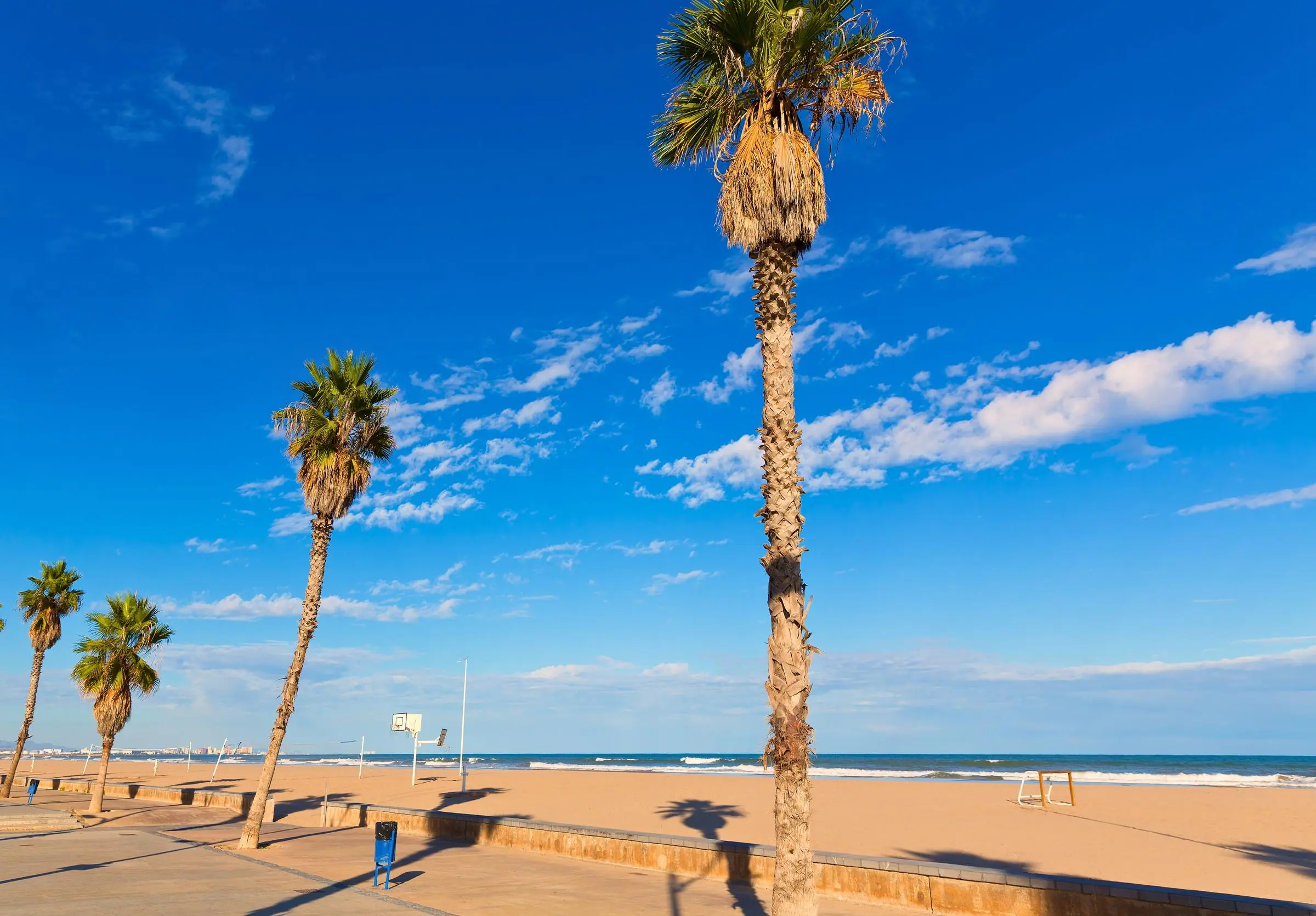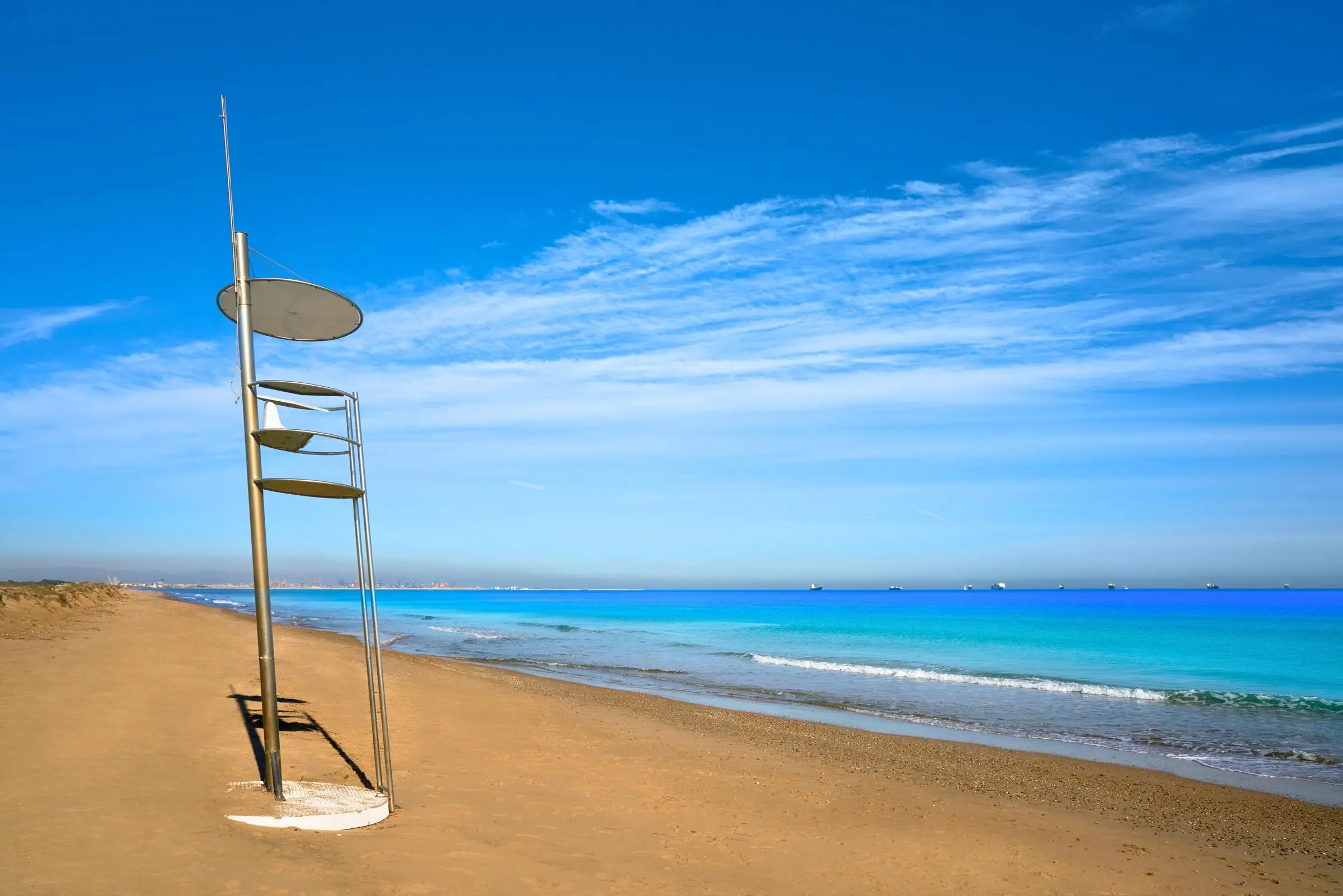
If you ask a local where they go to escape the summer crowds of Malvarrosa, the answer is almost always El Saler. Located just south of the city, this nearly 5-kilometer stretch of coastline is the wild, untamed sibling to Valencia’s urban beaches.
Here, there are no concrete promenades, thumping beach clubs, or volleyball nets. Instead, El Saler is defined by the Devesa del Saler—a dense Mediterranean pine forest that grows right up to a ridge of protected, white-sand dunes. Because it sits within the boundaries of the Albufera Natural Park, development is strictly controlled.
Visiting El Saler requires a bit more planning than simply walking off the tram. You need to know how to navigate the transit options, where to find shade, and what to pack. This guide breaks down the logistics and highlights of Valencia’s most natural coastal escape.
Is El Saler Right For You?
El Saler is beautiful, but its lack of commercial infrastructure means it isn’t the right fit for every traveler.
- Nature Lovers & Hikers: This is your spot. The combination of forest trails and open beach offers a full day of outdoor exploration.
- Couples & Solo Travelers: If you want quiet space to read a book, sunbathe (textile or nudist), or walk for miles without hitting a concrete wall, you’ll prefer this over the city beaches.
- Families with Young Children: Proceed with caution. While the sand is soft and there is plenty of space, the water gets deep faster than at Malvarrosa, and the undertow can be stronger. Furthermore, the lack of immediate toilets, shade on the sand, and food vendors means you must carry all your supplies.
- The Time-Poor: If you only have a weekend in Valencia, skip it. Getting here, enjoying the beach, and getting back is a half-day commitment at minimum.
5 Natural Highlights of El Saler
El Saler isn’t just a place to lay a towel; it’s a diverse ecosystem. Here are the five distinct zones and experiences that define the area.
1. The Pristine Coastal Sand Dunes
In the 1970s, developers planned to pave over this area for a massive resort. Local protests stopped the project, and decades of ecological work have restored the dunes to their natural state. Today, the dunes act as a vital barrier between the sea and the freshwater Albufera lake.
- The Rule: You must use the elevated wooden boardwalks to cross the dunes. Walking on the dune grass destroys the fragile root systems holding the sand in place.
- The Vibe: As you cross the boardwalks, the smell of hot pine resin gives way to the salty sea breeze. It’s a stark, beautiful transition.
2. Mediterranean Pine Nature Trails (La Devesa)
Before you even hit the sand, you have to walk through the Devesa forest. This dense woodland of Aleppo pines, mastic shrubs, and wild myrtle provides the only natural shade in the area.
- Local Tip: In the peak heat of July and August (between 2 PM and 5 PM), the beach itself becomes scorching. Locals retreat into the pine trails to eat their packed lunches in the shade. There are several marked botanical routes (like the Itinerario Histórico) that take about 45 minutes to walk.
3. Nudist Sunbathing Sectors
El Saler has a long-standing, relaxed attitude toward naturism. While the areas closest to the main parking lots and bus stops are predominantly “textile” (swimsuits worn), the stretches in between are mixed or explicitly nudist.
- Where to go: The most established nudist zone is near the old Torre del Saler (Saler Tower) ruins, roughly in the middle of the beach, and further south toward Playa de la Garrofera. There are no hard borders; just walk until the crowd thins out.
4. Garbí Windsurfing Zones
During the summer, a thermal wind known as the Garbí kicks up reliably in the mid-to-late afternoon. This makes the southern end of El Saler a hotspot for windsurfing and kitesurfing.
- Action: If you want to watch the colorful kites, head south toward the Casal d’Esplai area after 3 PM. If you want to join in, you can book a 2-Hour Windsurfing Class to take advantage of these consistent coastal breezes.
5. Low-Light Sunset Horizons
Because Valencia faces east, the sun sets inland, not over the sea. However, El Saler offers a unique geographical advantage. The beach sits on a narrow sandbar.
- The Hack: Spend your day on the beach. Around 7:30 PM, pack up and walk 15 minutes west, crossing through the pines to the edge of the Albufera lake (near the Gola de Pujol canal). Here, you can watch the sun set spectacularly over the mirror-like waters of the freshwater lagoon.
Sunset Boat Rides: To get the best view of the sunset, many visitors book a traditional albuferenc boat ride on the lake. You can secure an Albufera Natural Park with Sunset Boat Tour or an Albufera guided day tour from Valencia with a boat ride to end your beach day.
Logistics: How to Get to El Saler
You have two main options for reaching the beach from central Valencia: the municipal bus or cycling.
Option A: The EMT Bus #24 (or #25)
Valencia’s red EMT buses run direct lines from the city center to the Albufera coast.
- The Route: Catch Bus #24 or #25 from the Porta de la Mar stop (near the Turia Gardens).
- The Difference: Bus #24 goes to El Palmar (the paella village), while #25 goes to El Perellonet. Both stop at El Saler.
- Cost & Time: The ride takes about 30–40 minutes depending on traffic. It costs €1.50 one-way, or you can use your SUMA card or Valencia Tourist Card.
- The Catch: In peak summer, these buses get incredibly crowded. If you board at a later stop (like near the City of Arts and Sciences), you may have to stand the whole way, or the bus might drive past if it’s full. Board at the start of the line at Porta de la Mar.
Option B: Cycling the Coastal Trail
Riding a bike to El Saler is one of the best half-day activities in Valencia. The route is entirely flat and uses dedicated, separated cycle paths.
Cycling Route: City Center to El Saler
⏱️ Total: 45 minTuria to City of Arts
Start in the Turia Gardens and ride south toward the futuristic City of Arts and Sciences.
Port to Pinedo
Follow the bike path past the port area and over the bridge into Pinedo (the first southern beach).
The Pine Forest
The path shifts away from the road and dives directly into the Devesa pine forest, offering a shaded, scenic ride right to the El Saler boardwalks.
Bike Rental Tips: You can easily grab a City Bike Rental for the day. If you want a structured route with GPS, consider a Self-Guided Bike Tour to Albufera: Lake, Rice Fields & Beach.
Bus vs. Bike
- Bike: Total freedom, scenic forest paths, no waiting in hot bus queues.
- Bus: Cheap, air-conditioned (usually), better if you are carrying heavy coolers or umbrellas.
- Bike: You have to cycle 10km back after a tiring day in the sun.
- Bus: Can be packed like a sardine can in July and August.
Survival Guide: Food & Packing Advice
El Saler is a protected nature reserve. This means there are no beach clubs, no permanent kiosks on the sand, and no sunbed rentals. You must be entirely self-sufficient.
What to Pack
- Water: Bring at least 2 liters per person. There are very few public water fountains, and they are located back in the forest parking lots, not on the sand.
- Shade: An umbrella is mandatory in summer. The sun is relentless, and the pine trees are a 10-minute walk back across the dunes.
- Food: Pack a cooler with bocadillos (sandwiches), fruit, and snacks.
Where to Eat Nearby
If you don’t want to pack a lunch, you will have to leave the beach.
- El Saler Village: Located slightly inland from the northern end of the beach, this small town has a few traditional restaurants and a small supermarket.
- El Palmar: If you take Bus #24, you can ride it to the end of the line to El Palmar, a village famous for being the birthplace of traditional Valencian Paella.
If you don’t want to deal with public transit and packing coolers, book a packaged Albufera bus and boat trip from Valencia (or the Valencia 48-hour hop-on hop-off bus with the Albufera line and boat tour), which includes your transport, a boat ride on the lake, and drops you right at the nature reserve.
Where to Stay Near El Saler
Most visitors stay in central Valencia and visit El Saler as a day trip. However, if you want a quiet, nature-focused holiday, staying near the beach is an excellent option.
- Luxury: The Parador de El Saler is a famous luxury hotel and golf course located right on the edge of the reserve.
- Camping: There are several high-quality campsites (like Camping Valencia el Saler) hidden in the pine forests, offering bungalow rentals and tent pitches.
Frequently Asked Questions (FAQ)
Are there toilets and showers at El Saler beach?
Facilities are very sparse. During the peak summer season (mid-June to early September), the city installs a few temporary chemical toilets and foot-wash stations near the main boardwalk entrances. Outside of summer, there are no facilities at all.
Is it safe to swim at El Saler?
Yes, but you must pay attention to the flag system (Green = Safe, Yellow = Caution, Red = Do Not Swim). Unlike the city beaches, El Saler has no artificial breakwaters, meaning the waves and undertow can be noticeably stronger. Lifeguards are on duty during the summer months.
Can I bring my dog to El Saler beach?
Dogs are strictly prohibited on El Saler beach during the summer season to protect nesting birds in the dunes and maintain hygiene. In the off-season (November to February), rules are more relaxed, and you will see locals walking dogs, though they should technically remain on a leash.
How far is the walk from the bus stop to the sand?
When you get off the EMT bus on the main road (CV-500), you have to walk through the Devesa pine forest to reach the beach. Depending on which stop you use, this is a flat, scenic walk that takes between 10 and 15 minutes.
Are there jellyfish at El Saler?
Jellyfish (medusas) are not a constant problem, but they can appear in late August and September when the Mediterranean water is at its warmest. If there is a significant bloom, lifeguards will fly a specific jellyfish warning flag (usually white with a purple jellyfish icon) alongside a yellow flag.
Keep Planning: Looking for a beach with more restaurants and easier access? Read our guide to Malvarrosa Beach, or figure out how to get around with our Public Transport Guide.