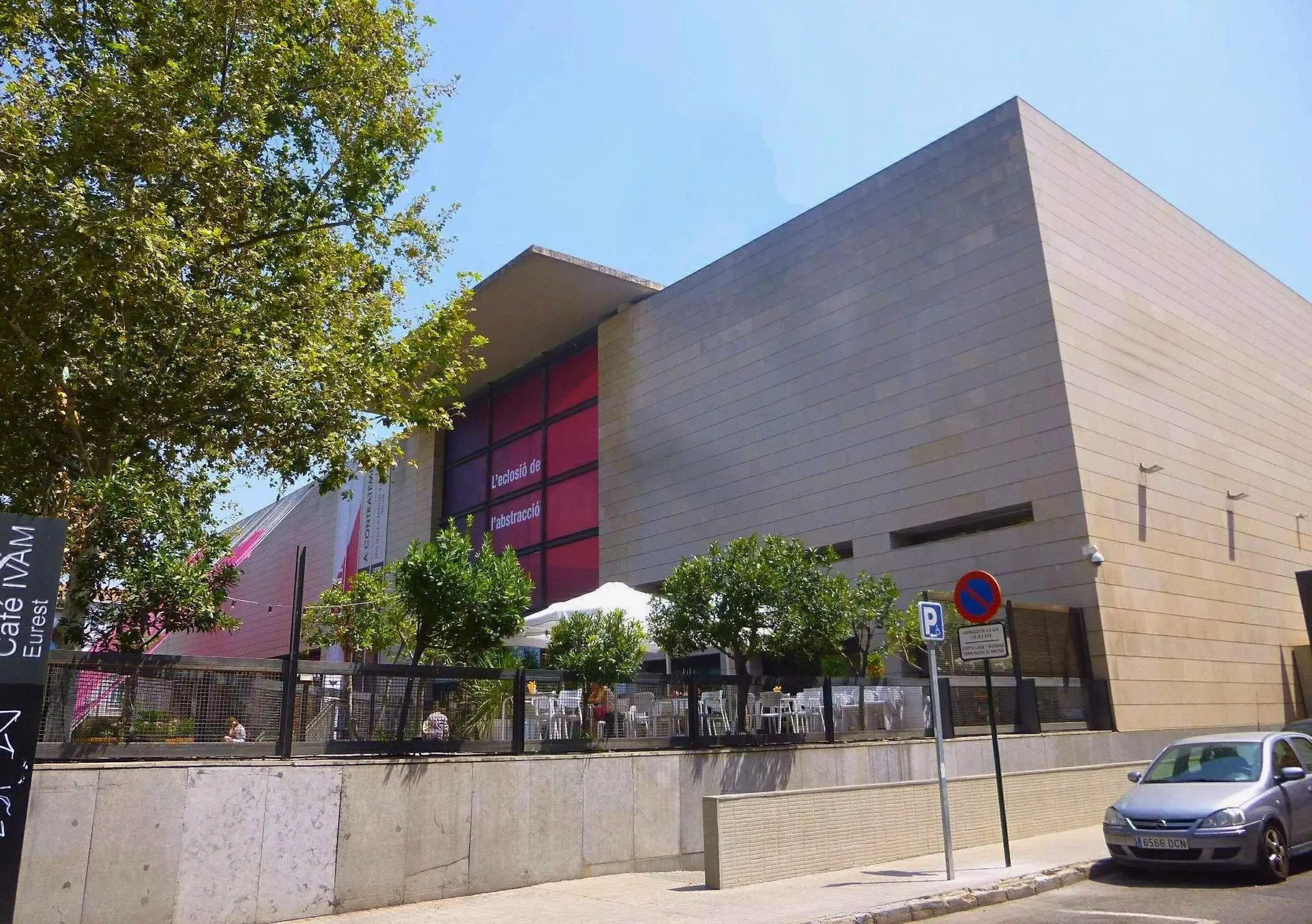
Opened in 1989, the Institut Valencià d’Art Modern (IVAM) holds the title of Spain’s first dedicated modern art museum—predating even Madrid’s famous Reina Sofía. Located on the northwestern edge of the historic El Carmen neighborhood, the museum acts as a physical and cultural bridge between Valencia’s medieval past and its avant-garde present.
While the crowds flock to the City of Arts and Sciences, IVAM remains a quieter, highly curated space. It is an essential stop for anyone interested in 20th-century European art, offering a deep dive into Spanish modernism, abstract sculpture, and contemporary installations.
This guide breaks down exactly how to navigate the museum’s five core cultural vectors, how to time your visit for free entry, and the easiest ways to get there using Valencia’s public transit network.
Who Should Visit IVAM (And How to Do It)
IVAM is a large, multi-level institution. Depending on your travel style and constraints, here is how you should approach the building.
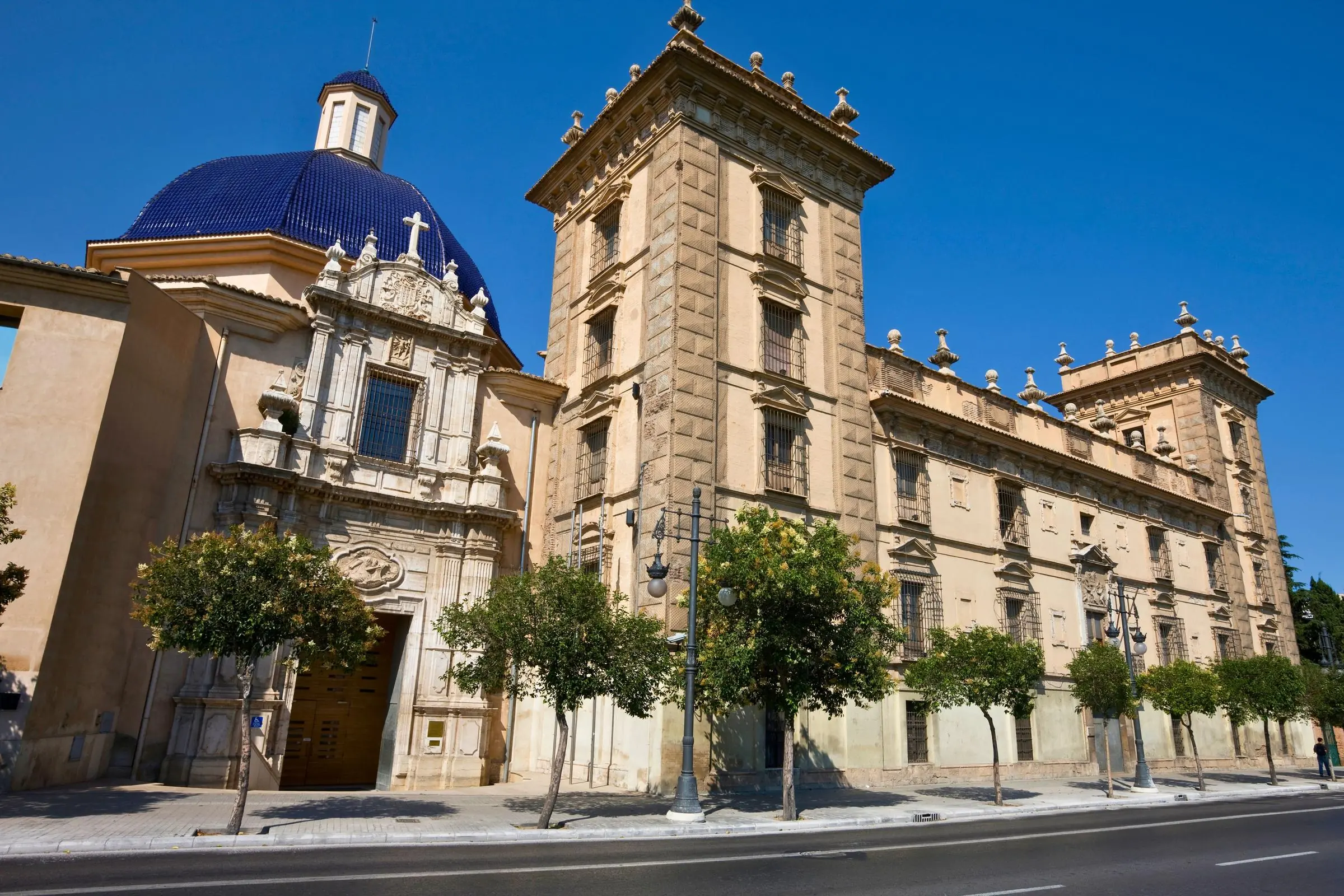
Museum of Fine Arts of Valencia
Discover Spain's second-largest classical art gallery—and why it remains one of Valencia's best free experiences.
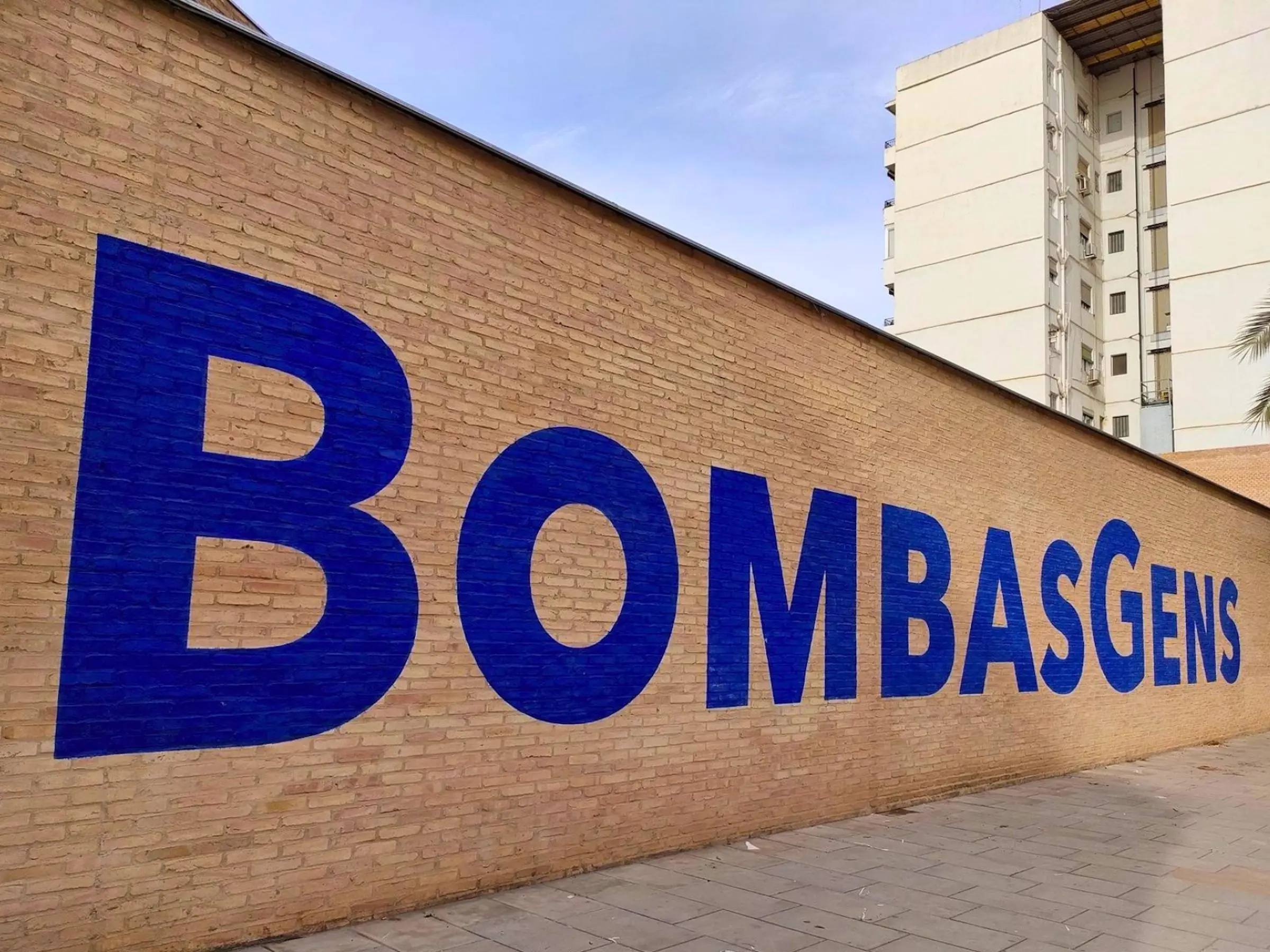
Bombas Gens
Explore a sprawling 1930s hydraulic pump factory that now houses immersive digital art, a Civil War bunker, and Michelin-starred dining.
For the Time-Poor
If you only have 60 to 90 minutes, skip the rotating contemporary exhibits on the upper floors. Head straight to Gallery 2 for the Julio González iron sculptures, then take the stairs down to the Sala de la Muralla in the basement to see the medieval wall foundations. These two exhibits provide the most uniquely “Valencian” experience in the building.
For Budget Travelers
General admission is normally €2, which is already incredibly cheap for a museum of this caliber. However, you can get in completely free if you time your visit right. Friday evenings from 7:00 PM to 9:00 PM are free for all visitors. Saturdays from 3:00 PM to 7:00 PM and all day Sunday are also free. If you plan to use public transit heavily, the Valencia Tourist Card covers your tram ride there and often includes free or discounted entry to regional museums.
For Families
Modern art museums can be tough for younger kids, but IVAM has a few saving graces. The large, abstract iron sculptures by Julio González often look like giant robots or mechanical monsters, which can spark a child’s imagination. The outdoor terrace spaces give kids room to breathe, and the subterranean medieval wall feels like a secret underground fort. Leave strollers in the ground-floor cloakroom and use a carrier if possible, as navigating the split-level galleries is easier on foot.
The 5 Cultural Vectors of IVAM
IVAM is not just a white-cube gallery; it is a multi-disciplinary space. To understand the museum, you need to explore its five distinct areas of focus.
1. The Julio González Iron Sculpture Collection
Julio González (1876–1942) was a pioneering Spanish sculptor who essentially invented the use of welded iron as a medium for modern art, heavily influencing his friend and collaborator Pablo Picasso. IVAM holds the largest collection of González’s work in the world, with nearly 400 pieces.
Located primarily in Gallery 2, the permanent exhibition traces his evolution from early classical metalwork to the abstract, fragmented iron figures that defined his later career. Look specifically for Mujer ante el espejo (Woman Before the Mirror) and Los enamorados (The Lovers). The gallery lighting casts dramatic, jagged shadows against the white walls, emphasizing the raw, industrial texture of the iron.
2. The Ignacio Pinazo Impressionist Wings
If González represents the hard, industrial edge of modernism, Ignacio Pinazo (1849–1916) represents its fluid, impressionistic roots. Pinazo was a Valencian painter who transitioned from rigid historical painting to a loose, luminous style that captured the everyday life, beaches, and faces of Valencia.
IVAM owns over 100 paintings and 600 drawings by Pinazo. His work provides vital context for how Spanish art transitioned into the 20th century. The Pinazo galleries are usually quieter, filled with small, intimate portraits and rapid sketches that show the artist’s thought process.
3. Sala de la Muralla (Subterranean Medieval Wall)
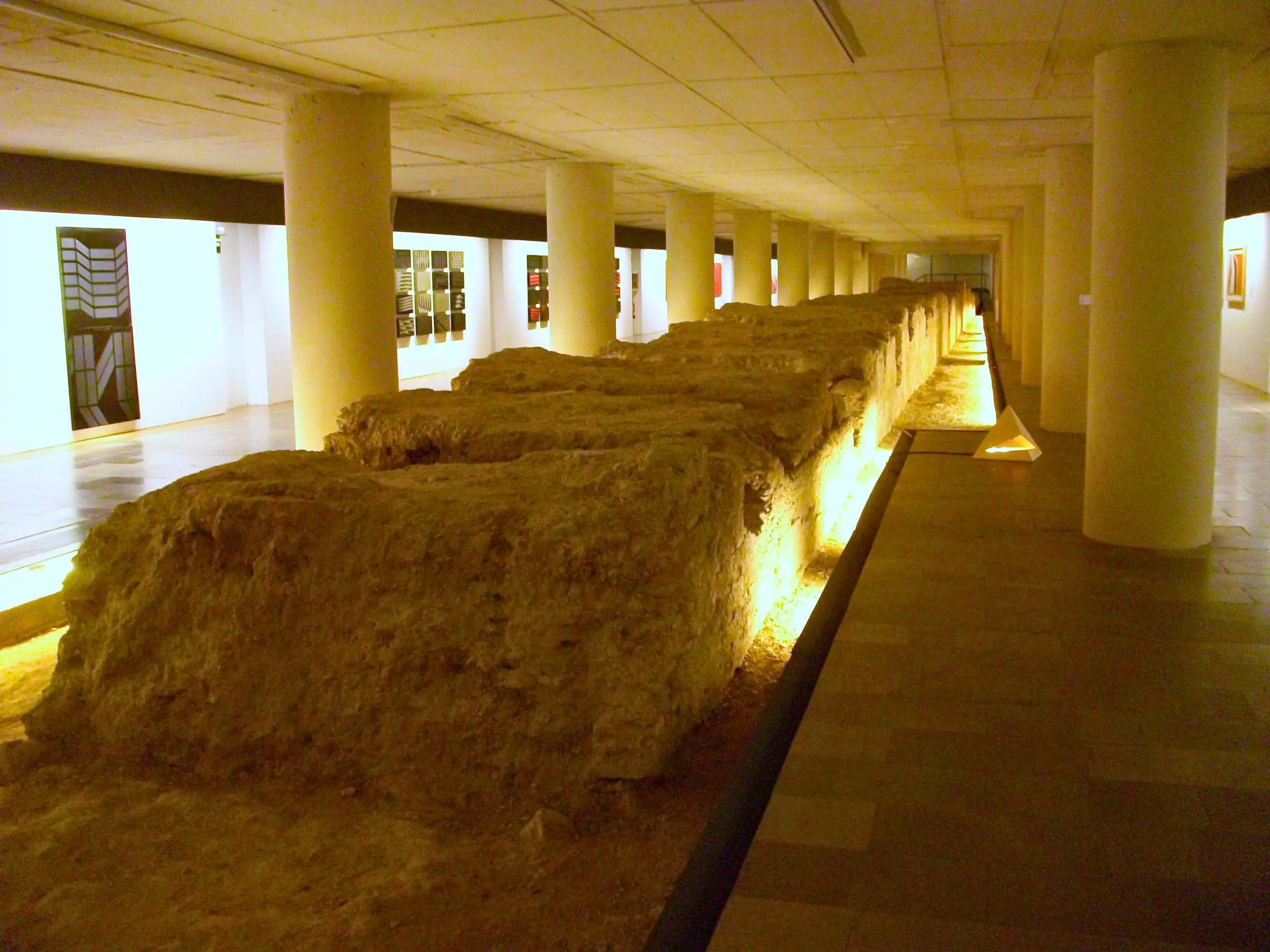
This is arguably the most surprising feature of IVAM. When the museum was being constructed in the 1980s, excavators uncovered a massive, well-preserved section of Valencia’s 14th-century medieval defensive wall.
Instead of destroying it or covering it up, the architects integrated the ruins into the museum’s basement. The Sala de la Muralla now serves a dual purpose: it is an archaeological exhibit of the city’s foundations and a unique gallery space for temporary exhibitions. Walking along the rough-hewn stone blocks while viewing contemporary art creates a striking contrast between Valencia’s ancient history and its modern cultural ambitions.
4. Dynamic Outdoor Rooftop Terraces
IVAM utilizes its exterior spaces as an extension of the galleries. The museum features outdoor terraces and a rear sculpture garden that provide a physical break from the intense focus required inside.
These spaces host large-scale, weather-resistant sculptures and occasional site-specific installations. The terraces also offer interesting vantage points over the rooftops of the El Carmen neighborhood. It gets hot out here in the summer, so visit the terraces early in the morning or late in the afternoon.
5. Rotating Avant-Garde Installations
The upper floors and the massive Gallery 1 are dedicated to temporary exhibitions. IVAM is known for hosting provocative, highly conceptual shows that focus on photography, pop art, political installations, and multimedia displays.
Because these exhibits rotate every few months, the experience on the upper floors is never the same twice. Check the official IVAM website before your visit to see what is currently on display. If you find highly conceptual art exhausting, you can safely skip these upper galleries and stick to the permanent collections on the lower levels.
Keep Planning: If you enjoy IVAM’s contemporary focus, consider walking 15 minutes north to Bombas Gens, a former pump factory turned digital arts center.
Logistics: Tickets, Timing, and Transit
IVAM is highly accessible, but its location on the edge of the old town means you need to plan your route.
Ticket Hacks and Free Entry
Standard admission is €2. However, IVAM is heavily subsidized by the regional government, resulting in generous free entry periods:
- Fridays: Free entry from 7:00 PM to 9:00 PM.
- Saturdays: Free entry from 3:00 PM to 7:00 PM.
- Sundays: Free entry all day (10:00 AM to 2:00 PM).
If you visit during the free Friday evening slot, arrive at 6:45 PM. A small queue forms outside, but it moves quickly. The museum is large enough that it rarely feels crowded, even during free hours.
Getting There: Tram and Bus Links
IVAM is located at Carrer de Guillem de Castro, 118. It sits right on the ring road that separates the historic center from the Turia Gardens.
- By Tram (Easiest): Take Tram Line 4 to the Pont de Fusta stop. From there, walk south across the pedestrian bridge over the Turia park, turn right, and walk 5 minutes down Guillem de Castro. The museum will be on your left.
- By Bus: EMT Bus lines C1, 28, and 95 drop you almost directly in front of the museum. The C1 is the circular route that loops around the entire old town.
- On Foot: If you are already exploring the northern edge of the old town near the Serranos Towers, IVAM is a flat, straightforward 10-minute walk west along the ring road.
- By Bike: Valencia is incredibly bike-friendly. You can rent a city bike and use the dedicated cycle lanes through the Turia Gardens, parking right outside the museum entrance.
Transit Options at a Glance
Tram Line 4
- Stop: Pont de Fusta
- 5-minute walk across the river
- Covered by the Valencia Tourist Card
City Bike Rental
- Ride through the Turia Gardens
- Bike racks available outside IVAM
Insider Tips for Your Visit
- The Cloakroom is Mandatory for Bags: IVAM has strict rules about backpacks and large bags. You will be asked to store them in the free lockers on the ground floor. You need a €1 coin to operate the locker, which is refunded when you return the key.
- Photography: Non-flash photography is allowed in the permanent collections (González, Pinazo, Muralla). However, some temporary exhibitions strictly forbid photos due to copyright restrictions. Watch for the crossed-out camera signs at the entrance to specific galleries.
- The Museum Cafe: The cafe attached to IVAM is surprisingly good and features an outdoor terrace. It’s a great spot for a café con leche and a slice of cake after your visit, though it is priced slightly higher than standard cafes in El Carmen.
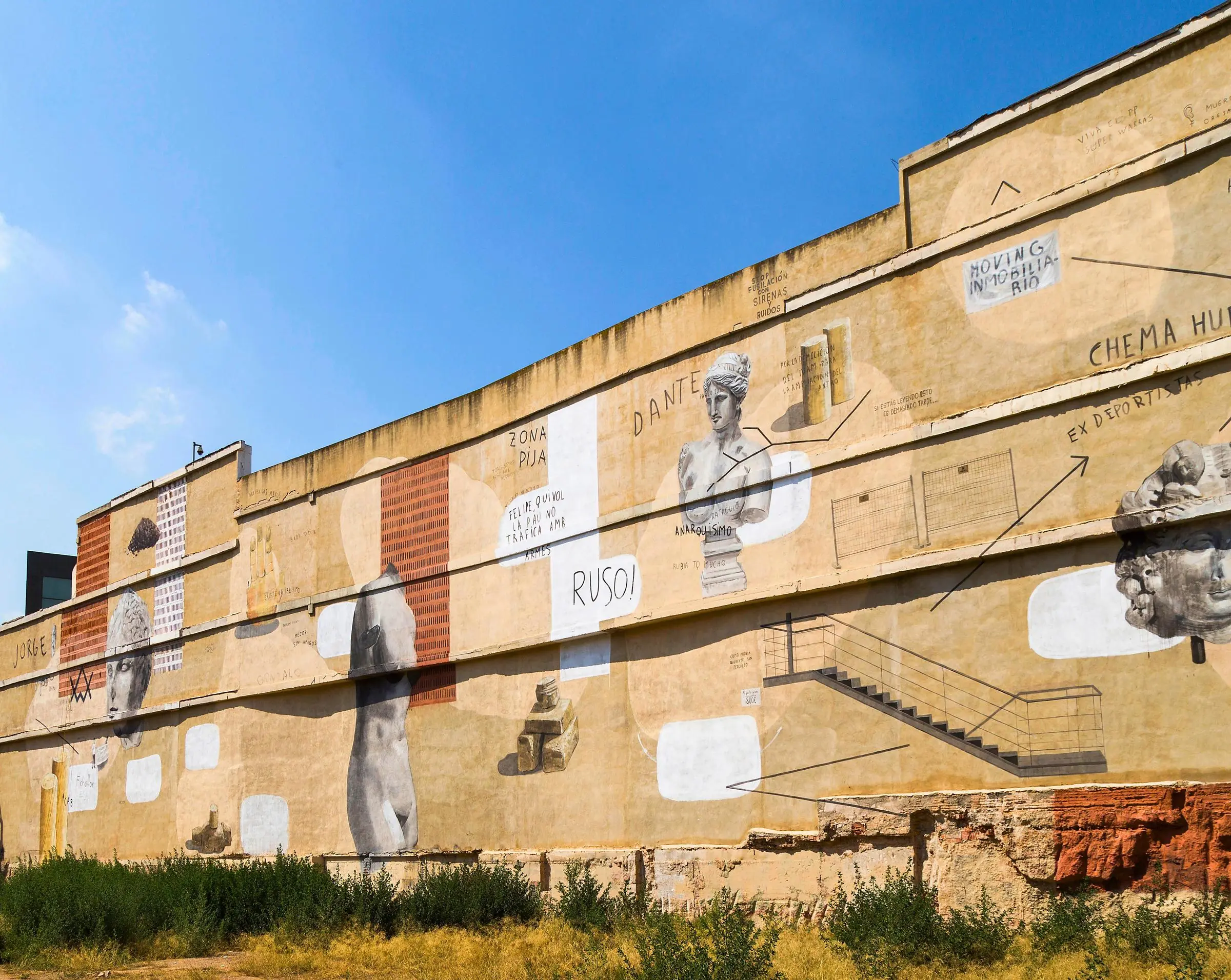
- Combine with Street Art: IVAM sits on the edge of El Carmen, a neighborhood famous for its urban murals. After leaving the museum, dive into the narrow streets behind it. Joining a guided street art tour is the best way to understand the outdoor art scene that surrounds the indoor galleries.
Where to Stay Near IVAM
Staying near IVAM puts you in the El Carmen neighborhood. This area is characterized by winding medieval streets, vibrant nightlife, and historic architecture. It is ideal for travelers who want to be in the bohemian heart of the city, though it can get noisy on weekend nights.
If you prefer a quieter stay, look just across the Turia park in the Zaidía neighborhood, which is more residential but still only a 10-minute walk to the museum.
Frequently Asked Questions
How much time do I need to visit IVAM?
To see the permanent collections (Julio González and the medieval wall) and one or two temporary exhibits, plan for 1.5 to 2 hours. If you want to read every placard and see every floor, you will need 3 hours.
Is IVAM air-conditioned?
Yes, the entire museum is heavily air-conditioned to protect the artwork. It is an excellent place to escape the brutal midday heat during the Valencian summer.
Are the exhibit descriptions in English?
Yes. Almost all wall text, placards, and multimedia exhibits at IVAM are presented in three languages: Valencian, Spanish, and English.
Is the museum wheelchair accessible?
Yes, IVAM is fully accessible. There are ramps at the entrance, spacious elevators connecting all floors (including the subterranean Sala de la Muralla), and accessible restrooms on the ground floor.
Can I bring water into the galleries?
No food or drink, including water bottles, is allowed inside the exhibition spaces. You must leave them in the ground-floor lockers before entering the galleries.
Does the Valencia Tourist Card cover IVAM?
IVAM is a regional museum, so it is not always 100% free with the municipal tourist card, but the card usually provides a 50% discount on the already cheap €2 entry fee. The card does, however, cover the bus or tram ride to get there.